There may be gaps in a system that is supposed to report dishonest police officers after they lie in Ontario courtrooms, according to a review by CTV News.
Crown prosecutors have a policy that requires them to report officers who were “deliberately untruthful” on the stand — something they’ve done 28 times in a 10-year period, records show.
But that list doesn’t include 11 cases that were identified in a report from Western University in a similar time period where Toronto or Peel officers “lied or provided false testimony.”
The discrepancy is a sign that the policy isn’t being put into practice evenly, said opposition NDP MPP Jennie Stevens, adding that Ontario’s government should address the gaps to make sure every officer in that position is flagged the same way.
“An overwhelming majority of police officers serve with integrity. But I want to be very clear: honesty in the justice system is non-negotiable,” Stevens said.
Last week in London, Ont., a judge tossed kidnapping charges against a 19-year-old accused person after finding an officer forcefully kicked the man when he was already on the ground in a parking garage.
The judge found that officer and others falsified their notes, and provided false and misleading testimony in court about the incident that was contradicted by surveillance camera footage.
“The court must distance itself from this behaviour to maintain its just processes,” Justice Kevin McHugh said from the bench last week.
The London Police Service said it had already launched a review in the case.
Provincial Crown attorneys have a policy that directs them to report “if a trial Crown becomes aware of credible and reliable information that an officer has been deliberately untruthful under oath.”
A document obtained by CTV News through a freedom of information request describes 28 cases where the policy was put into practice.
But it doesn’t include those 11 cases identified by the Western University report earlier this year, called “Unlawful Enforcers.”
That included one case in 2014 where a Peel police officer was found to have lied about taking a Tony Montana statue from a storage locker during a search. Tony Montana is a fictional drug kingpin from the 1983 movie “Scarface.”
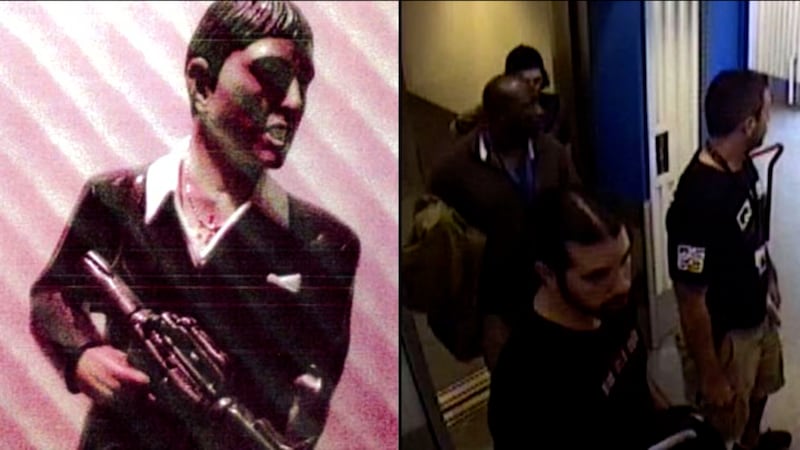
“The judge found an officer stole a Tony Montana statue from the storage unit and lied about it. Further, the judge found that three other officers knew what the officer had done but lied about their knowledge to deceive the Court,” the Western report said.
Ministry officials didn’t confirm whether the London case resulted in a report.
But a ministry spokesperson said the FOI list may not capture cases prosecuted by federal prosecutors, cases that were subject to an appeal, or cases where a director exercised their discretion not to forward the matter to a police service.
“It is fundamental to the administration of justice that police officers’ statements made under oath are truthful,” said the attorney general spokesperson, Alexandra Wilkes.

