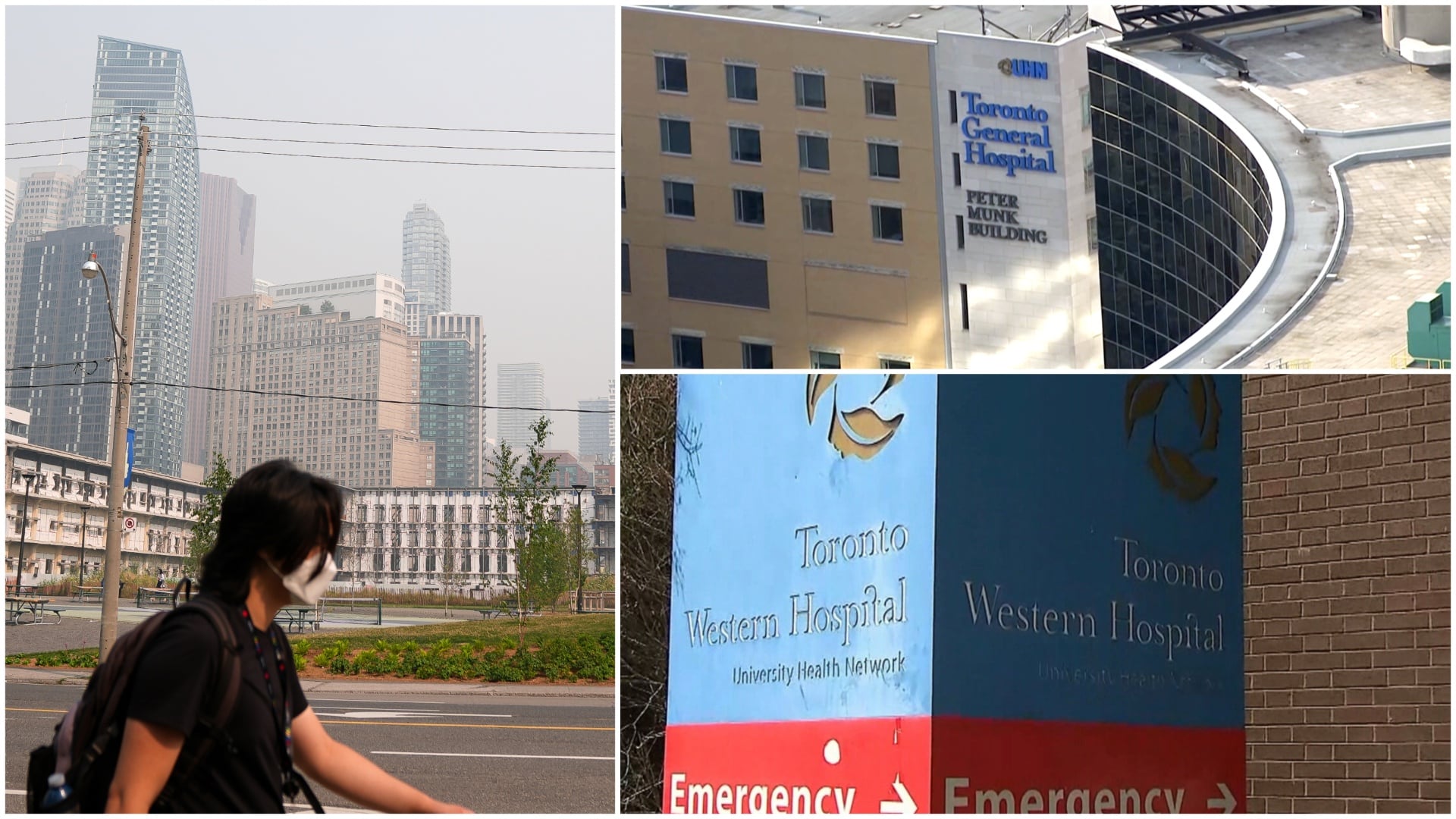
Two emergency departments in Toronto say preliminary data shows a significant jump in visits for “respiratory and air-quality” issues on Wednesday.
According to University Health Network (UHN), the emergency departments at Toronto General Hospital and Toronto Western Hospital received 36 visits from patients experiencing issues related to poor air quality, including shortness of breath, allergic reaction, chest pain (non-cardiac), cough/congestion, and eye pain, on July 15.
That’s an 80 per cent increase from July 1, which saw 20 such complaints, a spokesperson wrote in an email.
The uptick coincides with the arrival of wildfire smoke in the GTA, which at one point resulted in Toronto having the worst air quality in the world among major cities, according to IQAir.
The spokesperson said that the largest increases in ER visits were seen in “shortness of breath, cough/congestion and non-cardiac chest pain, all of which doubled over the two-week period.”
“While the analysis does not establish causation, the pattern is consistent with a potential impact of reduced air quality and warrants continued monitoring,” UHN said, noting that this data should be “considered anecdotal.”
Emergency physician weighs in
During an interview with CTV News Toronto on Thursday, Dr. Erin O’Connor, an attending emergency physician at UHN, said the longer these poor air quality conditions go on, the more we will see the “cumulative effect of this particulate matter as people are breathing it in.”
She went on to share some insights on the increase in patients showing up at two of UHN’s emergency departments with what she described as “exacerbated chronic lung conditions,” essentially the side effects of poor air quality and smoke inhalation.
“We’re seeing people with chronic lung conditions, things like asthma, COPD (Chronic Obstructive Pulmonary Disease,) emphysema, showing up to the emergency department with acute exacerbations of their chronic condition,” she said, adding patients are presenting with symptoms like cough, shortness of breath, wheezing, and chest congestion and/ or tightness.

O’Connor said that while many patients are treated and sent home, some have required hospitalization for longer-term treatment.
“Typically, it’s when we’re not able to reverse the acute exacerbation of their underlying lung condition with things like inhaled steroids or a short course of oxygen when they’re needing longer term treatment for usually a few days in a hospital,” she explained.
Vulnerable people should avoid going outside, says doctor
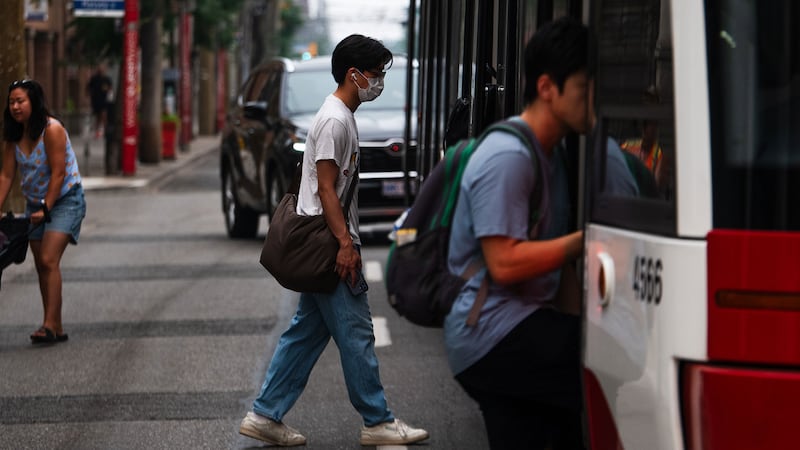
The doctor’s advice for vulnerable residents during these conditions is to avoid going outside as much as possible or entirely..
“For the rest of us, we really want to minimize our time outside and really limiting it to less than a half an hour at a time, and really avoiding exertion,” she urged.
“So not maybe going for your run today, maybe staying inside, doing it on a treadmill. And yes, if you’ve got a long way to go to get your Tim Hortons coffee, maybe driving today is the best choice.”
Check on vulnerable people
O’Connor urged people to check on their loved ones who may be struggling due to the poor air quality, ensuring that they’re not experiencing chest pain or shortness of breath,” and if they are, encouraging them to seek medical attention.”

