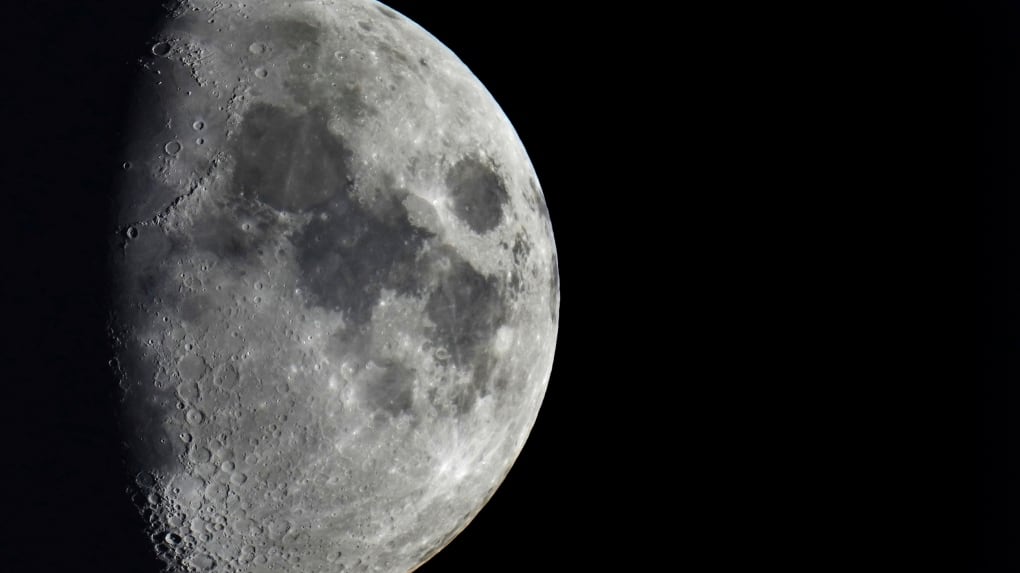
Many astronomers will be gathered around their telescopes early Wednesday morning in the hopes of seeing a SpaceX rocket slam into the moon’s surface.
The Falcon 9 rocket first launched in January last year, carrying two private lunar landers with it: Blue Ghost and the Hakuto-R Resilience.
The booster the rocket used for liftoff later returned to Earth but its second stage was used to help propel the lunar landers on their path to the moon - Blue Ghost touched down successfully in March while Resilience failed to land safely in June.
The abandoned rocket segment subsequently ran out of fuel and became adrift, though that was not the original intention of SpaceX.
Project Pluto, a website created by astronomer Bill Gray that relies on telescope surveys by amateur astronomers and the United States military’s satellite data, predicted it would impact the moon at 2:35 a.m. EST on Wednesday. Gray says he has been tracking this object since the launch, but by April this year he felt confident the rocket would strike the moon.
The upper stage of the rocket, which is roughly the height of a five-story building with a mass of 4,900 kilograms, is expected to hit the near side of the moon, close to its limb.
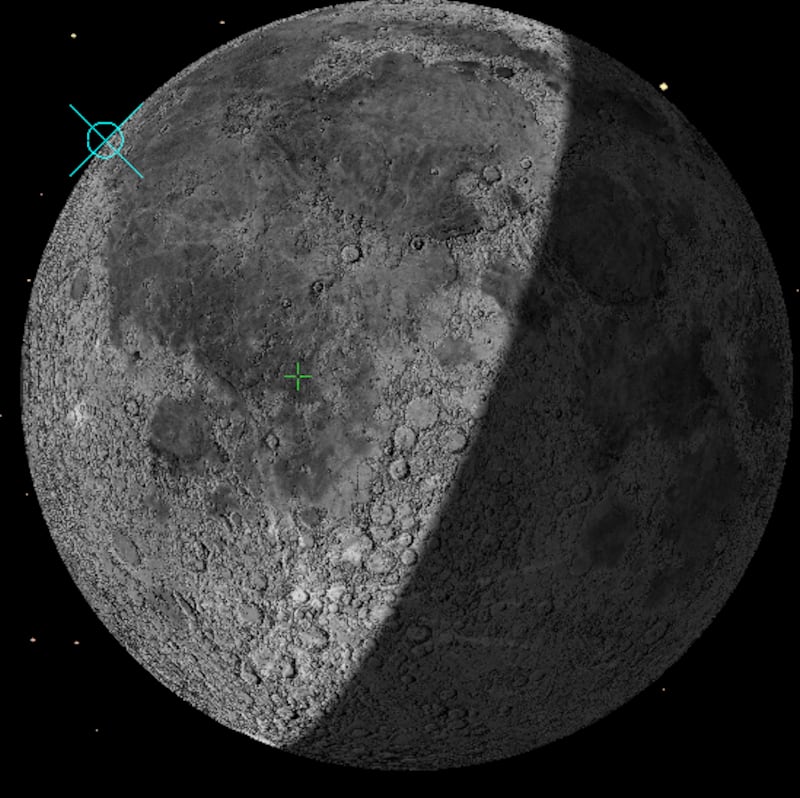
While the rocket’s impact will likely not be visible from Earth, the plume of dust that will billow from the collision likely will. With its size and speed, Project Pluto calculates its impact will emit a blast equal to 15,000 sticks of dynamite.
This rocket is moving at about 2.43 kilometres per second, which is roughly 8,700 km/h.
“It’s a pretty typical space velocity, but it is slower than most meteoroids,” Ethen Sun, a graduate student in astronomy and astrophysics at the University of Toronto, said in an interview.
“The average meteorite, it’ll be more than 10 kilometres per second, and that’s just because these things have fallen all the way into Earth’s gravity well from far away, so they’ve built up some minimum amount of speed.”
While it will release a lot of energy when it hits the moon, Gray estimates only a small fraction will come out as light.
How to see it
The best places to view the impact will be in central and eastern parts of Canada and the United States, and parts of South America, as the moon will be well positioned above the horizon.
Elaina Hyde, director of the Allan I. Carswell Observatory at York University, says it will be hard to watch without a telescope.
“Once the collision on the moon happens, it’s going to be just close enough to the near side that telescopes will be able to see it. Human eyeballs, not so much,” Hyde said.
At York University, Hyde says they will be opening their telescopes on campus and logging their observations starting around midnight. If a dust plume is visible, Hyde says they can send their data over to the researchers studying the moon’s composition.
Using a chart displaying the intensity of the light that’s emitted — Hyde says they can determine the velocity of the plume and determine its chemical composition.
“They can make estimates of how much was thrown up … and what it had in it,” Hyde said. “Was there sodium in the plume? Was there water ice in the plume? They’ll actually be able to tell some interesting things about it.”
Impact will change the moon’s surface
Once the rocket collides with the moon, Hyde says it will leave a new crater on it and permanently change its visible surface.
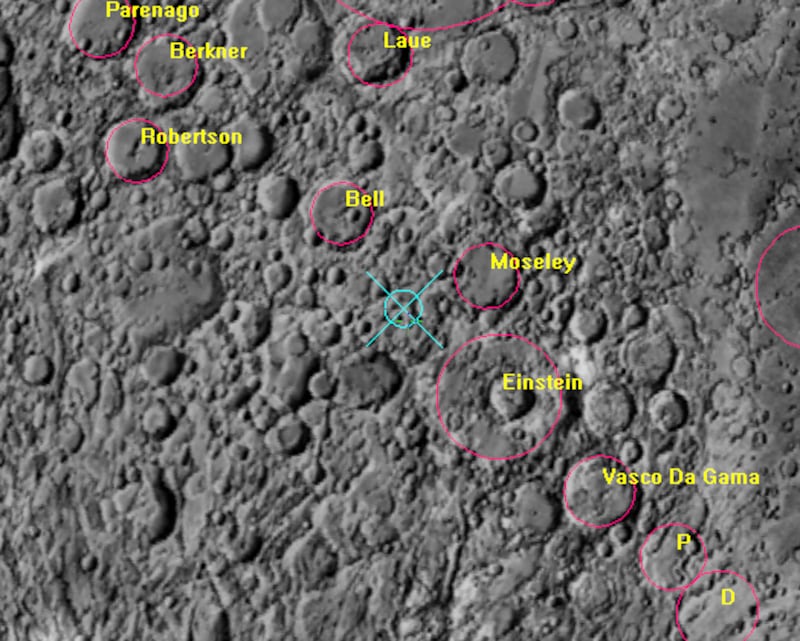
While changing the moon’s appearance is controversial, she says it is anticipated to leave a small dent near the Einstein crater. Gray predicts it will leave a 17-metre-wide crater, in a heavily cratered part of the lunar surface.
“It’s not gigantic, it’s not like the (International Space Station) is falling into the moon or anything,” Hyde said.
It’s also not the first time space junk has collided with the moon. In the early 1970s, the upper stages for Apollos 13 and 17 struck the moon. Then in 2009, NASA’s Lunar Crater Observation and Sensing Satellite deliberately hit the moon to see if water-ice exists in a permanently shadowed crater located on the moon’s south pole.

