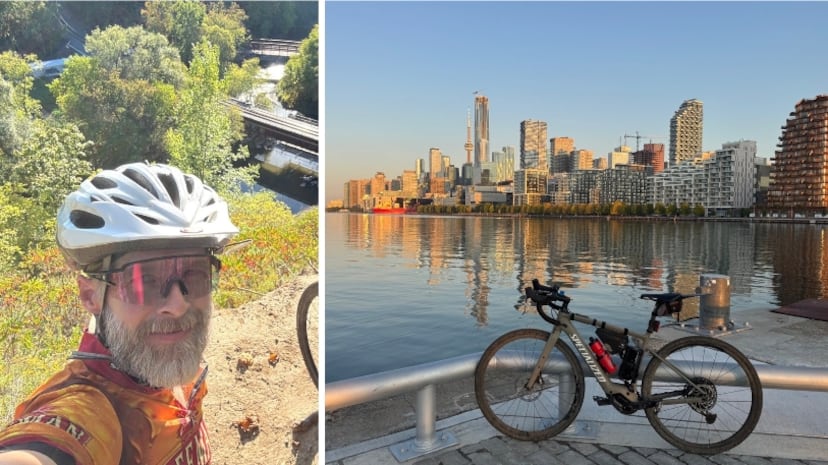
Betty Ann Drive is a quiet, residential street in North York.
There is nothing particularly remarkable about it. But on Tuesday, it became the final piece of a five-and-a-half-year journey that took Dave Laird 6,784 kilometres across Toronto, through two flat tires and a serious injury along the way.
Laird had just ridden every street in the city of Toronto, including trails, dead-end streets, cul-de-sacs and laneways.
“When I started, this seemed utterly insane,” Laird said in an interview with CTV News.
The 52-year-old graphic designer and photographer from Leslieville began the project while training for a 24-hour mountain bike race. Unable to ride with friends and tired of spending hours indoors using his stationary bike.
He began exploring Toronto street by street.
A friend introduced him to Wandrer, an open-source GPS trail tracker, and Laird began recording his rides throughout the city. He became “immediately addicted.”
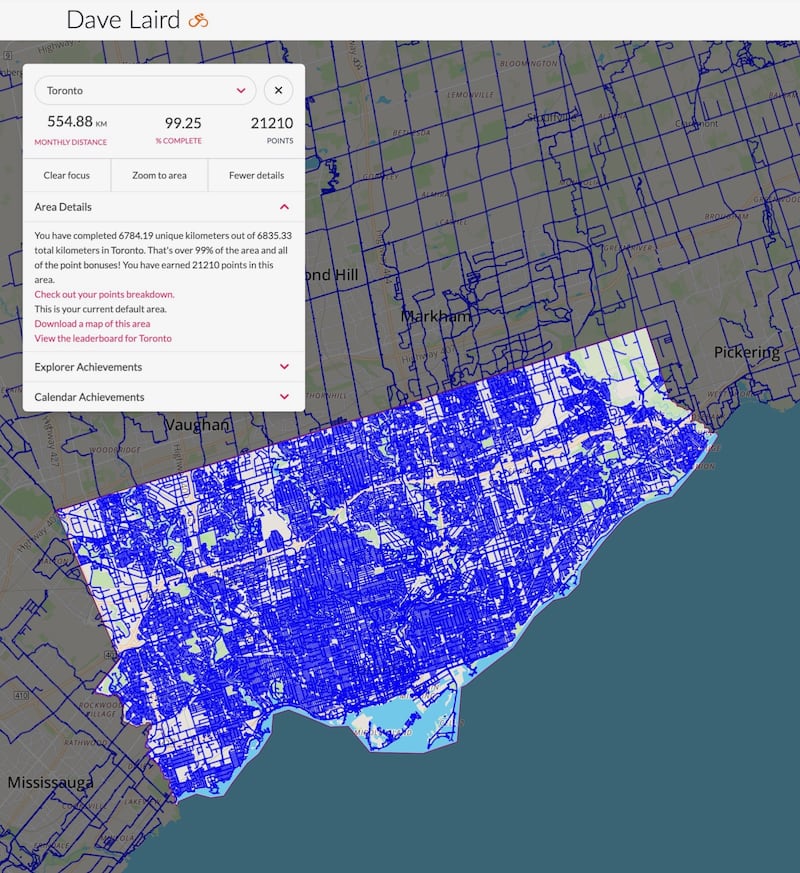
“It gave my outdoor rides purpose,” he said. “What made it so addictive was seeing all of the areas of Toronto that I’d lived near for decades and had never seen.”
With every ride, Laird said another piece of Toronto became familiar. Streets that had once been empty spaces on the map became part of Laird’s growing mental picture of the city.
In August alone, he rode 554.88 kilometres according to distance tracking from Wandrer.
“Amazingly, in five-and-a-half years of this: no collisions with cars, no door prizes, no pedestrian collisions, and only two flat tires,” Laird wrote in a post to Strava.
“There’s definitely luck involved in that.”
Laird said he would sometimes wake up between 4:30 and 5 a.m. and ride for at least three hours before work.
As he covered more of the city, the rides became increasingly difficult to plan. Laird compared it to a “diminishing return,” with it feeling less and less productive the further and further he went.
“There was times where, like, I would get up really early, like well before my wife would get up, drive to like some little cul‑de‑sac in northern Etobicoke, then drive to work," Laird said.
He had initially planned to finish the project after five years, but a serious mountain-biking accident in 2024 forced him to put the challenge on hold.
“I broke my neck and my back in seven places and had to take like six months off cycling,” he said. “I promised my wife, no more mountain biking.”
Getting back on his bike was difficult. Laird described the first time he put his feet to the pedals after the injury as “absolutely terrifying.”
He returned to Toronto’s streets in September.
“It was just glorious to be riding outside again,” he said.
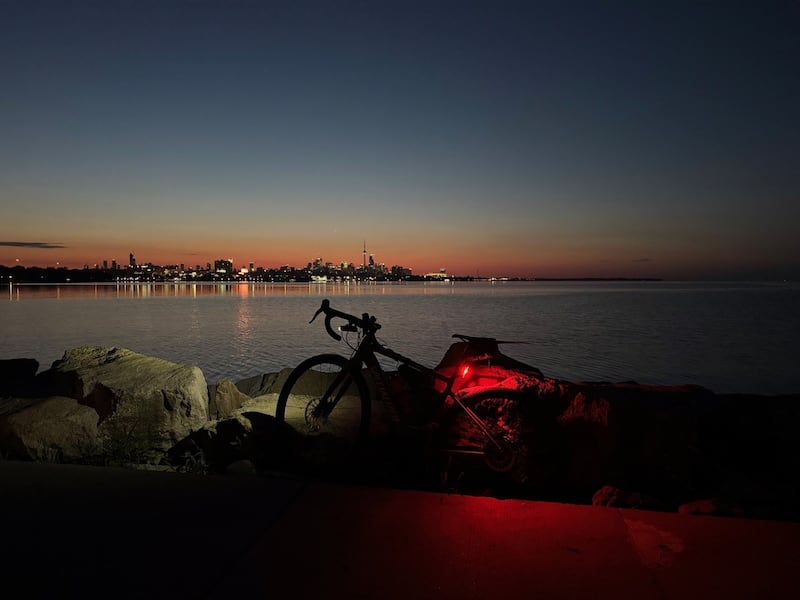
Discovering Toronto
After countless hours on the bike, Laird began to see Toronto differently.
“You wouldn’t believe how many beautiful neighbourhoods there are throughout the city,” he said. “There’s such a great ravine system throughout the entire city.”
One of his favourite discoveries was a secluded, boardwalk-lined ravine trail near Sunnybrook Hospital.
“I had no idea it existed,” he said. “It was this, like, beautiful little trail with little boardwalks and everything.”
Other favourite areas included the Highland Creek Trail, Cliffside Bluffs and the trails in and around Willowdale.
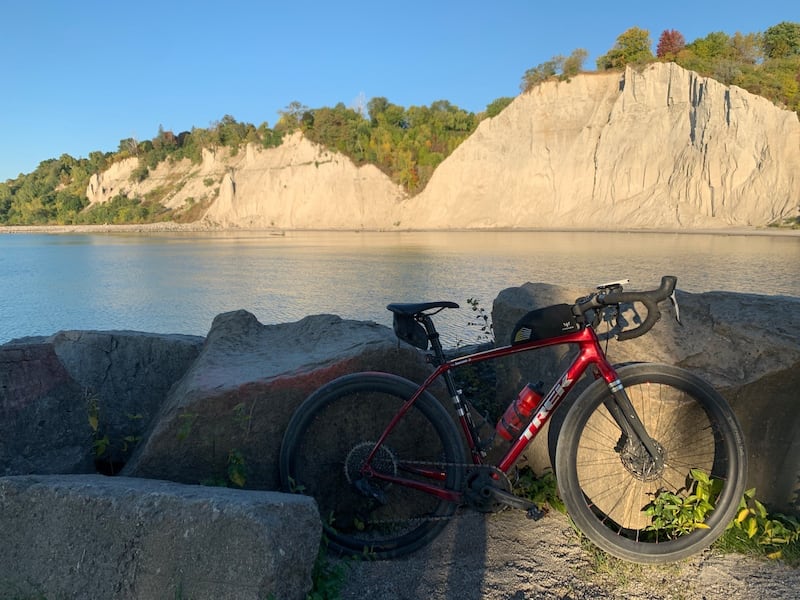
Laird rode in rain and snow, except during what he called “the dead of winter.” He especially enjoyed early spring mornings, when he could watch the city shed the grey of the cold winter months.
“The whole city comes alive. It’s amazing. Rides like this were pure joy,” he said.
The view from the road
Riding nearly every street in Toronto also gave Laird a firsthand view of the city’s cycling infrastructure.
He said Toronto’s cycling network compares favourably with those of some other major cities, but that significant gaps remain, particularly in Scarborough.
“There are big areas where you just can’t ride safely,” he said, specifically pointing to what he described as a lack of a safe cycling route between the waterfront and Steeles Avenue.
Laird said he was disappointed of the Ford’s government decision to remove bike lanes along a stretch of Bloor Street West and from two other major Toronto arteries.
“The on-road cycling network is nowhere near what it could be,” he said. “And then to see already established cycling infrastructure get ripped out, it’s so wasteful.”
When the map is finally full
Five-and-a-half years of riding the city’s streets and three bicycles later, Laird had developed an intimate understanding of how Toronto fits together — its neighbourhoods, ravines, dead ends and gaps in the cycling network.
He said the city now feels smaller.
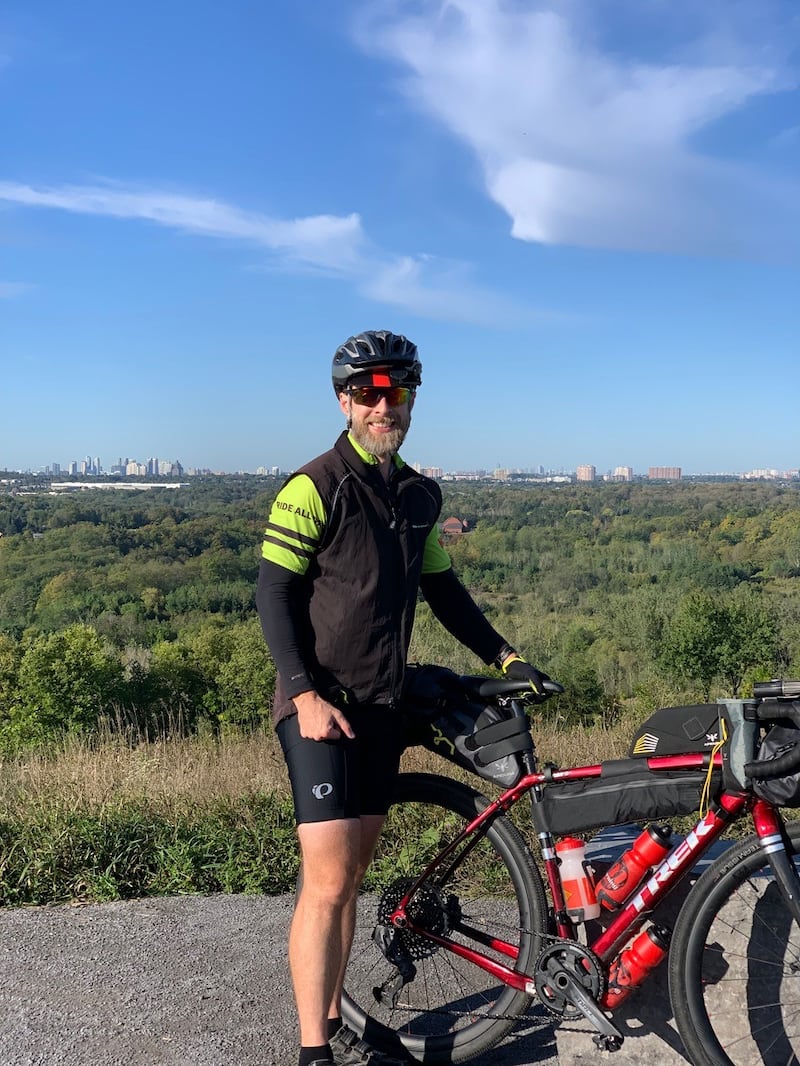
“You just build this memory map of the whole city, and now when I look at Toronto, it just kind of feels like my town,” he said.
Laird considers completing the journey a “huge life achievement,” but is now looking forward to spending more time riding with friends and pursuing activities outside cycling.
“I’m happy I’m done, but I’m also sad that the ride is over.”

