Safety concerns are being raised after recent statistics found there was a 40 per cent increase in hospitalizations for people using e-scooters, and while both adults and children are being injured, the number of kids under the age of 15 being seriously hurt almost tripled.
Dr. Daniel Rosenfield, with Toronto’s Hospital for Sick Children, said while they’re a favourite mode of transportation for children, it’s preteens that are most likely to be injured in an accident.
“The classic user of these devices that we see (in the emergency department) that is most severely injured are boys aged 10 to 12, which is before you can get a driver’s licence, before you know the rules of the road, and kids don’t understand how powerful these devices are,” said Rosenfield.
Research by the Canadian Institute for Health Information found that between April 2025 and March 2026 there were 837 hospitalizations involving e-scooters.
More concerning from the Canadian Pediatric Surveillance Program is the fact that 10 children died in 2025 using e-scooters or e-bikes.
Rosenfield, who is also the chair of the injury prevention committee for the Canadian Paediatric Society, wants parents to know e-scooters are not toys.
“They may seem to be toys, and they be marketed as such, but they are high-speed motor vehicles,” said Rosenfield.
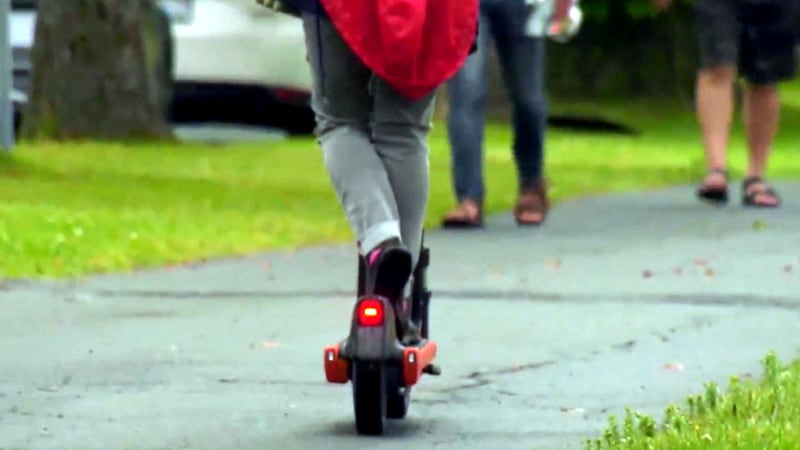
E-scooter speed increasing
New testing by Consumer Reports shows the average speed of an e-scooter has been increasing, making them harder to control and more prone to crashes.
Consumer Reports just tested 13 e-scooters and isn’t recommending any of them.
Bernie Deitrick with Consumer Reports said as e-scooters get faster, injuries are piling up.
The average top speed for an e-scooter in 2022 was 25 km an hour. Now in 2026, four years later, the top average speed jumped to 32 km/h, and some go much faster.
Consumer Reports said during its testing of e-scooters, two adult researchers were injured when they lost control of the e-scooters they were testing.
“As soon as you begin to brake, your weight naturally shifts forward onto the front wheel of the e-scooter, and the rear wheel is de-weighted, so it’s more likely to skid if you’re turning,” said Deitrick.
If you do choose to ride a scooter, always wear the appropriate safety gear, like wrist and knee guards and, most importantly, a properly fitted helmet.
Rosenfield feels children under 16 should not be using e-scooters but said if they do, a helmet is a must.
“Traumatic brain injuries are the most devastating injuries we see, and they can be mitigated with a helmet. It can be hockey, ice skating, polo helmet; it doesn’t matter whatever kind of helmet it is, you just need to wear it,” said Rosenfield.
No matter what your age, any user of an e-scooter needs to keep their speed down, put their phone and headphones away, and always be aware of their surroundings.
Enforcing the law could also help prevent injuries.
Legally in Ontario you’re not allowed to use e-scooters on public roads, sidewalks, or in bike lanes, but many people do. Riders must also be at least 16 years old, but many aren’t.

