Residents in a Scarborough community are raising concerns after a stretch of roadway was reconfigured in large part to improve safety for pedestrians and cyclists.
The redevelopment took place along Scarborough Golf Club Road between Ellesmere Road and Lawrence Avenue East, reducing four lanes of traffic to two to install new bike lanes and new redevelopment to sidewalks.
The redevelopment began in 2021 and cost approximately $13 million, according to Coun. Paul Ainslie, who represents the area.
“I would like somebody to come and take a look and see how dangerous the driving is now,” said retired schoolteacher Karen Izumi in an interview with CTV News.
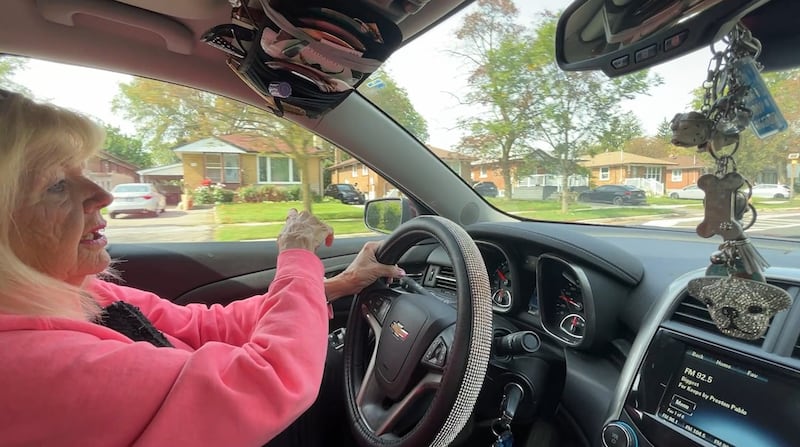
Izumi is a nearby resident and says she drives on the roadway almost every day.
In particular, Izumi said she doesn’t like the concrete medians on the corners of intersections, which have caused some motorists to make wide turns into the centre lane of traffic.
Izumi said she is also frustrated to see lanes of traffic replaced with garden planters and wide protected bike lanes on both sides of the street. She said it makes it difficult for cars to pull over for emergency vehicles, adding that in some sections there are two-way bike lanes going north and south on one side and another side of the street, a lane for bikes to go north.
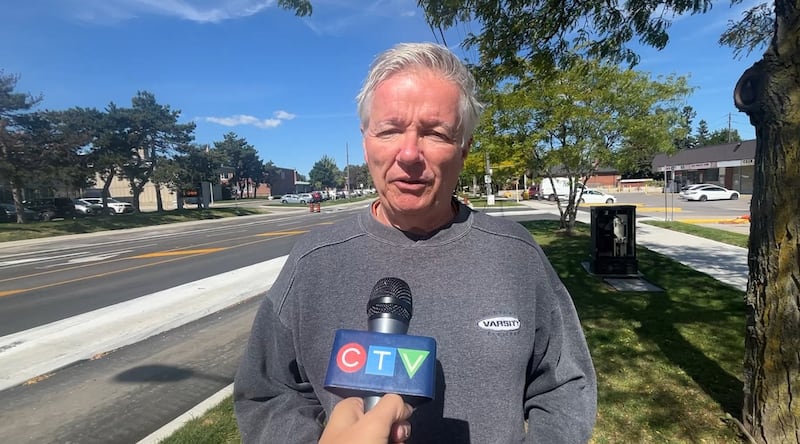
In an interview with CTV News, Ainslie said he is also unhappy with the project and has received hundreds of complaints from residents.
Ainslie said the project misses the mark because, despite the city sending out more than 12,000 flyers to residents for consultation, the project was created based on the voices of 80 people. He added that the final version voted on by council was vague.
The road redesign underwent two rounds of public consultation in 2022 and 2023, where participants supported designs that would reduce speeds, encourage cycling, and add greenery. It was subsequently approved by Toronto City Council in May 2023.
“Solid waste, emergency services, how snow was getting cleared, the width of the roads, (are) big concerns for me, they weren’t listened to,” he said. “The bike lanes that I was told was standard-sized bike lane, and my residents were told, are twice as big in some area,” Anslie said.
Improving pedestrian and cyclist safety possible reasons for redesign
According to Transportation Services, between 2010 and 2021, eight people were seriously injured and one person was killed during the same stretch of roadway.
Nine cyclists were also injured, including three school-aged children. Across the same time period. A total of 15 people were killed or seriously injured along Scarborough Golf Club Road.
A part of the four-year-long construction also includes wider sidewalks. Signs in the area have also gone up, explaining how changes were made to encourage drivers to slow down.
Bike lanes also connect to other cycling routes.
“I think it’s a good design here,” said Francis Bernardo, who was outside riding his bicycle Tuesday but also drives a vehicle. “I used to ride on the road, and guess what, it’s supposed to be that lane is shareable, but they don’t understand that without the barrier.”
Scarborough Golf Club Road was last reconstructed in 1956. City data reveals that before construction, 70 to 80 per cent of drivers travelled above the speed limit.
Features such as raised curbs, concrete islands, and protected cycling facilities are intended to encourage slower driving, better organize traffic movements, and create safer conditions for people walking, cycling, and driving.
Izumi said she wants the raised concrete sections removed and the road restored to four lanes of traffic.
“I think it’s ridiculous. A lot of money has been spent,” said Izumi. “I would rather see road repair than something like this that has been done.”
In a statement to CTV News, City of Toronto media relations manager Kayla Lewis said construction on Scarborough Golf Club Road is largely complete, and the redesigned street maintains access for residents, emergency services, and larger vehicles.
“This replaces aging infrastructure and includes safety improvements designed to reduce speeding, improve visibility at intersections, and help prevent serious collisions,” Lewis said.
“We will continue listening to community feedback and monitoring traffic and safety, making adjustments where possible.”
Meanwhile, in a statement provided to CTV News Toronto on Wednesday, the advocacy group Cycle Toronto defended the consultation process and said that the changes to Scarborough Golf Club Road are “essential to ensuring everybody gets home safely.”
“Public consultations are key to any successful project. That said, some of the community concerns being raised are sadly predictable especially at the outset when any new road safety project is being implemented. These decisions aren’t made without consulting winter maintenance, waste collection, EMS,” Michael Longfield of Cycle Toronto said. “The province’s own data shows that protected bike lanes reduce collisions by all road users by over 50 per cent (not just cyclists). When it comes to eliminating deaths and serious injuries on our roads, changes like these on Scarborough Golf Club road are essential to ensuring everybody gets home safely. Scarborough in particular needs is in desperate need of more healthier streets.”

