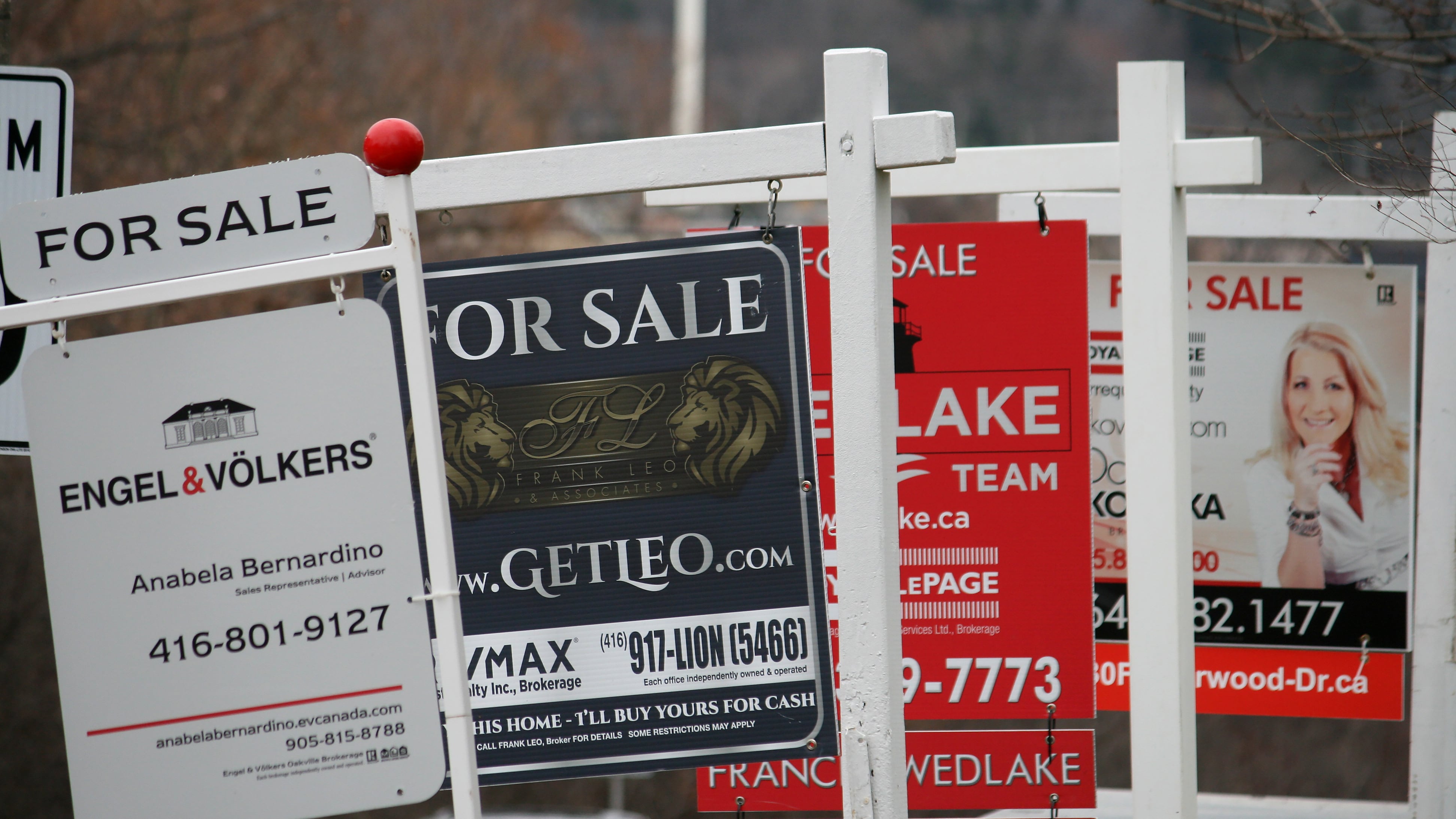
Toronto went from the strongest real estate market in the world to one of the weakest in a span of four years, with a new report finding housing prices in the city have fallen by around 30 per cent since peaking in 2022.
UBS, a global wealth management firm, published its annual Global Real Estate Bubble Index on Monday, tracking residential prices across 23 cities worldwide, like Amsterdam, Dubai, New York City, and Tokyo.
The report delved into housing price trends, what kind of housing bubble risk these cities are facing, how long it takes to buy a 650-square-foot apartment on an average income, and how the cost of homeownership compares to rent for comparable homes.
The wealth manager rates Toronto’s current bubble risk as “moderate,” pointing to Ottawa’s foreign buyer ban, a glut of housing supply, and higher interest rates as the factors contributing to the city’s market reversal.
For eight years, between 2014 and 2022, UBS found Toronto had the strongest housing market of any city that it tracks. Prices had doubled on the back of population growth, investor demand, and heavy construction.
But, since its peak, UBS says the trend has flipped. Real estate prices are down about 10 per cent in the past year alone, reflecting a more dramatic single-year drop compared to nearly every other city in the report (though Vancouver tied Toronto for this acclaim).
From the 2022 peak, Vancouver’s prices are down around 20 per cent with the report noting home sales are currently at a 25-year low.
“Elevated inventory, slower economic growth, inflation concerns, and the risk of further interest rate hikes continue to weigh on the near-term outlook for prices,” the report said of Vancouver.
By comparison, Germany’s Frankfurt and Munich saw prices fall by around four per cent while most cities in the U.S. (outside of San Francisco) also saw declines.
The correction also shows up in recent local data. In the Toronto Regional Real Estate Board’s (TRREB) most recent data, the number of listings in August is significantly lower compared to this same time last year, reflecting a 14 per cent decline.
The number of sales also edged lower in the GTA, the TRREB notes, down by roughly two per cent from August 2025. The composite benchmark price was also down by 4.5 per cent year-over-year in August, with the average selling prices hovering at $993,410.
The average home price in Toronto across all property types peaked at $1,334,544 in February 2022.
Rents have eased too. Across one- and two-bedroom units in the GTA, the TRREB notes that prices are down around two per cent from the second quarter of 2025 to 2026, averaging $2,273 and $3,013, respectively. The board says this continues to provide renters with “substantial choice.”
UBS ranks Toronto as a bit more affordable compared to its global peers, though it still notes that monthly housing costs are burdensome in the city. A skilled service worker needs less than five years making an average income to afford a 650-square-foot apartment in Toronto, compared with 15 years in Hong Kong and 11 years in London.
It will also take renters in Toronto roughly 20 years until they have paid enough rent to own a 650-square-foot apartment, the report finds. Meanwhile, in Zurich the price-to-rent ratio is 46 years, in Geneva 40 years, and in Vancouver around 23 years.
Marco Pedri, a real estate broker with Shoreline Realty, said the market currently favours both renters and buyers, though not necessarily investors.
“I think a lot of people are able to secure a place at a more reasonable price in terms of renting, especially if it’s rent controlled,” Pedri said in an interview with CTV News.
“Even on the purchasing side ... for those who may have been looking to get into the market to purchase something for their own personal use, rather than an investment, this may be an opportunity to actually secure something.”
UBS says the foreign buyer ban, a supply glut, and higher interest rates are impacting Toronto and Vancouver’s real estate markets.
Ottawa enacted the foreign buyer ban in 2023, though it is set to expire on Jan. 1, 2027. It remains to be seen whether the federal government will extend it.
Pedri says he is skeptical lifting the ban would reignite investor demand the way it once did, pointing to today’s rental returns and regulations as factors.
“You would think that would be a good opportunity, but when you look at the rental prices in today’s market and the return that some of these investors might be getting, as well as the rules around rental regulations, it may not be that favourable for a foreign investor to actually purchase in these major Canadian cities,” he said.
“So even if the foreign buyer ban was lifted, I don’t necessarily think that we’re going to see a magical correction—I don’t even want to say correction, a magical uplift in the market.”

