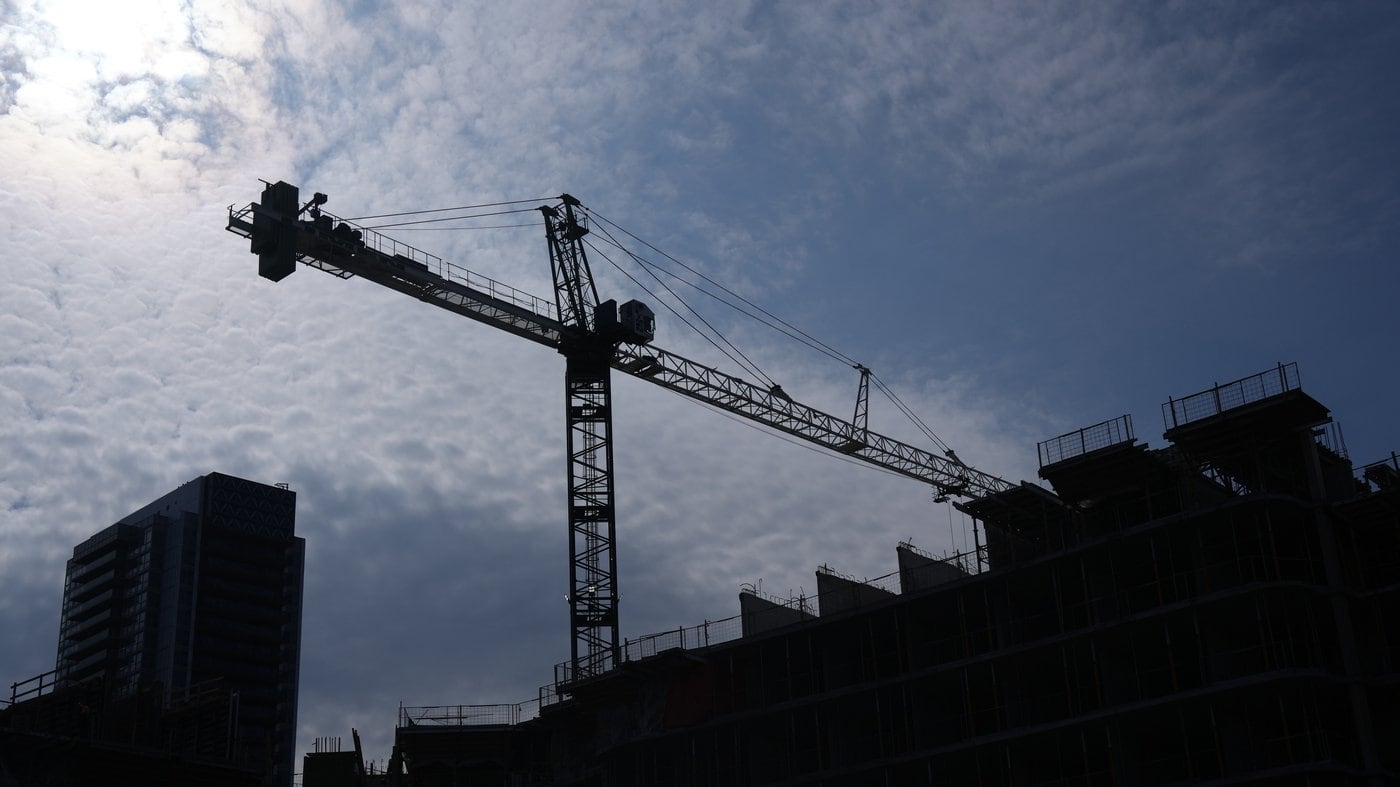
TORONTO — The Toronto Region Board of Trade is urging the province to amend zoning and building code rules as it says Ontario is on pace to fall well short of its goal of getting at least 1.5 million new homes built by 2031.
In a report published Thursday, the board said the target is unachievable by the current deadline, which was set by the provincial government in 2022, even if housing production increases over the next five years. Based on budget forecasts, Ontario is projected to fall more than 550,000 homes short of the pace needed by 2029, according to the analysis.
“We already had a massive gap. It was called the housing crisis for a reason,” said board president and CEO Giles Gherson in an interview.
“There’s been a lot of effort and a lot of work gone into, ‘How do we close this housing gap? How do we build houses faster?’ But the disappointing part of it is that the gap remains very, very large.”
The board said that even if ambitious reforms were adopted immediately, municipalities would need to update plans, amend zoning bylaws, align infrastructure investments, service land, and process applications. Those steps could take years, making the 2031 goal unrealistic.
Gherson said the key to unlocking new development at a quicker pace is through regulatory changes.
He described rules around zoning and building codes as “very fragmented” across the province, and “out of date.” In Toronto alone, builders face dozens of different requirements across the city, which makes it difficult to standardize production.
“It really adds a huge amount of cost and delay to housing development and that impacts the ability for the city to attract and retain our workforce that we need,” he said.
“But also, we know it is impacting the social fabric as the next generation sees home ownership as really a pipe dream, and that’s a really big problem.”
The report said Ontario should develop a provincial zoning code that provides every municipality the same framework and terminology.
That code could set a baseline of what housing types can move forward without special approval, starting with townhouses and multiplexes. The standard could also establish provincewide limits on the rules that most often block housing, such as parking, setbacks, lot coverage, height, density, and how far upper storeys must step back.
Meanwhile, it recommended key changes around building codes, saying there should be an assessment of every requirement for the cost it imposes to build, run and maintain over the life of the building. The report also proposed allowing single-stair buildings up to six storeys, along with smaller elevators in smaller buildings, as long as safety and accessibility are still prioritized.
Gherson said other cities in Canada are proof that a less patchy model can lead to meaningful housing growth. He pointed to Edmonton, where he said it’s more common see multiplexes in different types of neighbourhoods.
“Where we’ll have single-family dwellings on major roads, they’ll have a lot of these multiplexes and the reason is they have more flexible permissive zoning and they don’t have as many zoning codes,” he said. “There’s a city that’s been a fast-growth city for the last five decades ... so we need to look to other places that have been successful.”
The call for action comes as affordability challenges persist for Toronto’s housing market, even as prices have been on the decline over the past year.
Last month, the Toronto Regional Real Estate Board said the average selling price in the Greater Toronto Area stood at $993,410 for August, down 2.7 per cent year-over-year, while the composite benchmark price, meant to represent the typical home, was down 4.5 per cent.
But the trade board’s report said housing remains out of reach for many residents, especially compared with past decades. It said that between 2006 and 2025, Toronto-area home prices, as measured by the composite price, increased by around 187 per cent. That significantly outpaced the cumulative increase for inflation over that time, which was around 51 per cent.
“Durable affordability depends on increasing the supply of homes,” the report said.
“Without continued housing construction, recent affordability gains are likely to prove temporary.”
This report by The Canadian Press was first published Oct. 1, 2026.
Sammy Hudes, The Canadian Press

