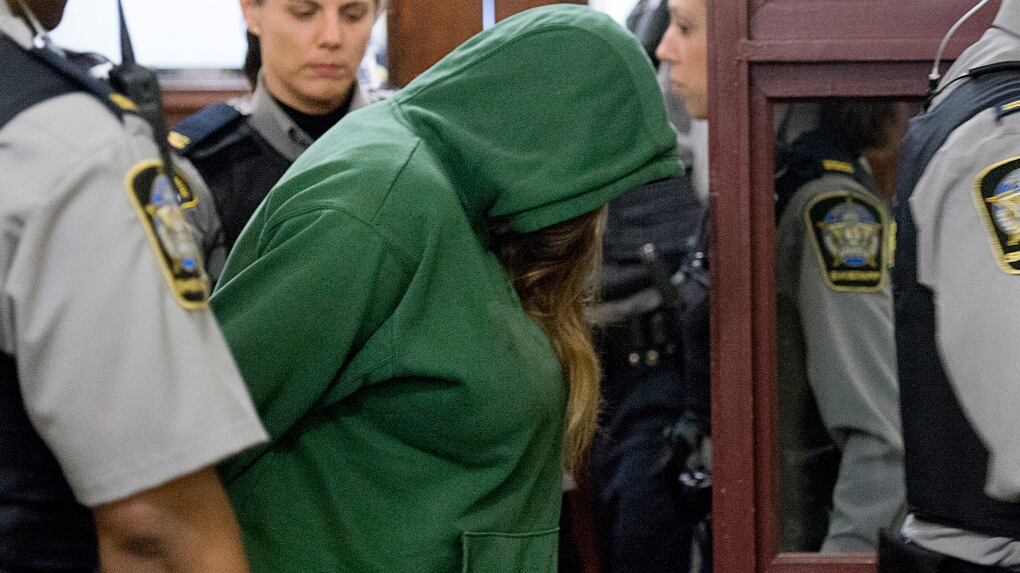
A jury has handed down their verdicts in the case of a couple accused of killing three family members over a five-year period in Mississauga.
The jury found Melissa Merritt guilty of first-degree murder in the death of her ex-husband Caleb Harrison but failed to return a verdict in the murder of Bridget Harrison (Caleb’s mother).
The jury, meanwhile, found Merrit’s common-law partner Christopher Fattore guilty of first-degree murder in the deaths of Caleb Harrison and Bridget Harrison. Fattore was found not guilty of second-degree murder in the death of Bill Harrison.
All three victims were found dead in the same Mississauga family home between 2009 and 2013.
Caleb Harrison had two children with Merritt but split up with her in 2005. He was found dead in the home in August, 2013 at the age of 41.
Harrison’s 63-year-old mother Bridget had been found dead in the home in 2010 but her death had only been classified as suspicious. It was later ruled a murder following Caleb Harrison’s death.
That development also prompted police to reopen an investigation into the 2009 death of Bill Harrison. Investigators had originally determined that he had died of natural causes, however they later said that he too had been murdered.
The Harrison family issued a statement Saturday saying the verdicts “bring some relief.”
“But the pain and sorrow we have experienced through the tragic loss of the Harrison family: Bill (2009), Bridget (2010) and Caleb (2013) will remain with us, in our hearts and minds, forever. We are haunted by lingering questions about the investigative and forensic handling of the deaths of Bill and Bridget Harrison. We need time to process the verdicts, reflect, and determine the best avenues to address our questions.”
The family said they would like to see an investigation into “any failures or other shortcomings in the investigative process,” that kept police from immediately classifying the deaths as homicides, “to ensure that corrective actions are taken by the public institutions involved, such as the police, coroners, and forensic services, so that no family has to endure the anguish we have suffered.”
With files from The Canadian Press

