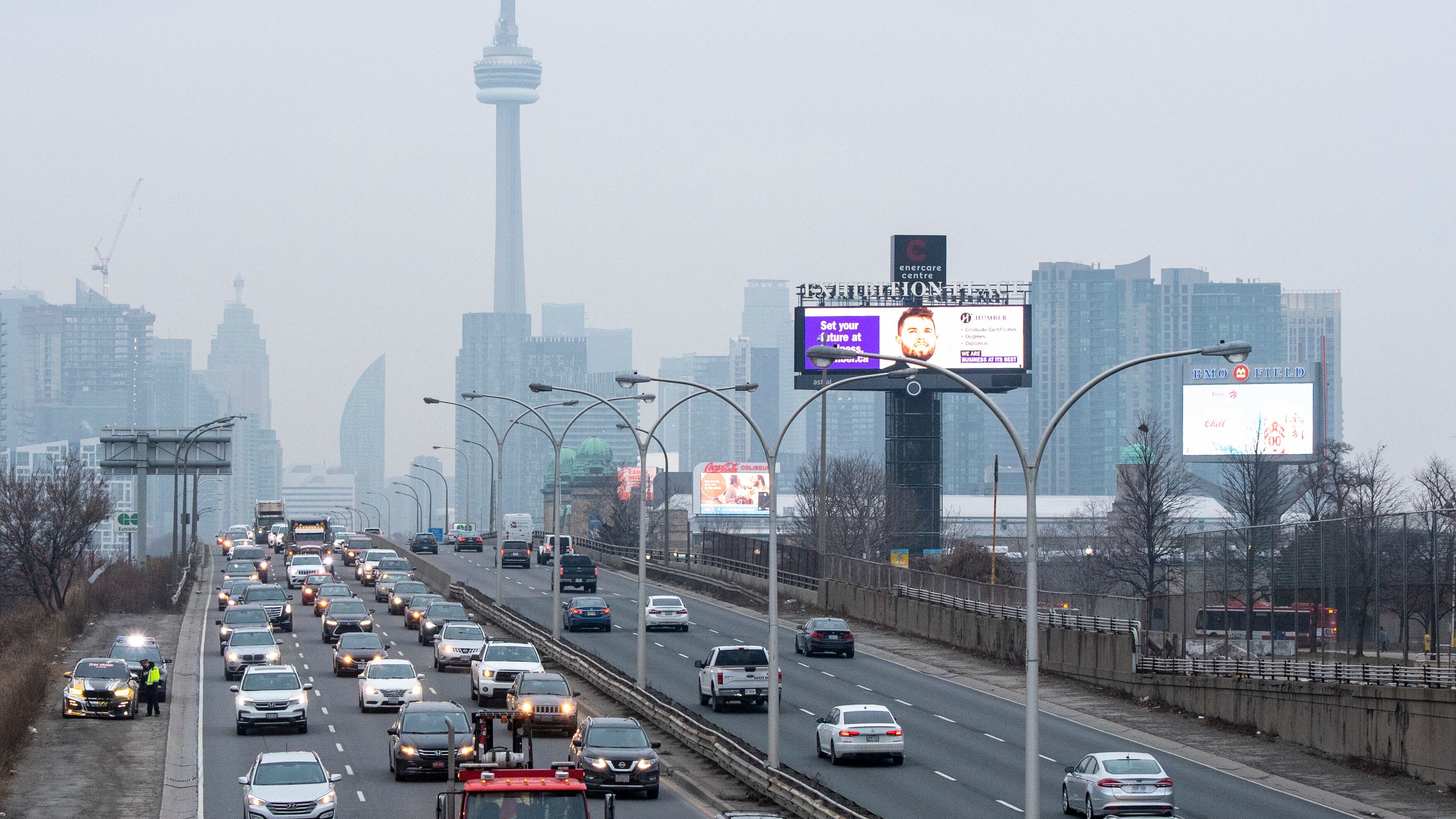
Toronto’s long-awaited traffic czar may soon be on the job, but experts say clearing up the city’s notorious gridlock will require more than a new title.
A spokesperson for the City of Toronto tells CTV News Toronto that council gave final approval for the new position of Chief Congestion Officer in April and recruitment for the post is already underway.
The role will be aimed at coordinating construction and traffic management across city divisions.
Earlier this month, the infrastructure and environment committee received an update on the position.
“The City of Toronto’s new Chief Congestion Officer position will focus on creative, long-term solutions to tackle traffic congestion and will pre-emptively identify challenges and recommend solutions to get Toronto moving,” said Will Johnston, Deputy City Manager for Infrastructure Services.
Construction, Johnston said, remains the largest driver of gridlock and will be a key focus for the incoming czar.
But experts warn that unless the city’s new traffic boss is given meaningful authority, very little will change.
Construction jobs ‘should be scrutinized,’ expert says
Matti Siemiatycki, director of the Infrastructure Institute at the University of Toronto, said addressing the city’s often uncoordinated construction work should be the first priority.
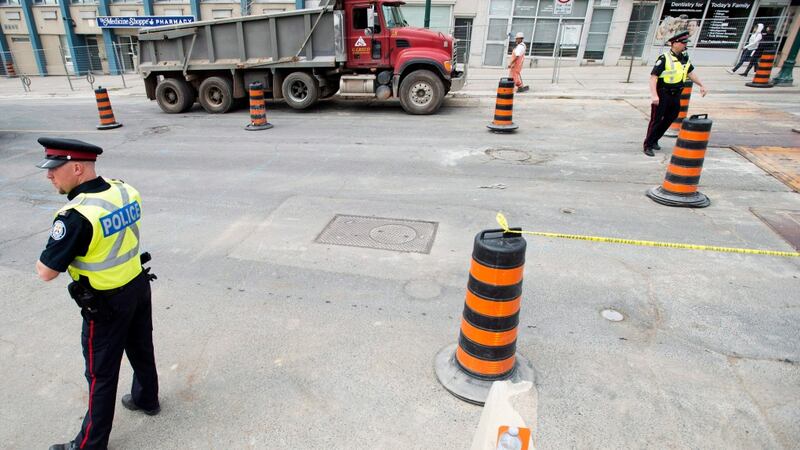
“I think fixing the bottlenecks that are happening by our own making is probably the first place to start,” he said.
Toronto has been called the busiest city in North America for road construction. A city report found that last summer, nearly one-quarter of city streets were partially closed due to construction, doubling travel times.
“Every job that’s going to take up a lane of traffic should be scrutinized to understand how it can be made faster,” Siemiatycki said.
Zero tolerance approach
In 2024, navigation and location technology company TomTom ranked Toronto third on its list of the most congested cities in the world, placing the city behind just London and Dublin.
The region’s crippling gridlock, meanwhile, has had a significant effect on the wider economy, with one report prepared by the Canadian Centre for Economic Analysis warning that the cost of lost economic opportunities in the GTHA totalled $10 billion in 2024 but rose to more than $47 billion when factoring in “social impacts” that diminish a commuter’s quality of life.
Some experts, including U of T professor Baher Abdulhai, argue that the situation has worsened and that lane rental fees — directly charging contractors for occupying lanes - could be an effective solution.
In an email to CTV News, he says this could incentivize faster project completion. It should, however, be noted that the city already charges developers fees when “occupying any portion of the city’s public right of way including expressways that will have an impact on road users such as pedestrians, people who cycle and vehicles.”
Others suggest the need for more night work and penalties for extended closures.
“The most urgent task is to use the existing roads much more efficiently,” Abdulhai said.
While construction coordination may offer quick wins, experts caution that Toronto’s congestion is not just a driver problem.
“When you hear congestion, it’s not just cars,” said Siemiatycki. “It’s the transit vehicles and others stuck in that exact same mess.”
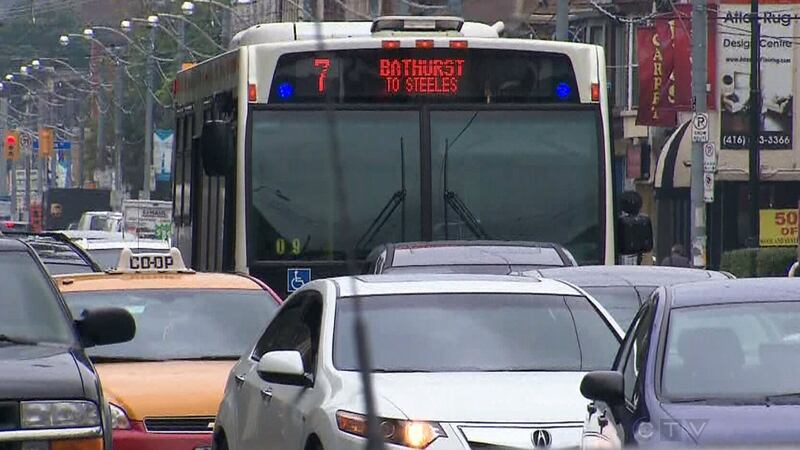
Enforcing existing traffic laws, particularly against drivers who block intersections and lanes, is another immediate step Abdulhai recommends.
Enforcement would fall under the purview of the Toronto Police Service, however.
He supports a “zero-tolerance” approach to effectively ease bottlenecks.
Could the traffic czar have actual power?
For the incoming traffic czar to succeed, Siemiatycki stressed that the city must avoid creating another bureaucratic position with minimal power.
“If it’s just another person that decisions have to go through, then it will not be effective,” he said.
Toronto’s experience with a “transit czar,” introduced in 2019, did little to streamline transit project decisions, he noted.
Abdulhai echoed that concern.
“This one person will not work alone. He or she will be the spearhead, but a larger team must be involved. And if enabled and authorized by council, they can be effective,” he said.
The city says the role will report directly to the Deputy City Manager and carry oversight of the Strategic Capital Coordination Office, responsible for coordinating capital projects and traffic mitigation across departments.
Road tolls: ‘if you charge... people will respond’
Both experts point to a politically sensitive solution that could help ease gridlock — that’s congestion pricing.
“If you wanted to address congestion in a serious way… we have to be talking about road tolls,” Siemiatycki said, noting similar measures have reduced traffic in cities like London, Stockholm, and New York.
However, while Toronto has floated the idea in years past, the political appetite for fit may be low.
In 2017, a proposal to toll the Gardiner Expressway and Don Valley Parkway was rejected by the provincial government. New Ontario legislation introduced in 2024 now bans tolls on provincial highways.
Though Toronto theoretically retains the power to toll its own roads under the City of Toronto Act, experts are skeptical such a measure will move forward without strong mayoral support.
Still, Siemiatycki says tough choices will be necessary.
“Cost is a key driver of people’s choices,” he said. “If you charge for something, people will respond.”
‘A tough job’
The new traffic czar role will launch in the coming months. But as Siemiatycki put it, “this will be a tough job.”
How much difference the role makes may depend less on who the city hires and more on how much power they’re given to act.
Correction
A previous version of this story stated that the traffic czar position still needs final approval from Toronto City Council. The position was in fact approved in April.

