


The four-member crew of Artemis II set a new record on Monday, travelling further away from Earth than any humans before them. But despite being hundreds of thousands of kilometres from home, they start each day with a familiar tune.
Since the mission launched on Wednesday, National Aeronautics and Space Administration (NASA) mission control has played the astronauts, among them Canadian Jeremy Hansen, a wake-up song after a period of scheduled sleep.
On Day 1, they heard “Sleepyhead” by Young & Sick, followed by “Green Light” by John Legend (feat. André 3000) on Day 2 and “In a Daydream” by Freddy Jones Band on their third Earth-day in space.
The crew was woken up to the 2020 hit “Pink Pony Club” by Chappell Roan on Day 4, but the recording stopped after about a minute, prompting Artemis II commander Reid Wiseman to let mission control know the crew was “all eagerly awaiting the chorus.”
Day 5’s wake-up call was “Working Class Heroes (Work)” by CeeLo Green, and on Monday, before the crew prepared for its record-setting lunar flyby, they heard “Good Morning” by Mandisa and TobyMac.
Tradition goes back decades
The tradition of waking astronauts up with music goes back to the mid-1960s.
According to a chronology of wake-up calls compiled by Colin Fries of the NASA History Division, the first ever wake-up song sent to space was a modified version of “Hello Dolly,” sung by American entertainer Jack Jones to the astronauts of the Gemini 6 mission in 1965.
Since then, songs have been played for astronauts across dozens of missions to space, including “I’ll Be Home for Christmas,” compositions by classical composers such as Johann Sebastian Bach, and “Rocket Man (I Think It’s Going to Be a Long, Long Time)” by Elton John.
In addition to music, NASA has woken up its astronauts with specially recorded messages from celebrities.
In 1988, actor Robin Williams woke the astronauts aboard the space orbiter Discovery with “Gooooooood Morning Discovery!!!” in the style of his “Good Morning Vietnam” film from a year earlier.
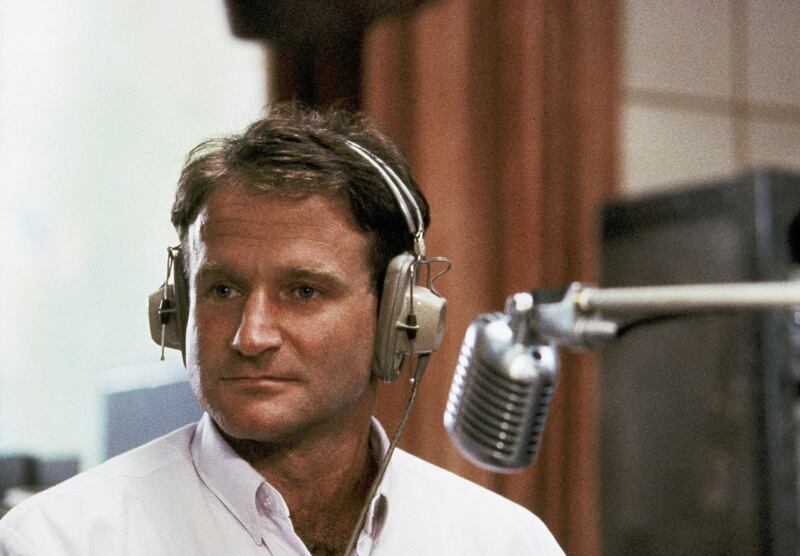
“People kind of forget that mission was the first mission since the Challenger accident, it was the first wake-up call, so (it was) to really kind of lighten the mood, almost,” NASA’s chief historian Brian Odom told National Public Radio (NPR) in the U.S.
Odom said the tradition, which is set to continue daily for Artemis II until the crew returns to Earth on Friday, helps to boost morale and allows astronauts to feel connected to home during space voyages.
“So, in a moment when they feel further away than they’ve ever felt,” he said, “they can be connected to family, they can be connected to culture; they can be connected back home in ways that only really music has a way to do.”

