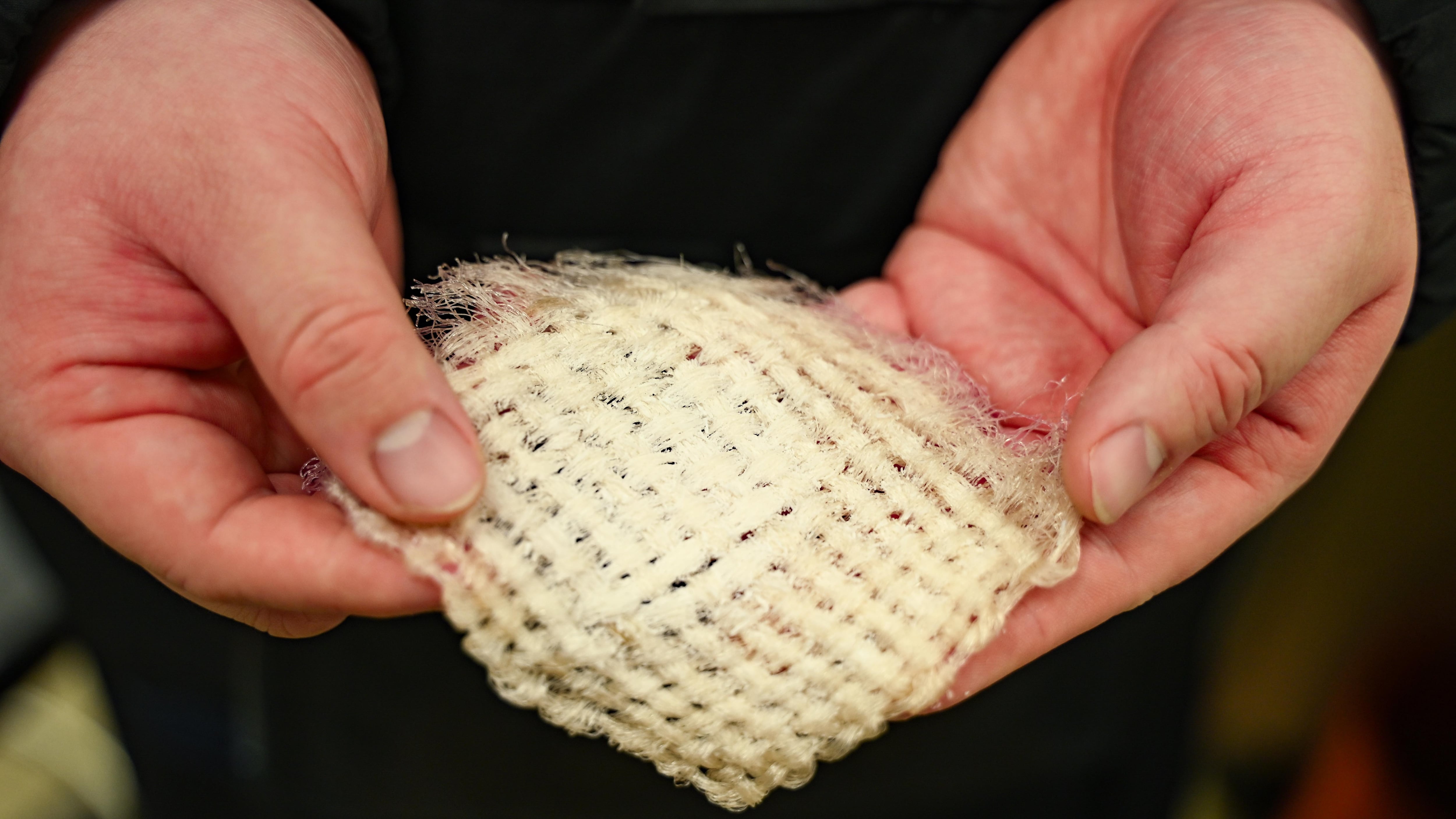
A team of engineers has created a jacket that can harvest drinking water directly from the air, a new wearable technology that could one day be used by campers, soldiers, agricultural workers, emergency responders and those who live in arid environments like deserts.
“Water harvesting from air is usually imagined as a stationary device such as a box,” University of Texas at Austin Prof. Guihua Yu said in a news release. “Here, we wanted to rethink the form of the technology. If the fabric itself can collect water from air, it opens a new direction for personal and portable water access.”
The textile in the jacket works by collecting moisture from the air and funnelling it towards a detachable harvesting unit that produces potable water when heated.
When the jacket was tested in arid parts of China and the comparatively humid environment in Austin, Texas, it was able to produce between 410 and 894 millilitres of water per day. In experiments, researchers say the new textile proved to be three to 10 times more effective than conventional water-harvesting materials, which usually involve bulky devices.
“The important advance here is that the team did not simply make another material that absorbs water,” study co-author and University of Texas at Austin chemical engineering professor Keith Johnston said in the news release.
“They designed a pathway for water to move quickly, from vapour in the air, to liquid on the fibre surface, and then into the textile. That transport design is what allows the material to work not just in a small lab test, but in a wearable system.”
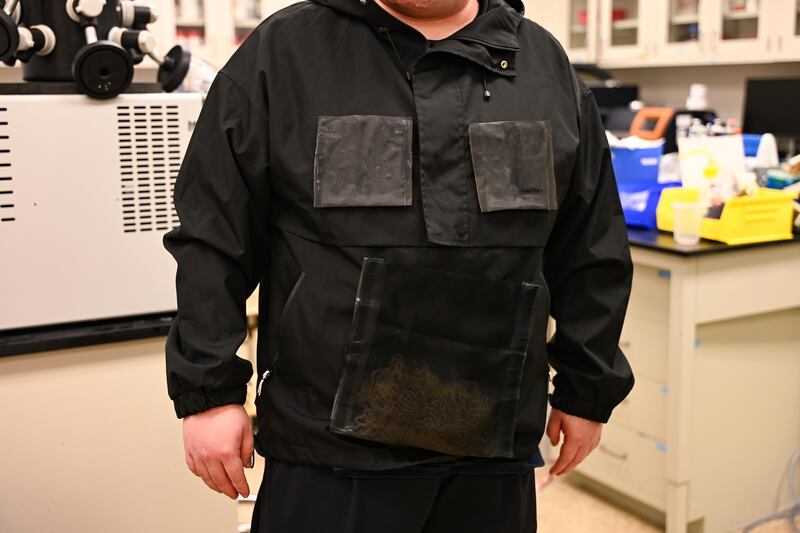
Beyond clothing, researchers say the textile could be used in backpacks, tents, emergency shelters and other outdoor equipment. The technology could one day benefit everyone from outdoor adventurers to disaster responders and those who live in dry regions and remote areas with limited infrastructure.
The new study was published last week in the journal Science Advances.
“Water scarcity threatens two-thirds of the global population, underscoring the urgent need for sustainable and accessible clean water solutions,” the study explained. “The atmosphere, with an estimated 12,900 trillion litres of water, represents an immense but underused reservoir capable of addressing this crisis.”

