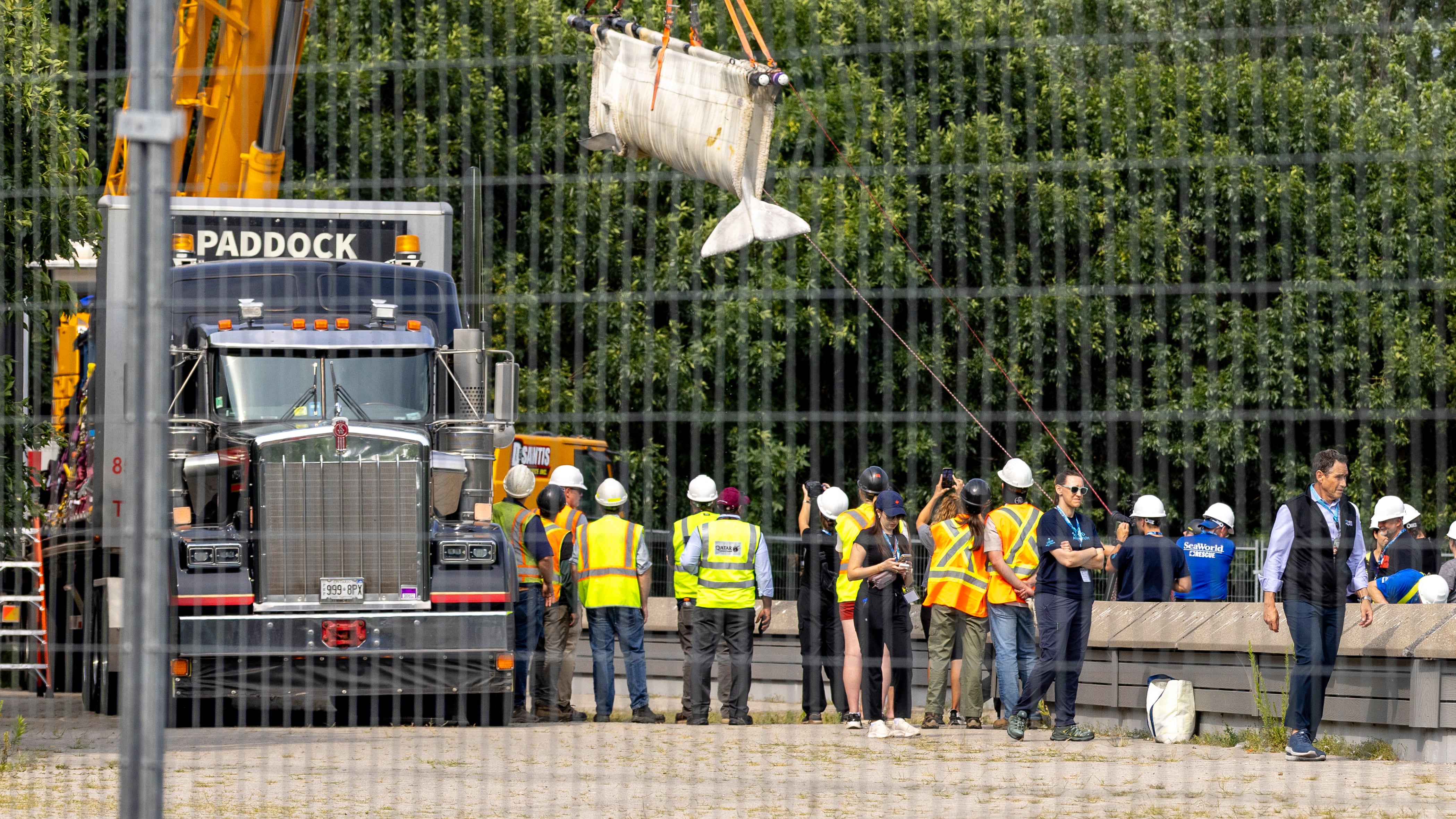
Marineland began relocating its whales and was set to ship six belugas on Monday to aquariums in the United States, in what the park called a major milestone in a complex process months in the making.
Andrew Burns, Marineland’s external legal counsel, said the move is “unprecedented.”
“It’s huge. This has required the ... sudden and critical attention of all of the leading marine mammal aquariums on the planet and a complex, co-ordinated response involving dozens and dozens of people putting all their time and attention into the logistics, the care, the management, the financing of all this in an extremely accelerated time frame,” he said in an interview Monday.
The shuttered Niagara Falls, Ont., tourist attraction tried last year to ship its complement of 30 belugas and four dolphins to an aquarium in China, but the fisheries minister blocked that move.
Marineland scrambled and struck a deal with a consortium of U.S. and Spanish aquariums, which co-ordinated a plan to move the whales.
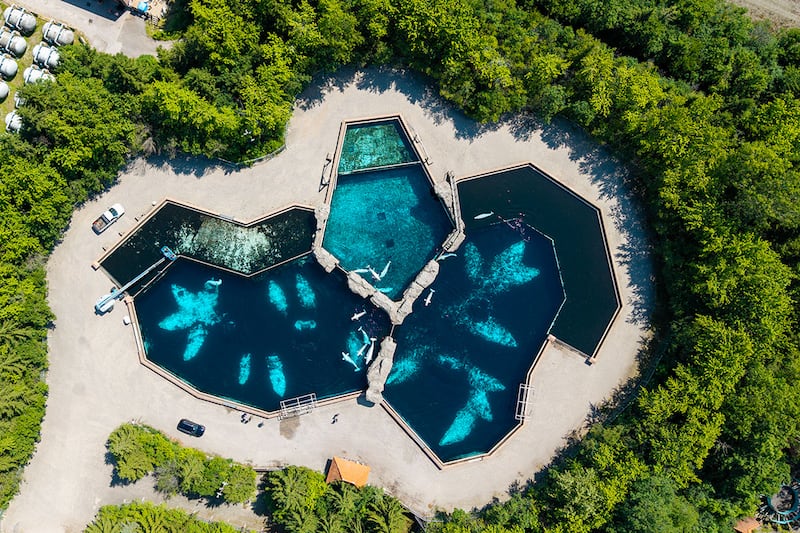
Ottawa endorsed the plan to send Marineland’s whales to five marine parks: Shedd Aquarium in Chicago, Georgia Aquarium in Atlanta, SeaWorld locations in San Antonio and San Diego and Oceanografic Valencia in Spain.
The U.S. parks are part of the Association of Zoos and Aquariums, which rallied to help Marineland after Ottawa nixed last fall a request for permits to export the whales to China.
In the wake of that decision by the federal government, Marineland made international headlines when it threatened to euthanize all of its belugas if it didn’t receive emergency funds.
Fisheries Minister Joanne Thompson marked the “first wave of the rescue mission at Marineland” in a statement on Monday, thanking the consortium of aquariums, the veterinarians and all organizations working to ensure the whales are transported safely.
Four of the whales being shipped Monday — belugas named Sierra, Acadia, Osiris and Lillooet — are headed to the Shedd Aquarium, while the others — Bertie Botts and Frankie — are going to SeaWorld in San Antonio.
Burns told The Canadian Press that all six whales will travel on one plane, on a flight expected to last an hour at most.
“What we’re doing is we’re breaking up these moves and the reason for breaking up the moves is because that way there can be more focus on a smaller number of whales to ensure that they get maximum care and attention,” he said.
The whales have been trained to go into a special pool from which they will be lifted and transported, Burns said.
The water will slowly be drained to a level where it barely covers the whales’ bodies while still keeping them safe and comfortable, he said. A team will then gently fit a special sling underneath each whale and, after checking the whale is feeling fine, bring up the sling so that it can be lifted with a crane, he said.
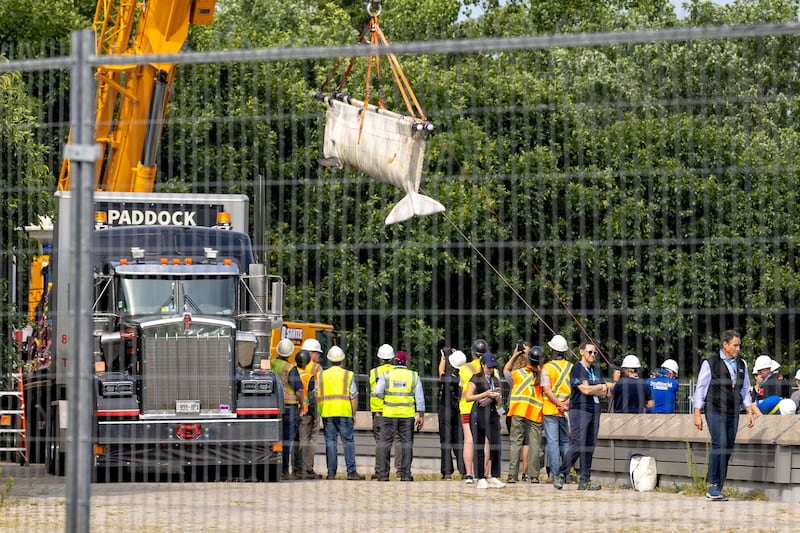
The whale is then lowered into a large transport container lined with a pool liner and “plush soft material” to act as a cushion, and partially filled with water, Burns said.
Once all the whales get a health check and are loaded, the convoy will head out, with police units and animal welfare services vehicles travelling with it, he said.
“The convoy includes the trucks that contain the whales plus, in case of any possible breakdown, there’s reserve trucks, there’s a crane, there’s medical teams, there’s vans with extra staff in it so that at any point on the journey, if anyone indicates a whale has any issue, we’re capable of stopping, we’re capable of treating the animal, we’re capable of turning them around and bringing them right back,” Burns said.
The convoy will move at a fixed, slow pace, avoiding any unnecessary inclines and declines all the way to the airport, he said.
Everything has been cleared in advance so the containers will go directly onto a lift that will take them on the plane, he said. The plane will take off at a “very careful rate” so it doesn’t disturb the whales, and will fly at a certain altitude to ensure they’re safe, he said.
“And they’re monitored and taken care of carefully the entire time,” he added.
The plane will then land carefully and the process will play out in reverse, he said.
Marineland said Monday “marks a significant milestone.”
“The international relocation of marine mammals of this size ranks among the most complex undertakings in animal care, demanding months of meticulous planning, specialized expertise, and precise co-ordination across borders,” it said in a statement.
The park said it’s “deeply grateful” to everyone who made the move possible.
“Above all else, the safe, healthy, and comfortable transfer of these whales to their new homes remains our unwavering priority,” it said.
A spokesperson for the Shedd Aquarium said in a statement on behalf of the U.S. coalition that experts taking part in the “complex rescue operation” are focusing on the whales’ comfort and safety.
“The group of accredited aquariums will share more details and updates as animals arrive safely to their new homes,” Johnny Ford said.
This report by The Canadian Press was first published July 20, 2026
Liam Casey, The Canadian Press

