A Canadian researcher is helping pregnant and postpartum soccer players keep playing the game they love.
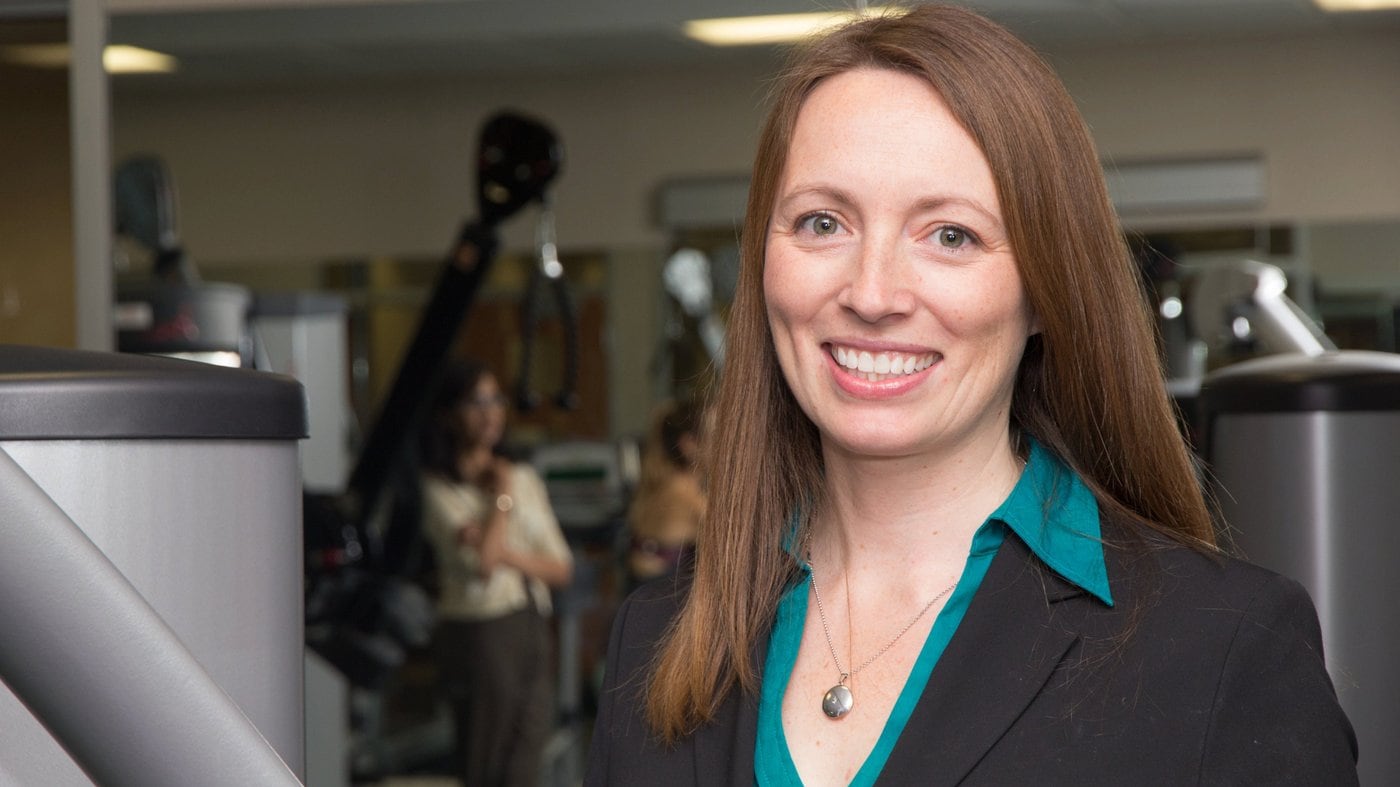
Margie Davenport, a professor in the University of Alberta’s faculty of kinesiology, sport and recreation, is one of the experts behind a new set of FIFA decision guides aimed at helping athletes figure out how to play and train safely during and after pregnancy.
Research shows that staying physically active during pregnancy can reduce the risk of complications such as gestational diabetes, pre-eclampsia and hypertension, and is linked with lower rates of depression.
There are guidelines for the general public on how much and what kind of exercise is safe, but those aren’t always useful for high-level soccer players, Davenport said.
“Athletes have always said they don’t know how to take that very vague information and apply it on the day-to-day basis on the field,” she said.
Davenport, a mom of two and former synchronized swimmer for the Canadian national team, started working with FIFA about three years ago to help create educational content for athletes around fertility, pregnancy and the postpartum period.
She saw gaps in the information available for elite players when it came to physical activity, and — working with experts in Hamilton, Ont., and the United Kingdom — she analyzed existing scientific research on what’s safe during and after pregnancy. The research team also looked at what barriers a high-level athlete might face, and used that information to create the new guidelines.
“When we talk about athletes, typically what we see is that most athletes are told to reduce their volume of activity across pregnancy,” Davenport said. ”Many athletes so strongly identify as an athlete; you take that sport away from them, it can cause a lot of stress, anxiety, uncertainty in terms of what they can do. And so helping to maintain their training in pregnancy supports their physical and mental health.”
Using the tools, the athlete answers a series of questions that help assess any health conditions they may be dealing with, and evaluate their mental health, fear of movement and pelvic health.
Then, working with their doctors, coaches and other support staff, a player can use the guideline’s flow charts to determine what physical activities might be right for them and how exercises can be modified.
The new guides aren’t linear and don’t include timelines for when an athlete can or should be limiting or returning to training, Davenport noted, treating every player’s experience as unique.
“That’s reflective of what pregnancy and postpartum are like. It is a very fluid time where you might feel phenomenal one day and not so phenomenal the next,” she said.
While there have been many stories in recent years of professional athletes having kids, then returning to the field, court or ice just months later, that’s not always the case.
“What we don’t hear enough about are the women who haven’t been able to (return to sport) because of a lack of support, because baby’s not sleeping and you feel terrible,” Davenport said. “So this guide is really designed to help support all women, and give a guide to be able to figure out how to return in a safe, evidence-based way.”
Davenport and her colleagues worked with amateur, semi-professional and professional players, coaches and support staff, and doctors around the world to develop the guidelines.
Now that they’ve been released, the response from the same groups has been “incredible,” she said.
“Since this has been released, I know that there are a number of pro players who are actually following it,” Davenport said. ”And it just really helps to reduce the uncertainty in terms of what you can do in some ways and acknowledge and be OK with the flexibility of the postpartum.”
The next step of the project will be to go and test the tools and see how effective they are at supporting athletes during and after pregnancy.
Davenport is already working with five other sports federations, including the Women’s Tennis Association, to adapt the guides for different sports.
As women’s professional sports become more mainstream and more athletes become moms, these kinds of tools will be increasingly important, she said.
“I think that we’ve had for a really long time this idea that women are quite fragile during pregnancy, and we’ve had a lot of caution about what can or should be done in terms of training,” Davenport said. ”But over the last, especially five or six years, we’ve had an explosion of athletes who are returning or staying in sport while they’re pregnant and returning in the postpartum.
“We’re also seeing an explosion of research that’s coming out to support the types of training that they’re doing. So the need for this type of work has always been there, but it’s become glaringly obvious over the last couple of years.”
This report by The Canadian Press was first published July 21, 2026.
Gemma Karstens-Smith, The Canadian Press

