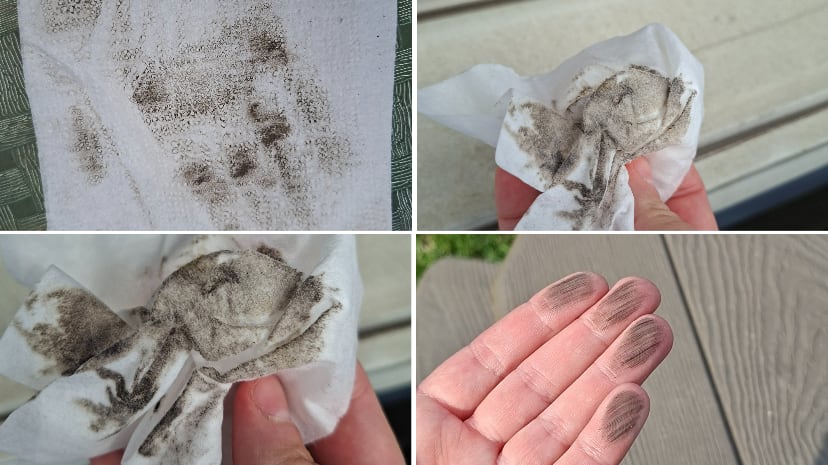
Numerous Hamilton residents woke over the July 4 weekend to find their homes, cars, and nearly every outdoor surface covered in a familiar nuisance: a layer of black, powdery and sticky substance.
Black carbon, commonly referred to as soot, is a carbonaceous aerosol produced through the incomplete combustion of carbon-based fuels.
The pollutant has been a familiar concern for Hamilton residents, who have reported recurring deposits of the dark, sticky substance on their properties.
The increase in soot deposits across Hamilton in recent weeks has raised concerns among residents, with the city councillor for one industrial neighbourhood telling CTV News that she has received “significant amounts” of complaints from residents about the problem.
In an interview with CTV News, Hamilton resident Gillian Stanley stated that the soot has become a regular part of life.
“It’s hard to describe unless you’re living here and you actually see the fallout coming. It’s very annoying and alarming. It feels so dirty and grimy and all-encompassing.”
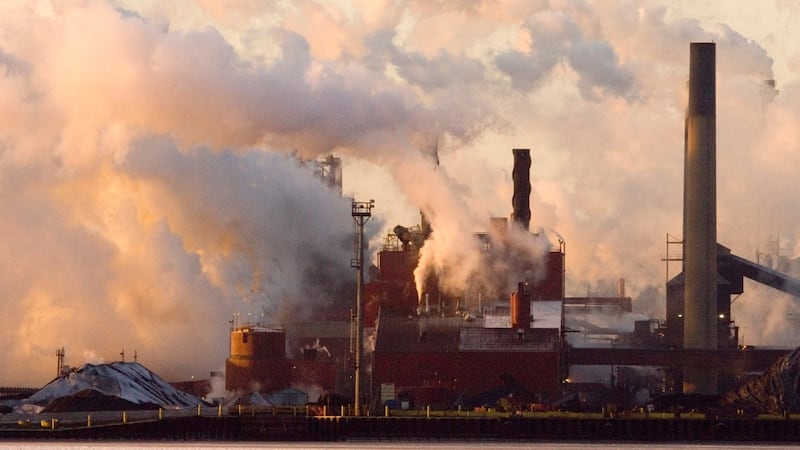
The source of the soot has not been confirmed. However, some residents suspect it originated from emissions at one or more of the city’s north-end industrial facilities, which include steel manufacturing plants, chemical processing facilities and other factories.
Last week, CTV News published a story about growing concerns over the soot deposits affecting Hamilton, asking residents to share their experiences.
- Soot has covered a Hamilton neighbourhood and the local councillor says the problem is getting worse
Stanley has lived in Hamilton for just over five years. Her home is within walking distance of the city’s main industrial sector. She said the soot has coated both the interior and exterior of her home.
“My house is white, and when the soot lands, I have to spray and wash it frequently,” she said.
“Inside the house, there’s soot too. I have to keep my windows shut. I bought the most expensive HEPA air purifiers I could find and put one on each level to try to keep the indoor air quality reasonable.”
Stanley said that because of the buildup, she and her family stay indoors on particularly bad days.
“I was convinced that I had environmental allergies — grass, trees. But it turns out it’s just good old pollution,” Stanley said.
Jane Jamnik, a Hamilton resident for six years said that her deck has been covered in the dust and has also affected her day to day.
Jamnik said that she previously a “beautiful white deck” but said the soot was like “thick car grease that wouldn’t come off” once it landed.
“Tonight would be salsa down at the pier there in Hamilton. I’m not going out there,” Jamnik said. “I don’t know what this stuff is.”
“I have a calendar filled with things I’d like to do this summer. I haven’t gone cycling since this thing happened.”
Soot Health implications
In a statement to CTV News McMaster University Associate Professor of Medicine Jeremy Hirota said it is possible for soot particles to travel into the lungs depending on their size.
“The smaller the particles, the more they migrate down into the lungs and the deeper parts of the lungs. Deep enough, there are limited ways in which the lung can clear these particles, which can result in an inflammatory response,” he said.
Hirota noted that individuals with pre-existing health conditions, such as asthma or chronic obstructive pulmonary disease, can be at greater risk in the short term of flare-ups of existing health problems.
According to Hirota, long-term effects of prolonged exposure are often harder to determine, any short-term health problems “will at minimum persist on a long-term scale — and potentially compound to create a chronic and or persistent challenge with breathing.”
“I have no idea what’s in the substance. You know, is it in my lungs? Is it going down my throat? I certainly feel really (sick) in my throat, as do many residents. If I do run some errands and go around, I can feel it,” Jamnik said.
“I don’t want to be bombarded by chemicals. I’ve been scared since I moved here because of the smell of the chemicals. It’s very strong when these factories go off and smoke is in the air.”
Hundreds of complaints sent to the Ministry of the Environment
In a press release, Robin Lennox, the NDP MPP for Hamilton Centre, said 475 complaints were filed with the Ministry of the Environment, Conservation and Parks over a nine-day period following the recent wave of soot deposits.
In a statement to CTV News, Gary Wheeler, a spokesperson for Ontario’s Ministry of the Environment, Conservation and Parks, said that “Ministry staff have conducted inspections and collected environmental samples, and laboratory analysis is ongoing.”
“Until that work is completed, it would be premature to draw conclusions regarding the composition and potential sources of the reported emissions.”
Stanley said she hopes her questions will be answered, adding, “Maybe somebody can figure out a solution. I don’t know what to do. I’m looking for answers.”

