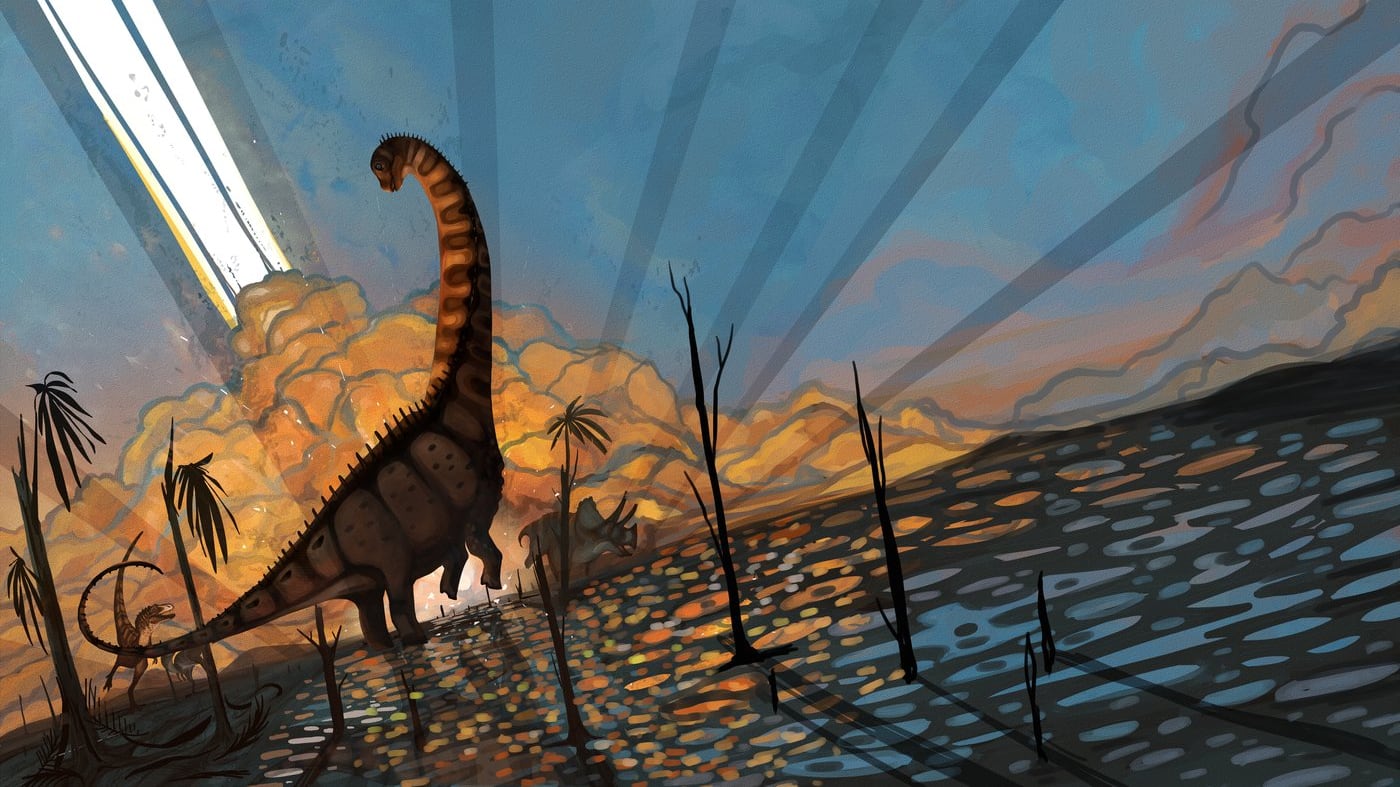
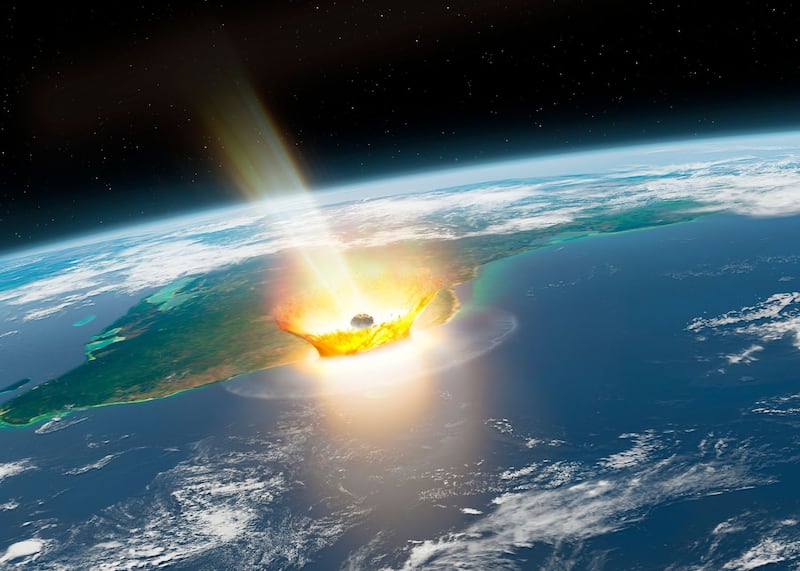
A giant asteroid that slammed into Earth 66 million years ago may have done more than trigger earthquakes and towering tsunamis. New research suggests it also wrapped the planet in a heat-trapping blanket of dust that effectively baked much of the surface, leaving few places for life to escape.
The findings offer fresh insight into how the impact that formed the Chicxulub crater near Mexico’s Yucatan Peninsula became a global extinction event that may have wiped out roughly three-quarters of Earth’s species, including most dinosaurs.
The study, conducted by researchers at Purdue University and published in the Journal of Geophysical Research: Biogeosciences, concludes that an enormous cloud of fine dust trapped heat in the atmosphere after the impact, dramatically raising temperatures worldwide and fuelling widespread wildfires.

A planet covered by heat
Lead author Brandon Johnson said the asteroid’s tremendous energy did not end with the initial collision.
“That much kinetic energy has to go somewhere and eventually it is converted to heat,” he said. “With the dust cloud trapping thermal radiation, it was like the surface and everything on it was being charbroiled.”
Johnson said the blast itself was devastating near the impact site, but it was the planet-wide cloud of debris that transformed the disaster into a mass extinction.
“Without the dust cloud, it would have been bad. It would have killed a lot of creatures. But it wouldn’t have been a planetary catastrophe.”
Tiny particles, enormous consequences
Earlier research showed the impact blasted more than 1,000 cubic kilometres of rock and other material into the atmosphere.
Some of it cooled into tiny rock droplets called spherules, which fell back to Earth while generating additional heat.
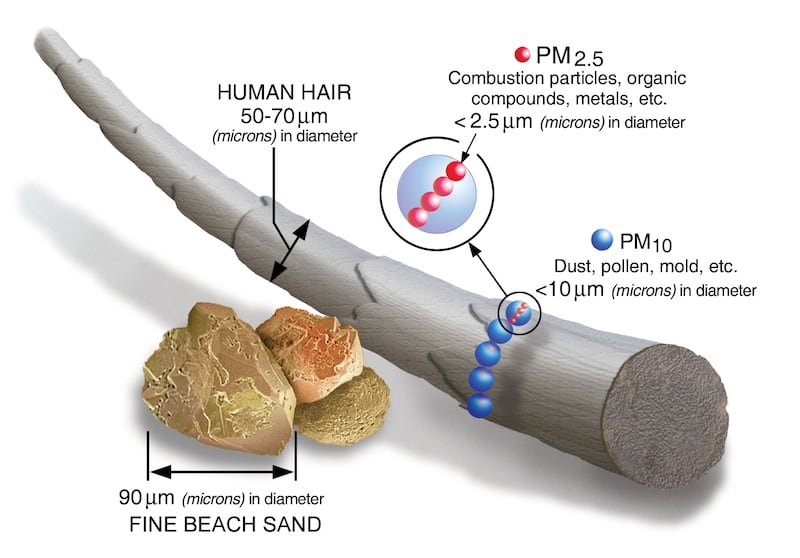
The new study focused on much finer dust particles, measuring about 2.5 micrometres across. Researchers found the dust formed a nearly impermeable layer that prevented heat from escaping into space, instead sending it back toward the surface.
According to the study, animals unable to shelter underground or underwater would have faced extreme temperatures. The researchers estimate some Cretaceous-era animals received thermal radiation doses far beyond what would be lethal to humans today.
Johnson described the conditions in stark terms.
“It probably looked more like Hell than like Venus.”
Lasting effects beyond the heat
Co-author Alexandria Johnson, who studies clouds and atmospheric particles at Purdue, compared the ancient dust to the fine smoke particles produced by modern wildfires.
“We found that the cloud layer was so impermeable that it trapped almost all of the heat from the falling spherules near the surface of the planet. The dust is essentially acting like a lid on a pot,” she said.
The researchers say the fine dust may have remained in the atmosphere for years or even decades. Besides trapping heat, the particles could have posed long-term health risks to any surviving animals because they were small enough to be inhaled deep into the lungs.
The study suggests the combination of extreme heat, global wildfires and lingering atmospheric pollution helps explain how a single asteroid impact reshaped life on Earth and ushered in the end of the age of dinosaurs.