TORONTO – The effects of climate change are impacting Canadians even more than scientists predicted less than a decade ago, according to a new report released this week.
Canada’s Changing Climate Report, released on Thursday by Environment and Climate Change Canada (ECCC), is a collective effort of about 100 scientists and roughly 1,500 pages long that took three years to compile.
The article highlights multiple concerning trends. Warming temperatures are driving a wide range of “interconnected, and sustained changes across Canada,” the report said, going on to add that “the warming and associated changes in climate in Canada are effectively irreversible.”
“Canadians need to prepare themselves for the fact that by the end of this century, most of the glaciers in western Canada will be gone,” ECCC modelling director Chris Derksen said. “That’s an important water supply, it flows from west to east across the country.”
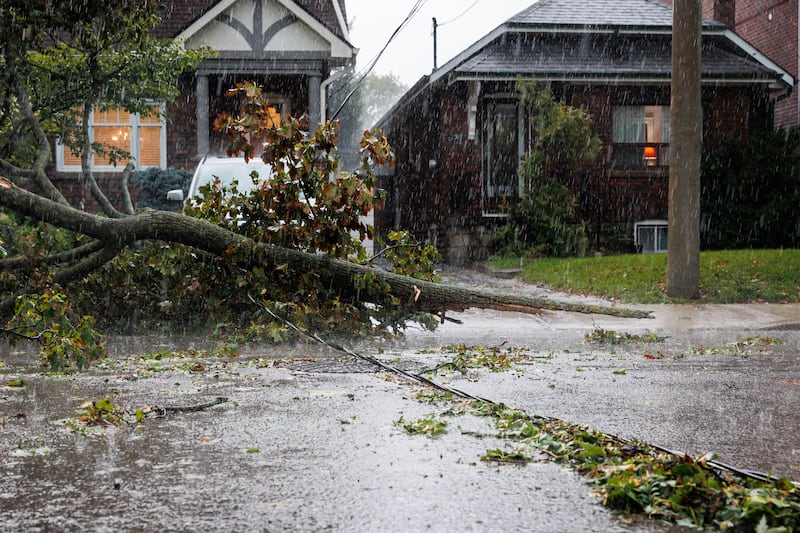
This week, Toronto and parts of southern Ontario were hammered by a violent storm that ripped seats out of Rogers Stadium and left thousands without power. It’s a perfect example of what we can expect moving forward, according to scientists who spoke to CTV News.
“The event we just had here on Wednesday in Toronto is a great example of the types of events that we very clearly say in the report are tied to the magnitude of global warming,” shared Derksen.
Scientists who contributed to the paper shared their concern that a report of this magnitude was quietly released by the federal government.
The last time a similar report was shared in 2019, it went public with a press conference. This week’s edition was released the Thursday before a long weekend.
Requests to interview federal Environment, Climate Change and Nature Minister Julie Dabrusin were declined. A statement from her office says in-part that: “Our government is moving with urgency to fight climate change, while working together to build the energy security, industrial capacity, and strategic autonomy that will define this century for Canada.”
In late June, Prime Minister Mark Carney conceded that the country won’t meet its 2030 greenhouse-gas emissions targets, instead extending the deadline to 2050. The global goal is to limit warming to well below two degrees.
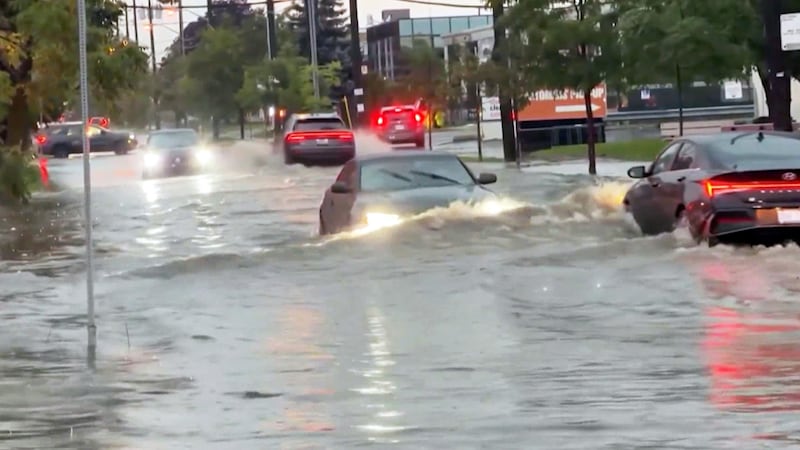
Damon Matthews, a professor and climate scientist at Concordia University in Montreal, who is one of the report’s many co-authors, says that Ottawa and global policy makers simply aren’t doing enough to save the plant from larger climate catastrophes.
“The current policies we have globally and here in Canada are not consistent with meeting that temperature target. As a result, right now we’re looking at more intense climate events and damaging storms on the horizon,” said Matthews.
“Droughts and flash floods will become more frequent and severe with additional warming. Summer droughts are projected to become longer and more intense and occur more frequently in central and southern Canada,” the report also said. “Increases in the frequency and intensity of atmospheric rivers (in high emissions scenarios) and of extreme rainfall will lead to more frequent and intense flash flooding.”
Though Derksen says that the world is still in partial control of its climate destiny, if net zero greenhouse gas targets are reached, warming won’t decrease, but it will stabilize.
“If we continue on a path towards more warming, we should expect the size of the forest fires in Canada to increase in size,” he said. “If we get a handle on warming, then we can decrease the size of forest fires and the severity of weather events across the country.”
The report outlines that if there were no climate policies, we could expect warming to increase 6.9 degrees and the areas burned by wildfires could climb 287 per cent. Under net zero, warming stabilizes after 2050 and reaches 3.5 degrees.
The report is clear: the Earth’s warming is largely a consequence of humans burning fossil fuels, coal, oil and gas.

