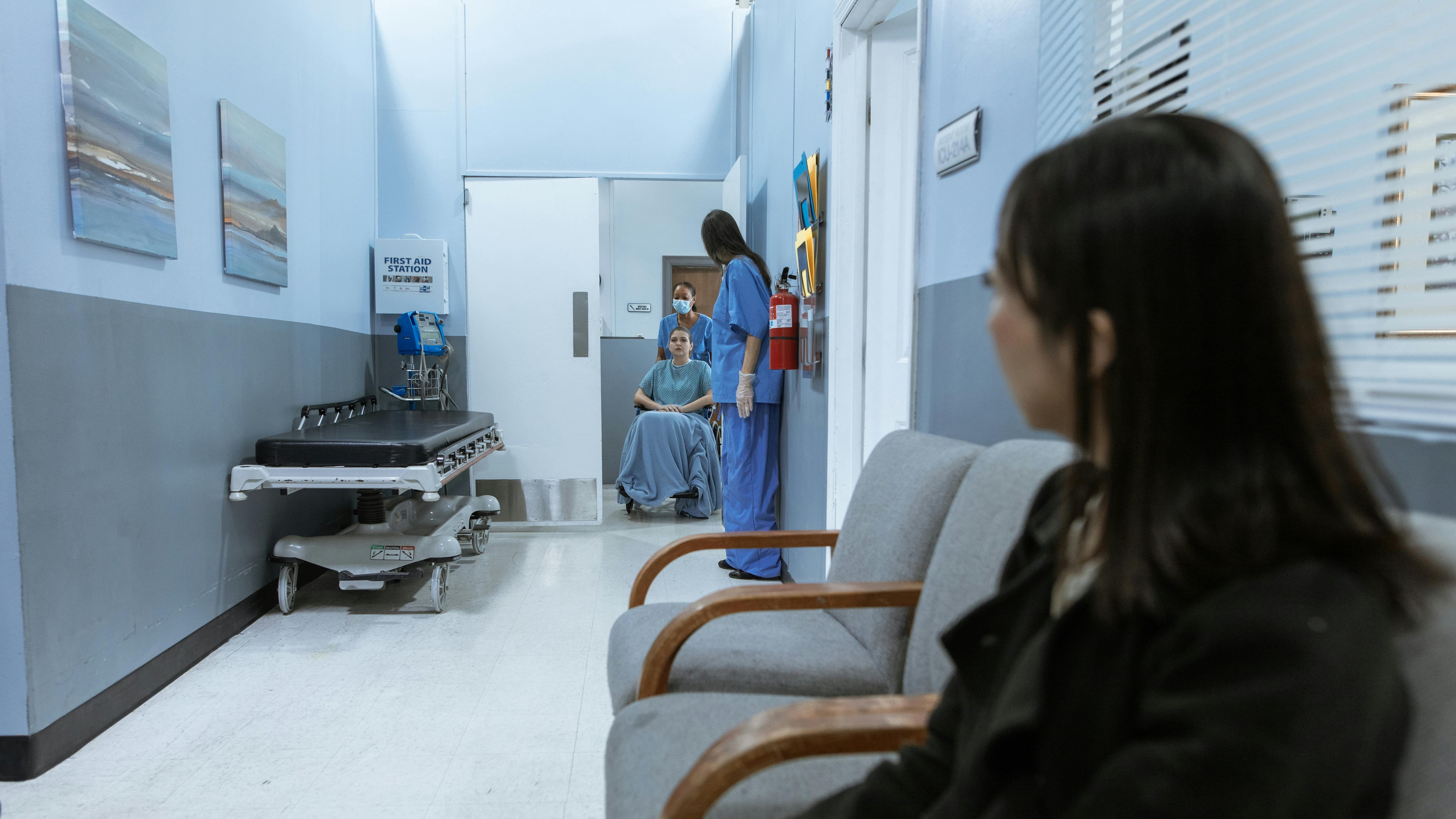
Quebecers waited an average of five hours and 23 minutes to be seen in the province’s emergency rooms last year, finds a new report by the Montreal Economic Institute (MEI).
“These long wait times are not just numbers — they represent real Canadians who face delays in receiving critical care that cause needless pain or distress,” said Emmanuelle B. Faubert, an economist at the MEI and author of the report. “In all the provinces, wait times are worse today than they were five years ago, a clear sign that our health care systems are struggling to provide their patients with timely access to care.”
According to the report, an average patient visiting a Quebec emergency room in 2024 spent 10 minutes longer waiting than they would have the previous year.
This also represents a one-hour increase over the past five years.
“With patients in Quebec having some of the longest emergency room visits in the country, it’s clear that things need to change,” said Faubert. “It’s important to note that, while this is the province’s median, patients in some parts of the province are unfortunately having to wait even longer for emergency medical care.”
The longest emergency room stays in Quebec were in Laval (eight hours), the Laurentians (seven hours and seven minutes) and the Montérégie (six hours and 55 minutes).
The Pavillon Albert-Prévost mental health emergency room in Montreal topped the list of longest lengths of stay at 13 hours and five minutes.
The second longest was the Royal Victoria Hospital (10 hours and 33 minutes) at the McGill University Health Centre (MUCH) in Montreal and Anna-Laberge Hospital (10 hours and 26 minutes) in Châteauguay on the South Shore.
“Having to spend long hours waiting in an emergency room may be the norm in Quebec, but in other developed countries, it isn’t,” noted Faubert. “It’s clear that solving the issue of long wait times requires looking at best practices from abroad, such as Europe’s mixed systems, to finally give patients the timely access they deserve.”
Faubert says she looked to France as an example of how to improve care in Quebec, and in particular, the country’s immediate medical care centres.
“These...are independent clinics that specialize in handling lower priority cases, or minor non-life-threatening emergencies,” the report notes. “These types of emergencies could be bone fractures, wounds that need stitches, infections, flu and other ‘non-vital’ emergencies.”
Faubert adds that these clinics, a doctor-led initiative, are not only equipped to provide care but also include infrastructure that allows them to perform blood tests and imaging on-site.
“The point of these clinics is to offer patients a point of access to care that differs from large hospital emergency rooms,” the report notes, adding that the main benefit of this model is that it lightens the pressure on regular hospital emergency rooms.
In comparison to Quebec’s five-hour and 23-minute wait times, the report found that average ER stays across the country last year were as follows:
- British Columbia: four hours and 13 minutes
- Alberta: three hours and 48 minutes
- Saskatchewan: no data provided
- Manitoba: four hours
- Ontario: four hours
- Newfoundland and Labrador: two hours and 45 minutes
- New Brunswick: four hours 28 minutes
- Prince Edward Island: four hours 36 minutes
- Nova Scotia: no data provided

