James Moore is a former federal cabinet minister under prime minister Stephen Harper, and a columnist for CTVNews.ca.
Choosing to be a politician is, I am heartbroken to say, a dangerous decision. And the dangers are more constant, passionate and persistent than ever.
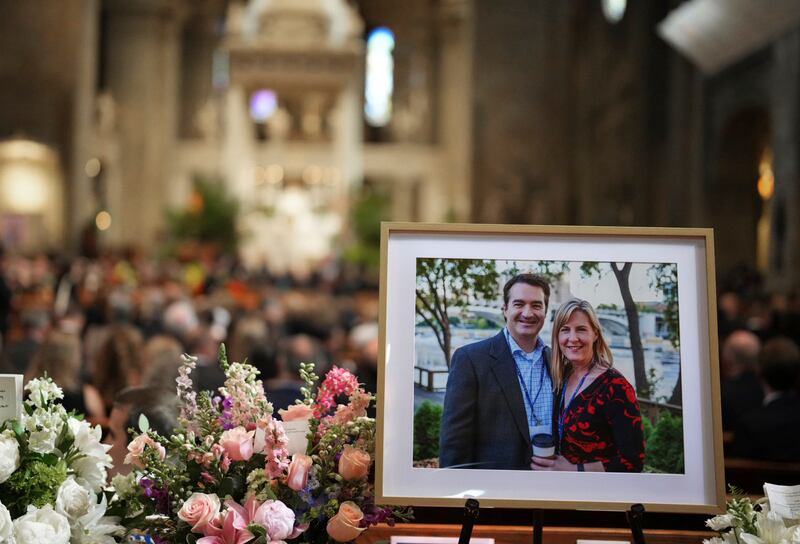
It was just over three weeks ago that Minnesota House Speaker Melissa Hortman and her husband were assassinated by a deranged political opponent.
Last week, B.C. Infrastructure Minister Bowinn Ma appeared to be targeted when an explosion struck her office. No one was physically hurt, an investigation is ongoing, but this wasn’t a random event at an arbitrary office. This was political violence.
Next week will mark the one-year anniversary of the near assassination of U.S. President Donald Trump as he campaigned in Western Pennsylvania. Even though he was surrounded by some of the most sophisticated and well-armed protective services in the world, it is said that but for an inch of differentiation of marksmanship, flinch or windage, he would have been assassinated. Corey Comperatore, a 50-year-old married father of two, was struck and killed that day, and two others were badly wounded.
Last September, former NDP leader Jagmeet Singh was harassed outside of Parliament Hill and almost got into a physical confrontation and Conservative Leader Pierre Poilievre has been subject to death threats and public threats against his wife triggered an RCMP investigation. And three years ago, an infamous video surfaced of Minister Chrystia Freeland being verbally assaulted and confronted by a large and aggressive goon during a visit to Grande Prairie.
I remember an event back in January of 2014 in Vancouver, when then-prime minister Stephen Harper was speaking at a luncheon hosted by the Greater Vancouver Board of Trade that exposed the fragility of our security arrangements for political leaders. That day, all was going well at the luncheon until suddenly four protesters took over the event and managed to find their way into a supposedly secured room, on a supposedly secured floor, in a supposedly secured building, on a supposedly secured street entrance for the Prime Minister of Canada.
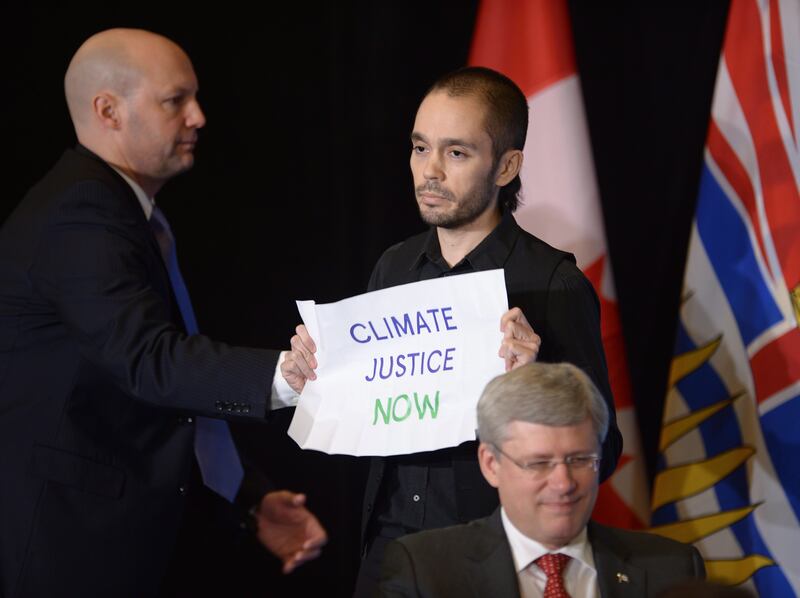
They got within two feet of Canada’s prime minister, stood over him menacingly, and, thankfully, merely held up a sign that read “climate justice now.” But if they had violence on their mind, that day could very easily have been tragic. We were lucky, we were not prepared. I fear that our luck is running out and that we are still not prepared.
Increasing threats
We have example after example that are exposed day after day after day. Ask any Member of Parliament, or any member of a provincial legislature, or almost any mayor or high-profile public office holder (like our Medical Health Officers during COVID) about the threats they have received, and you will begin a long, frightening and appalling conversation about the state of incivility, crudeness, viciousness and fear that happens regularly.
And, yes, it is getting worse. The Parliamentary Protective Service in Ottawa, the Sergeants-at-Arms of almost all our provincial legislatures — who are tasked with the security of the legislatures — have all reported increases in threat counts and their severity. The RCMP and other police services regularly report the same.
These threats are getting out of control. I have worried for a long time, and many others who have served in public office will agree, that it feels like we’re on a trajectory for a tragedy. Most people feel that another serious violent attack, perhaps a deadly one, is only a matter of time. The trend of our politics towards ugliness, personal destruction, excessively aggressive language, seemingly constant confrontation, and fear and anger as a magic catalyst for that precious voter turnout is all on a course for tragedy.
So, what can be done?
Fortunately, we are increasingly aware and awake of the problem. Parliament Hill’s security was shaken to the core and forever changed as a consequence of the October 2014 shootings that left Cpl. Nathan Cirillo dead, a member of the House of Commons security team with a gunshot wound, and an entire capitol traumatized.
The security around the prime minister, our premiers, federal party leaders, provincial opposition leaders has been increased, and not just when they’re on Parliament Hill or at their respective provincial legislatures, but when they are out in public or at home. But even with these improvements, most people would be shocked to know how little security many of our political leaders have.
When they appear at public events, they are extraordinarily vulnerable. I often find it very uncomfortable at times seeing how close people can get to our prime minister and premiers without being challenged or screened in any meaningful way.
Cabinet ministers, legislators and others in public office should be furnished with panic buttons, security systems, cameras, and, if necessary, physical security whenever it is warranted. These tools are available and affordable and can make many situations significantly less threatening. They should all be made available wherever they are not already.
Further, staff members need to be trained in crisis management, communication and risk mitigation. Too often they are vulnerable and alone to disturbing confrontations and they need to be supported.
Finally, political parties have a significant role to play in protecting and supporting their candidates. We need to tell people who are eager to run for office that running for office is not for the faint of heart. Political parties try to lure people into running by upselling the privileges and the opportunities to serve in public life. What they fail to typically tell candidates, out of the fear of losing an attractive political prospect, is that they are entering into a world that is increasingly dark and potentially dangerous.
They need to be told the truth about the cruelty of social media and what they may be exposed to. And, most importantly, political parties need to support their candidates, mentor them, and protect their candidates when they don’t feel safe.
For Canada to be successfully and effectively governed, we need to draw into public life the best and the brightest, the decent and kind, the substantive, the energetic and the empathetic.
It is becoming more difficult with every passing election to find people of high quality who are willing to run for office. We must do a significantly better job of recognizing the growing reality of political violence and taking all necessary steps to protect our democracy.

