Unions representing federal workers say Canadians will bear the cost of expected cuts to the public service as Prime Minister Mark Carney’s government prepares to tighten the belt and find savings in day-to-day operating costs.
CTV News learned Monday that federal ministers have been asked to find 7.5 per cent savings for the 2026-27 fiscal year that begins on April 1, 2026 followed by 10 per cent in 2027-28 and 15 per cent in 2028-29 in an effort to find “long-term savings,” a promise Carney made during the election campaign.
“I’m very concerned by this announcement. The prime minister promised caps and not cuts and it definitely feels like the public service workers are going to be bearing the brunt of this,” Sharon DeSousa, president of the Public Service Alliance of Canada (PSAC), told CTV News Ottawa on Tuesday.
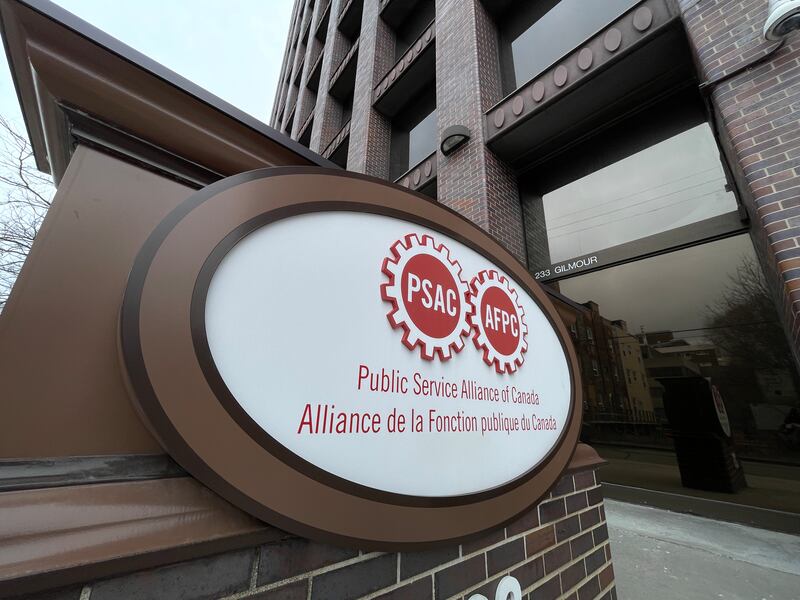
“We need to be working together. The government needs to work with its workers and unions and not around them. I think there’s a better approach then the same old lazy austerity measures.”
PSAC and other unions received a briefing from the federal government on Tuesday outlining the expenditure review called by the federal government.
DeSousa says she wished the government had consulted with workers and unions before announcing the measures, saying workers know where gaps and efficiencies can be found to cut costs.
“There’s no obligation to consult, so once again, we have department heads making decisions and that’s what worries me the most is that you’re not consulting people with expertise that are actually doing the jobs,” she said.
Carney has pledged a slate of spending measures aimed to boost affordability and defence. It includes a middle-class tax cut and a $9.3 billion to meet NATO’s defence spending target of two per cent of GDP by this fiscal year. During the federal election, Carney had promised to find savings from “increased government efficiency” with $6 billion in savings in 2026-27 and $13 billion a year in 2028-29.
A report from the Canadian Centre for Policy Alternatives says $13 billion in savings will “mostly be in personnel expenditures in non-defence departments,” amounting to a 24 per cent cut in government spending. It suggested Carney’s election promises could bring about the “worst cuts in modern history” to the federal public service.
The move comes as the federal government prepares a 2025 budget set to be tabled this fall.
Canadian Association of Professional Employees (CAPE) president Nathan Prier said arbitrary austerity measures” would undermine the workers who will carry out the government’s wishes to build major nation-building projects.
“When governments make big promises to Canadians, public sector employees are the ones who deliver on them. And when ideological governments directly undermine their productivity, Canadians ultimately suffer the consequences,” Prier said in a statement.
“Mark Carney’s current proposals are another rehash of the last Liberal government – arbitrary austerity measures completely disconnected from the question of who is going to deliver on his promises to Canadians.”
Prier said the union is advocating for cost-cutting measures that don’t “attack” the federal workforce and seeks changes to “bloated” management ranks, dependence on private contractors and reiterated a desire to reduce the public service’s real estate footprint by allowing workers to work from home.
A report from the C.D. Howe Institute released last week said it projects Canada’s deficit could top $92 billion this fiscal year alone, in part due to the government’s defence spending commitments.
William Robson, who serves as the CEO of the C.D. Howe Institute, believes it’s possible the government can make savings in its operating spending without degrading the quality of public services.
“When you look at a lot of things that the federal government does and you look at the increased in spending that occurred over the last decade and the increased in headcount over the last decade, its not obvious there’s any direct connection between the costs of operating the federal government and the quality of the services that we’re getting,” he said.
Robson is calling on the government to make steeper cuts to program spending and reduce federal transfers to provinces.
“If you’re going to have these very expensive traditional defence commitments, you need to either look at a source of revenue that isn’t personal or corporate income taxes or you have to look at spending cuts,” Robson said.
“Something has to give.”
Statistics released by the Treasury Board of Canada Secretariat in the spring show 357,965 people worked for the federal government as of March 31, down from 367,772 people in 2024.
With files from CTV News Ottawa’s Austin Lee and CTV’s Stephanie Ha

