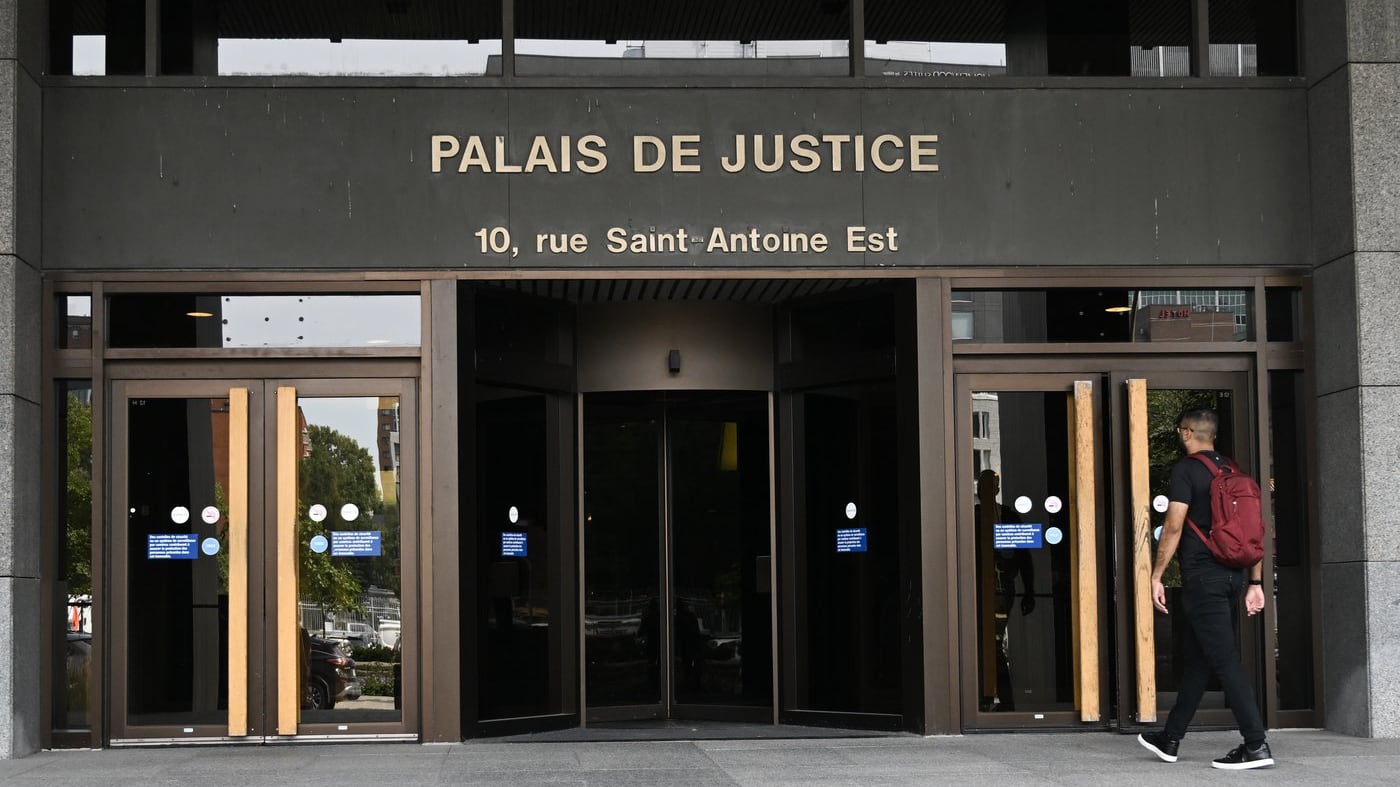
A major drug trafficking case in Montreal could be in jeopardy after it was revealed that the prosecutor working on the file had an intimate relationship with one of the co-accused’s defence lawyers.
The case stems from an operation by Quebec provincial police, which announced in January 2024 that they had carried out 25 raids and busted an illicit online cannabis trafficking network.
The raids resulted in the arrest of 10 suspects and the seizure of 155 kilograms of bulk cannabis, more than 3,000 cannabis plants, nearly $500,000 in cash and $18,000 in cryptocurrency.
The accused were suspected of having conducted 70,000 transactions totalling $15 million through an illegal network with links to Montreal organized crime.
Pre-trial hearings in the case are still underway. However, the case could be thrown out after a member of the defence team alleged an abuse of process after learning of a personal relationship between Crown prosecutor Alice Bourbonnais-Rougeau and defence lawyer Mathieu Rondeau-Poissant.

‘I panicked’: prosecutor in court documents
The personal relationship, first reported by La Presse, is detailed in court documents, which shows that in May 2025, Bourbonnais-Rougeau had initially denied the relationship with one of the accused’s lawyers before later admitting it.
“In the heat of the moment, I panicked,” she said, according to a summary of her admissions obtained by CTV News.
“I lied to [my supervisor] to take the time to discuss it with other people.”
She said “it wasn’t done maliciously” and later realized that she put herself in a conflict of interest.
The relationship started in December 2024 and ended last May, according to court documents. She revealed that “during occasional dinners, there were a few instances of physical intimacy.”
Some of the defendants are now alleging that the personal relationship would prejudice the fairness of the trial.
Bourbonnais-Rougeau is a prosecutor with the Bureau of Major Crimes and Special Cases (Bureau de la grande criminalité et des affaires spéciales), which handles “cases deemed special due to their complexity, scope, sensitivity, or societal interest.”
In her defence, she said that she has “never disclosed or received any privileged information” related to the drug case.
Both Bourbonnais-Rougeau and Rondeau-Poissant did not respond to requests for comment on Friday.
In a motion filed in court, the Directeur des poursuites criminelles et pénales (DPCP) stated that “given that both [Bourbonnais-Rougeau] and [Rondeau-Poissant] are no longer involved in the case, there is no risk of prejudice to the integrity of justice.”
Hearings on the abuse of process claim are scheduled to begin Aug. 20.
Operation ‘Postcure’
Rondeau-Poissant had represented David Keith Bishop, one of the co-accused in the SQ operation called “Postcure.” He is facing charges of selling cannabis to an individual who is 18 years of age or older under the Cannabis Act, laundering proceeds of crime under the Criminal Code, and possession for the purpose of trafficking under the Controlled Drugs and Substances Act.

According to the SQ, police seized several buildings, bank accounts and vehicles valued at about $7 million. The investigation was led by the ACCES Cannabis program, an initiative created in 2018 and funded by Quebec’s Ministry of Public Security that brings together the SQ, Montreal police and several other police forces to combat cannabis smuggling in the province.
The Postcure investigation was “the biggest case we’ve worked on since the inception of ACCES Cannabis at the SQ,” said Lieutenant Daniel Mc Coy at the time.
The operation was a collaboration of the SQ, Montreal police, and the the Financial Transactions and Reports Analysis Centre of Canada (FINTRAC).
It’s not the first time that Bourbonnais-Rougeau has faced legal trouble. On May 19, 2023, she was found guilty of driving a motor vehicle while impaired by alcohol and of hit and run. Court records show that she struck a parked vehicle on April 24, 2021.
She appealed the decision to Superior Court, but the court upheld the conviction last year. She later appealed to the Quebec Court of Appeal, which has yet to render a judgment.

