The country’s top naval officer says “there is a path” for the federal government to decide which company will replace Canada’s aging submarine fleet by the end of the year.
Canada’s four submarines are nearly 40 years old and will become obsolete in about a decade. The Victoria-class submarines are no longer being made, and it’s difficult for the military to get parts.
Only one of the four submarines is operational. Two are undergoing maintenance, and another is being used for training.
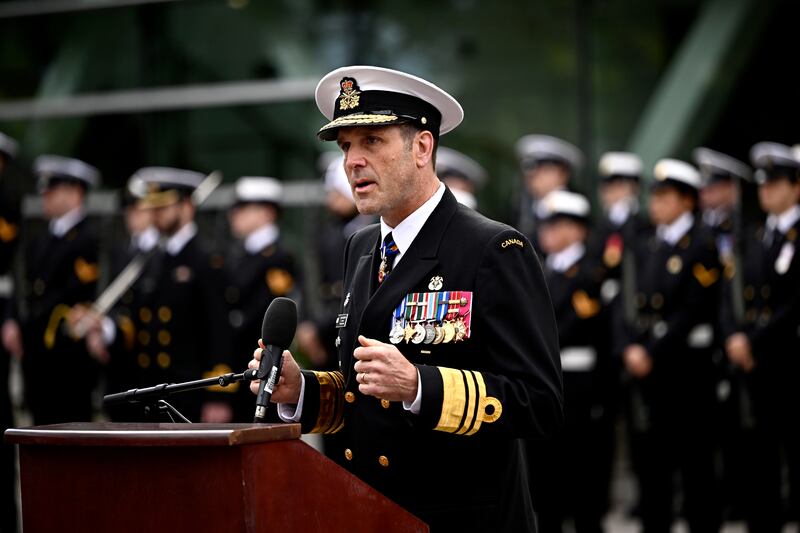
“It means we have three oceans to defend and one we can cover because we’ve struggled to get these submarines operational,” said Vice-Admiral Angus Topshee, commander of the Royal Canadian Navy.
“We absolutely need submarines to make sure that we can control who comes into our waters, including in the Arctic.”
The federal government currently plans to select a submarine provider by 2028, but in an interview with CTV National News, Topshee said the navy wants to accelerate the timeline by getting the government a shortlist of “two or possibly three” proposals so it can make a decision within months.
“I believe that there is a path for us to be able to get the information to government, for them to make a decision about the right submarine for Canada by the end of this year. That’s a very aggressive timeline, but it is achievable.”
No American option
When the government launched a process to acquire 12 conventional diesel-electric powered submarines last year, five military contractors responded to the government’s request for information.
American defence contractors are not in consideration, because the U.S. only manufactures nuclear submarines, which are much more costly than conventional vessels.
The companies in contention are from France, Spain, Sweden, South Korea and a joint venture from Germany and Norway.
Topshee said several companies are able to meet the navy’s requirements and that he fully expects the government to leverage the deal to boost the Canadian economy. The submarine contract is expected to be in the tens of billions of dollars and last several decades.
“What is that country prepared to give us if we make this sizeable investment in their business?” Topshee says the final decision could be based on non-military factors like “the lowering of trade barriers, access to markets and a commitment to invest in Canada.”
In a statement to CTV News, the minister responsible for defence procurement, Stephen Fuhr, said that the government is “now assessing RFI (request for information) submissions and engaging with officials from allied and partner countries, as well as companies and navies in Europe and Asia.”
Fuhr said the government is committed to “significantly increasing the capabilities of the Canadian Armed Forces, including through a new submarine fleet with a contract award anticipated by 2028 or sooner.”
To protect commercial confidence, the minister said there won’t be further comment at this time.
Rapid response
When the request for information came out last year, South Korea’s Hanwha Global Defence made an unsolicited pitch. In documents seen by CTV News, Hanwha said that it could deliver the first submarine to Canada by 2032, if a contract was signed by 2026.
Mike Coulter, the CEO of Hanwha Global Defense said the vessel the company wants to sell Canada is under production now at its massive plant in Geoje.
“We produce ships and submarines at (rate of) 40 plus ships and submarines a year. These are these same ships and submarines in operation right now by the Korean navy. So we have a high confidence level that we’ll be able to meet our target date,” Coulter said in a zoom interview from Seoul.
Hanwha’s proposal to build 12 submarines is costed at between $20-25 billion and covers initial training, technology transfer, testing and delivery.
Coulter says the Hanwha also plans to open a sales office in Ottawa later this summer and has signed deals with approximately 15 Canadian companies to use their technology.
“We are offering not just to sell Canadians submarines, but to build out a large, robust supply chain of Canadian partners,” said Coulter.
The intangibles
David Perry, the President of the Canadian Global Affairs Institute, has visited Hanwha’s massive shipbuilding facilities.
Perry says the scale of the facility is premised on for military readiness in the country rooted in the Korean War and its proximity to its enemy.
“Seoul is within range of North Korea has been levelled by North Korea, so (South Korea) maintains a high capability production of what they need.”
But while Hanwha has a “demonstrated track record of being able to deliver quickly,” it doesn’t have much of a commercial history with the Department of National Defence.
Perry notes that Canada has purchased military equipment from French, Swedish and German companies but “it hasn’t had a significant sale” with the South Koreans.
Those factors could play a role in deciding who will be awarded what is expected to be the biggest military procurement project the country has embarked on.
Once a submarine provider is chosen, new infrastructure like dockyards will have to be built on the east and west coasts and in the Arctic. Hundreds of people will need to be trained to maintain the new submarines in a project that will requires tens of billions of dollars over several decades.
Other intangibles could also arise. This is the first time Canada has gone on the open market to purchase submarines.

