After 50 years, Jonathan Hooker made an emotional journey home to Manitoba to reconnect with his Indigenous heritage and family.
“I always knew I was adopted,” said Hooker, who arrived in Winnipeg Wednesday afternoon. “I guess up until a couple of years ago, I didn’t understand how it played out.”
Hooker arrived to an airport terminal filled with his biological family and members of the Indigenous community.
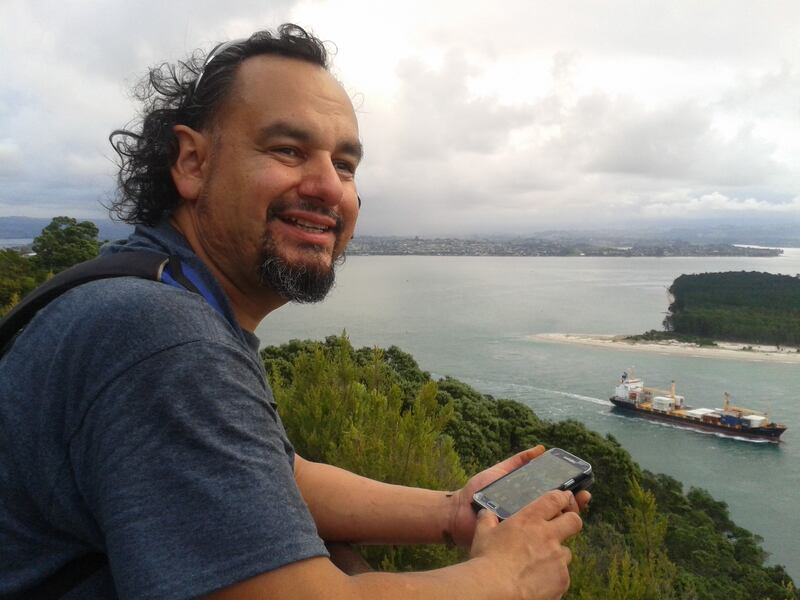
He says he was going through a lot of emotions coming down the escalator.
“A bit overwhelming to be here today, so yeah, it’s pretty cool,” he said. “It’s been quite the journey.”
Hooker’s return home began with an ancestry test, which was gifted to him by his mother-in-law. Within six months, he was contacted by his half-sister, who is living in Texas, and has since met her and his biological uncle.
Hooker, who has lived his life in New Zealand, made it back to Canada several years ago, but was never able to locate his birth mother, until now.
“It’s actually the first time I’ve laid eyes on my mother,” he said emotionally.
Hooker is from Mosakahiken Cree Nation, also known as Moose Lake, in northern Manitoba. In 1975, at just 18 months old, he was taken from his home during the Sixties Scoop and was adopted by a white middle-class family in Manitoba. The family subsequently moved to New Zealand shortly after.
‘I’m happy to see him’: Hooker’s biological mother
Hooker’s biological mother Patsy George has dreamed of this moment ever since he was taken away.
“I thought I would never see him again,” said George. “He was only two months old when they took him away from me and my other daughter, a month old.”
George hasn’t seen her son since he was taken away in 1975, and didn’t know what he looked like.
“I only saw him when he was two months old,” she said. “I couldn’t believe it when he climbed down the (escalator) stairs.”
George was visibly emotional, wiping tears away from her eyes as she was talking about her son. She says she only recently found out that her son was married and had kids of his own.
“One day, I am going to go and see my grandkids,” she said. “If I can even make it that long. I am having a hard time too.”
‘This is a moment to celebrate’: Manitoba Grand Chief
An estimated 30,000 Indigenous children were taken from their homes between the early 50s, all the way to the early 90s. This was a government operation known as the Sixties Scoop.
Many were removed from their families and placed into non-Indigenous homes across Canada and around the world.
Manitoba Keewatinowi Okimakinak (MKO) Grand Chief Garrison Settee says it’s a moving experience to have “one of our own finally come back to our territory and to our people.”
Settee says reunions like this need to happen, as there are many families out their who don’t know where some of their loved ones are.
An estimated three thousand Indigenous children were taken outside of Canada, but how many have returned home is unknown.
“There is hope for a lot of people all over the world that are searching for their families, and this is one of those examples,” said Settee.
“Jonathan was taken 50 years ago,” he said. “He was deprived of his language, his culture, and his identity. This is a new journey for him, a new beginning, where he can reconnect with his family, his community and his nation.”
MKO, Southern Chiefs Organization (SCO), and Anish Corporation were able to help fund the trip for Hooker and his wife to come to Manitoba.
Sixties Scoop advocate Coleen Rajotte says bringing Hooker home was extremely important and hopes this can set a precedent for future reunions.
“We need to make sure that everyone of those children can come back home, reconnect with their family and communities and know their family,” she said.
Hooker will be spending three weeks in Manitoba and will be returning to his home community of Moose Lake First Nation in the first week of September.
He hopes his story will help others in his situation.
“Hopefully someone else will see this and hopefully maybe start looking for their family and get clues to start reaching out,” he said.
“Through this journey, I have been able to open up and actually talk about how I am feeling.”

