
The head of the Archdiocese of Montreal says Quebec’s plan to table legislation to ban praying in public is an impractical and discriminatory affront to fundamental freedoms.
Archbishop Christian Lépine published an op-ed in La Presse Monday morning reacting to comments from Minister Jean-François Roberge last week when he announced plans to introduce a new bill in the fall prohibiting the practice, in a bid to further strengthen the province’s laws on secularism.
Praying, whether in public or alone, is a right that is not limited to places of worship and is guaranteed by the Canadian Charter of Rights and Freedoms, the Quebec Charter of Human Rights and Freedoms, and the Universal Declaration of Human rights, Lépine wrote, adding that anything that would outlaw it “would amount to reducing the freedom of society as a whole.”
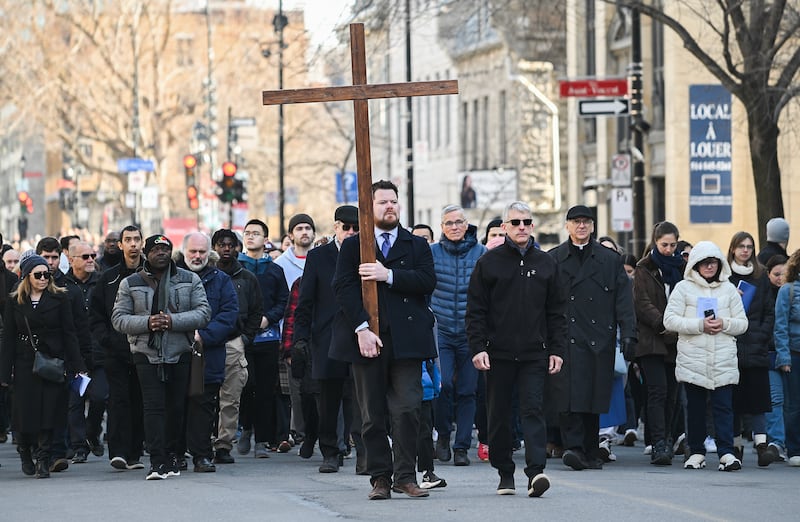
He also raised questions as to how prayer would be distinguished from a moment of silence or silent meditation. A ban would jeopardize longtime Catholic traditions held in the public spaces, he noted, such as the Way of the Cross and the Palm Sunday march.
“Banning public prayer would compromise their very existence,” the archbishop wrote in his opinion piece.
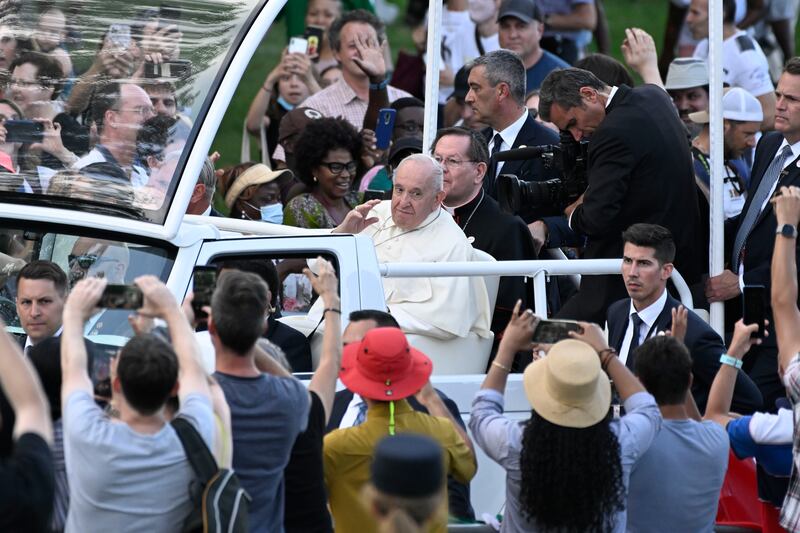
“Need we remind you that Pope Francis’ visit in 2022, an event of global significance, would not have been possible in a context where public prayer was banned? And yet, this visit took place in an atmosphere of respect and peace.”
Roberge, the minister responsible for secularism, announced the proposed ban last Thursday, which came amid some tension in Quebec over Muslim prayers taking place as part of pro-Palestinian demonstrations, including those held in front of the Notre-Dame Basilica of Montreal, to draw attention to the worsening humanitarian crisis in Gaza.
“The rise of street prayers is a serious and sensitive issue in Quebec,” Roberge said in a written statement. “Last December, our government expressed its unease with this growing phenomenon, particularly in Montreal.”
Muslim groups have denounced the Quebec government after Roberge’s comments, saying they feel targeted once again by the province’s secularism laws.
“The idea that somehow prayer in the street is a new thing or a dangerous thing is absurd,” Stephen Brown, the CEO of the National Council of Canadian Muslims, told CTV News on Friday.
Brown says when it comes to pro-Palestinian demonstrators, organizers have permits to allow them to use the space. “What are we going to start doing in Quebec? Mandating that you get your messaging approved by the government before you’re given a permit to go protest?” he said.
In his Monday op-ed, Lépine wrote that Quebec’s moves to make the province more secular should not spell the end of faith in society.
“Confusing the neutrality of the state with the neutralization of society would be a serious step backward,” he wrote.
“In a democratic society like ours, diversity of beliefs is not something to be feared; it is welcome and contributes to the richness of Quebec, with its strong culture of dialogue and encounter.”
When reached Monday morning, Roberge’s office declined to comment on the op-ed.
The minister’s announcement also came days after a committee released a report with 50 recommendations on how the Quebec government could strengthen secularism. The report stopped short of recommending a province-wide ban on prayers in public places, stating that the measure should instead be left up to individual municipalities to decide.
Côte-Saint-Luc Mayor Mitchell Brownstein applauded the move from the province.
“Municipalities know their communities best, and we certainly would not allow it to happen blocking the street or in other situations. It has to be reasonable,” he told CTV News last week.
However, both Brown and Tom Mulcair, a political analyst and former NDP leader, believe the proposed prayer ban is a political move, one that they claim is meant to please the Coalition Avenir Québec (CAQ) base amid poor performance in the polls.
With files from The Canadian Press

