Tuesday was the first day back at Holland College, but this semester brings fewer options for those attending, which the school links to Canada’s cap on international students and recent rules for post-graduation work permits.
Earlier this year, Holland College suspended eight programs and downsized three others in response to reduced enrolment. Some were tied to P.E.I.’s biggest sectors, including tourism and hospitality.
“There’s financial issues, social issues, cultural issues,” said Alexander (Sandy) MacDonald, president of Holland College.
MacDonald pointed to recently introduced rules for getting a Post-Graduation Work Permit (PGWP). For international students in many college-level programs, PGWP eligibility now depends on graduating from fields that Immigration, Refugees and Citizenship Canada (IRCC) ties to long-term labour shortages. He said Ottawa determined that several affected programs do not fit that list.
“That’s not what our industry tells us. I’m getting letters from the industries, and the associations and operators themselves,” MacDonald said. “And it begs understanding, because the idea that there’s no labour shortage in these areas is simply untrue.”
Graduates with a bachelor’s, master’s or doctoral degree are exempt from the field-of-study requirement, meaning most university students are not affected by that specific PGWP filter.
Separately, the federal government set a two-year cap on most new international study permit applications, announced in January 2024. IRCC projected more than 360,000 approved permits in 2024, roughly 35 per cent below the 2023 total, and set a 2025 allocation of 437,000, about 10 per cent below 2024.
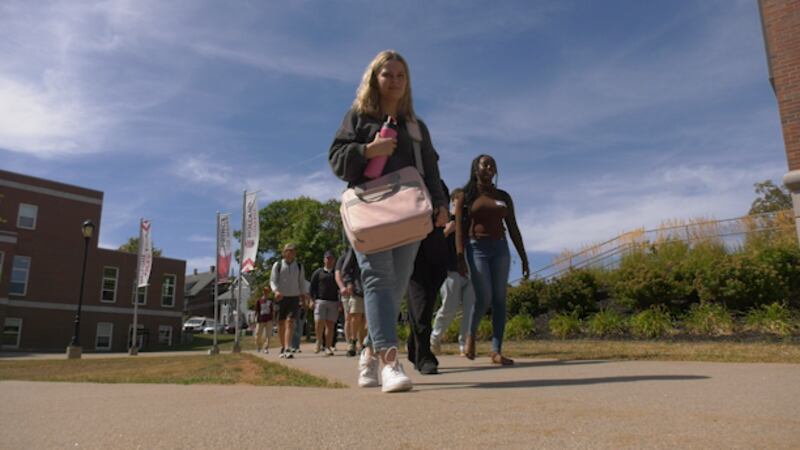
Across Atlantic Canada, education experts say the drop has an outsized effect.
“They’re our future professionals, business leaders, community leaders, health-care professionals,” said Peter Halpin, executive director of the Association of Atlantic Universities. “They’re just so important to the development of our region.”
Halpin said campuses in the region lean more heavily on international students, and so do employers who are grappling with an aging population.
In a statement to CTV News, an IRCC spokesperson said the aim of the PGWP is to “create a pipeline of international student graduates whose skills match the country’s long-term economic and labour needs.”
The spokesperson added eligible fields include health care, social services, education and the trades.
As for the cap, Ottawa has previously cited housing and affordability concerns.
“The annual growth in the number of international students couldn’t be sustained while ensuring students receive the support they need,” the spokesperson said.
Most applicants must now include a provincial or territorial attestation letter with their study permit application. The letter confirms the applicant has been assigned a space under that province or territory’s allocation.
Canada’s auditor general has launched a review of the international student program. The report is expected to be presented in parliament in 2026.

