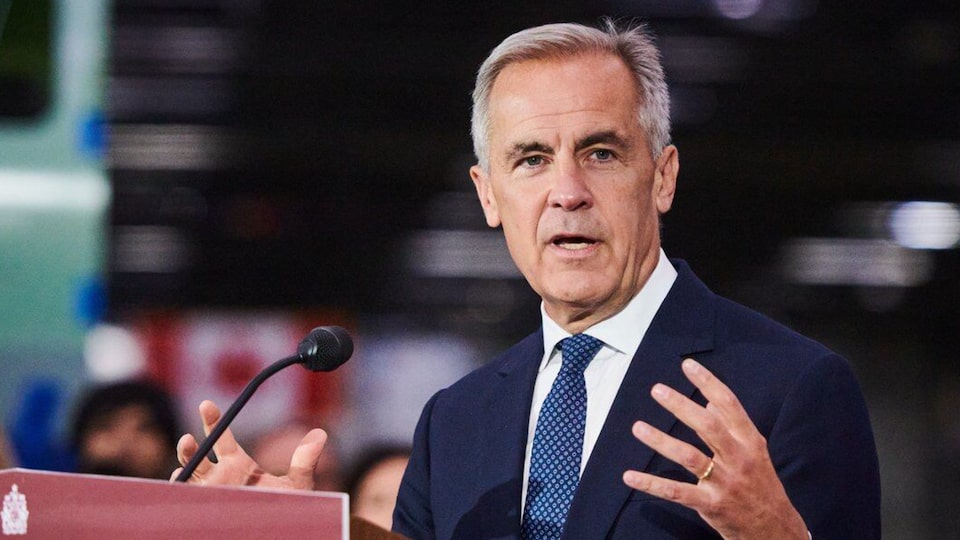
Prime Minister Mark Carney is pausing the federal government’s 2026 electric vehicle (EV) target and launching a review of the overall mandate as part of a new strategy to support sectors impacted by U.S. President Donald Trump’s tariffs.
Carney made the announcement on Friday in Mississauga, Ont., following a two-day cabinet planning forum this week that was largely focused on the economy.
“Our relationship with the United States, so essential for so many industries, was once one of our greatest strengths, and in many cases, in certain sectors has become a vulnerability. This disruption calls for a bold new approach,” Carney said.
Multiple government and industry sources shared the details of the federal government’s “sector-based” strategy to CTV News prior to Friday’s announcement.
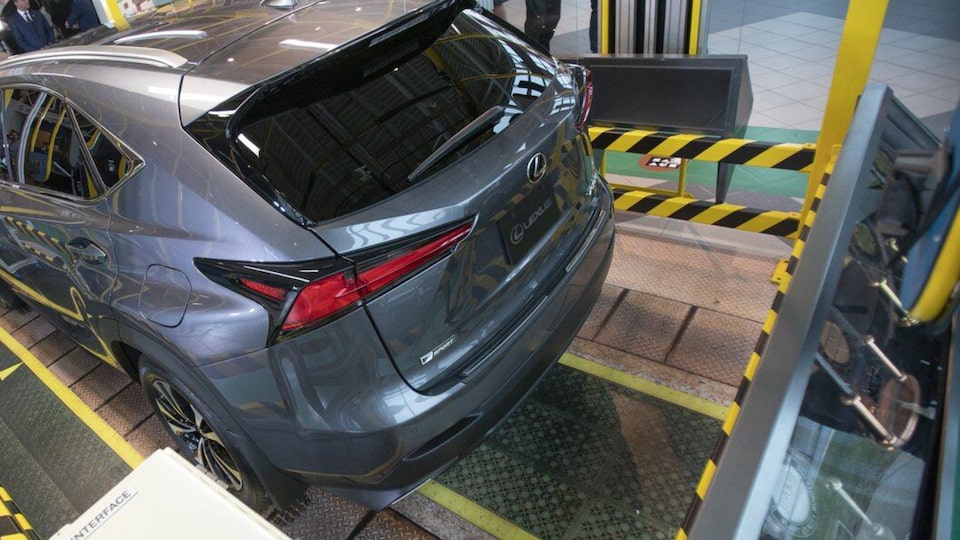
As part of the strategy, Canada’s 2026 target for 20 per cent of light-duty vehicle sales be zero-emission will be paused, and an immediate 60-day review of the EV mandate will also begin.
Asked by reporters whether the EV sales mandate will be scrapped altogether, Carney wouldn’t answer directly, but said automakers have “enough on their plate right now.”
“We’ll look at the interaction between the EV mandate, our clean fuel standards, our investment tax credits, our trade policy, all of those elements, because what this government is focused on is absolutely results,” Carney added.
Some automakers have criticized the current plan to achieve 100 per cent zero-emission vehicle sales by 2035 in the wake of Trump’s auto sector tariffs.
The 2026 EV target pause is another shift away from the climate agenda under former prime minister Justin Trudeau. Carney effectively eliminated the consumer carbon price earlier this year.
In Ottawa on Friday, Conservative Leader Pierre Poilievre accused Carney of flip-flopping on a policy he previously endorsed.
“He’s finally admitted that the Conservatives were right, just like we were right on the carbon tax,” Poilievre told reporters.
“But he’s doing a clumsy retreat, saying that he’s going to delay this mandate. So now, businesses who would otherwise consider investing in auto making here in Canada, will have to put that investment on hold.”
Friday’s announcement also includes a “Buy Canadian” policy when it comes to procurement and funding at all federal institutions. The government aims to have full implementation by spring 2026.
Other elements of the strategy include:
- More loan flexibility for businesses impacted by tariffs
- New support measures for workers laid off due to tariffs
- The launch of a $5-billion Strategic Response Fund to help businesses adapt to the new economic landscape
- The development of a trade diversification strategy aimed at increasing Canadian exports to overseas markets to 50 per cent by 2030
- Providing more than $370 million over two years to help domestic canola producers through new biofuel production incentives
- And, intentions to make targeted amendments to Clean Fuel Regulations
Canada-U.S. trade war
Canada and the U.S. have been in an ongoing trade war since February, when Trump imposed sweeping tariffs on Canadian goods, claiming they were related to border security. Those were later scaled back to apply only to goods not covered by the Canada-U.S.-Mexico Agreement (CUSMA).
But, in the months since, the U.S. president has stacked significant additional sectoral tariffs on steel and aluminum, copper and autos.
Carney has recently faced criticism from some premiers and federal Conservatives after dropping many of Canada’s countermeasures by exempting goods covered by CUSMA, along with the digital services tax (DST) which Trump vehemently opposed.
Speaking to reporters on Aug. 22, Carney insisted the move to drop some counter-tariffs is meant to “match” U.S. levies, which don’t apply to CUSMA-related trade. But, while the American administration has imposed 50 per cent tariffs on steel and aluminum, Canada’s counter-tariffs on those industries remain at 25 per cent.
Earlier this week at cabinet, Carney revealed he spoke to Trump on Monday “at length” and described it as a “good conversation,” but insisted Canadians shouldn’t expect “white smoke” to signal an end to sectoral tariffs.
With files from CTV News’ Judy Trinh, Brennan MacDonald and Spencer Van Dyk

