James Moore is a former federal cabinet minister under prime minister Stephen Harper, and a columnist for CTVNews.ca.
In Edmonton, Dawn Farrell, head of the new Major Projects Office (MPO) for the Government of Canada took to the podium to introduced Prime Minister Carney and summarized her mandate and the mission of the government thusly: “To get to one project, one review, one decision in a two-year timeline, (that) will set Canada apart globally and attract enormous inflows of capital.”
Yes, absolutely.
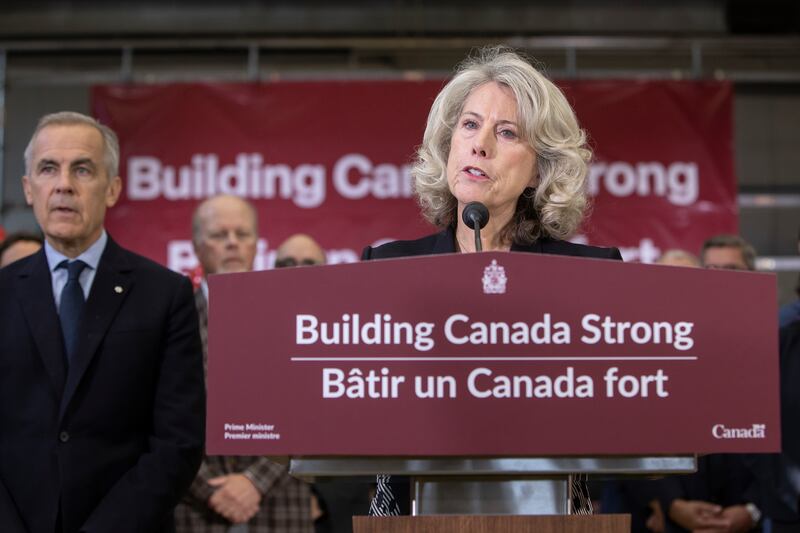
This is the clear ambition that Canada has needed for a long time. No matter what partisan commitment one might have, for Canada’s sake, we should hope this process is a success.
It did occur to me, however, that if “one project, one review, one decision in a two-year timeline” makes sense for large scale projects, why not have the same ethos for medium projects or smaller projects, of which there are plenty?
Surely if large multijurisdictional projects that require sophisticated financing, aboriginal engagement, stakeholder collaboration, strategic procurement, environmental assessments and more can be driven to such efficiency, why stop at a select few “major” projects? Why not drive the same ambition through the whole of catalogue of infrastructure opportunities, and not just a tight list of five projects every few months? I am hopeful that this question will be asked in the coming session of Parliament at some point, but I digress.
None of the five projects that were announced by the prime minister were new, but they are all excellent. As a British Columbian it is great to see the Government of Canada continue to champion the expansion of Canada’s liquified natural gas opportunity by backing phase two of the LNG Canada’s expansion in Kitimat.
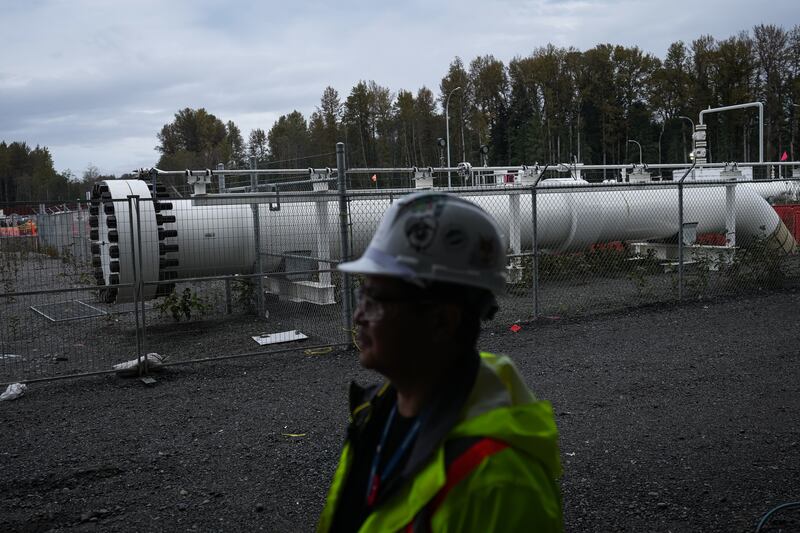
A final investment decision on the expansion is expected in 2026 by LNG Canada’s owners, and I have to think that with the federal government offering their full support to drive the regulatory process to a positive outcome, the proposal to double the terminal’s capacity to almost 30 million tonnes per year could be on a path for approval to Canada’s benefit.
The Darlington New Nuclear Project has been in development for years and is already under construction. The project has already been cleared for approval by the Canadian Nuclear Safety Commission and construction is already underway with a reported finishing date in 2029.
When the project is fully operational, “Canada (will be) the first G7 country to have an operational small modular reactor (SMR), accelerating the commercialization of the technology… for use across the country and worldwide,” according to the government. Great ambition again, but there are enormous regulatory challenges to make this a reality, and I am hopeful the MPO can realize this potential.
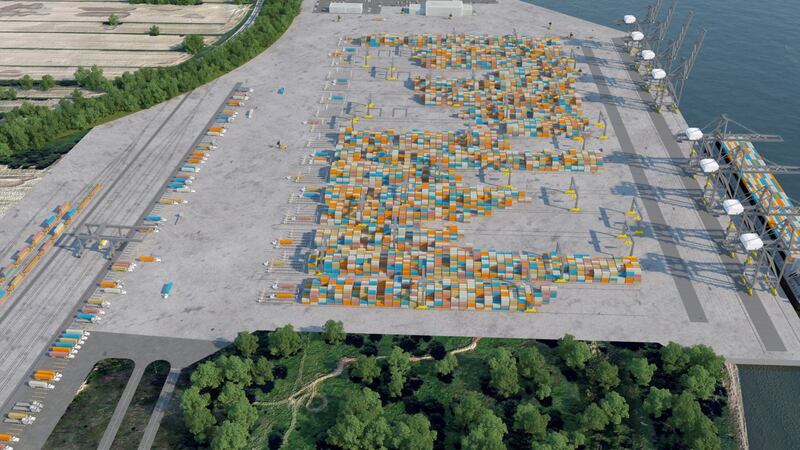
The prime minister also highlighted the Contrecoeur Terminal Container expansion project at the Port of Montreal, the McIlvenna Bay Foran Copper Mine Project in Saskatchewan, and the Red Chris Mine Expansion in Northwest B.C. Again, all job-creating projects with billions already committed from governments before this week’s announcement.
Carney also announced projects that may be added to the fast-track list soon, including expansion of the Port of Churchill, high-speed rail through the Toronto-Ottawa-Montreal-Quebec City corridor; the “Pathways Plus” carbon capture and storage project proposed by Alberta’s biggest oilsands companies; and critical-minerals projects in Ontario’s Ring of Fire.
This is all good stuff, but two observations:
First, no oil pipelines made the first list, and that is a problem that can’t remain unresolved.
While Premier Danielle Smith remains hopeful, there is a chicken and egg dance happening where the federal government consistently suggests that there is no proposal for a pipeline, so there isn’t anything to add to a list, but the door is open if this changes.
But that won’t change in the current regulatory environment imposed by the federal government. Proposals are needed, but they won’t ever be drawn up and presented because the federal government has made moving forward a wholly unattractive enterprise.
As long as current laws on emissions caps and tanker bans remain unchanged, I don’t imagine the “Major Project Office” will be burdened with assessing many (or any) pipeline proposals.
Impressive, but risky
So, the choice is: Be sincere about nation building and change the status quo and incent a pipeline proposal; or stay as-is and stymie the energy opportunity for Canada by expanding our global market access to create wealth for Canadians.
Second, Prime Minister Carney’s decision to align himself with the fate of these individual projects – with all their complexities – is impressive leadership, and incredibly risky politics at the same time.
In his hour-long press conference, the prime minister went into significant detail on each of these projects and other prospective projects, demonstrating that he is as advertised: A substantive policy analyst who does his homework and cares about the details. This is good but comes with downside risk.
The MPO could well be announcing 20 to 30 projects for approval by next summer, and the idea that they will all be without controversy is a fantasy.
Projects of the magnitude that have been announced and those that will be announced in the future will, without question, at some point, have cost overruns, procurement controversies, delays, local opposition, shaky value propositions, questionable governance, perhaps legal challenges and more.
This will not be all smooth sailing, great photo-ops, peace and prosperity. This will get tough at times.
So, for the prime minister to take personal ownership of these projects as a direct proxy for the success or failure of his leadership is truly leading from the front and admirable.
Time will tell whether it will prove to be politically foolhardy or if this exercise will be as transformative and as nation-building as it is being advertised to be.
Day 1 was a good start, but tougher days lay ahead.
More from James Moore:

