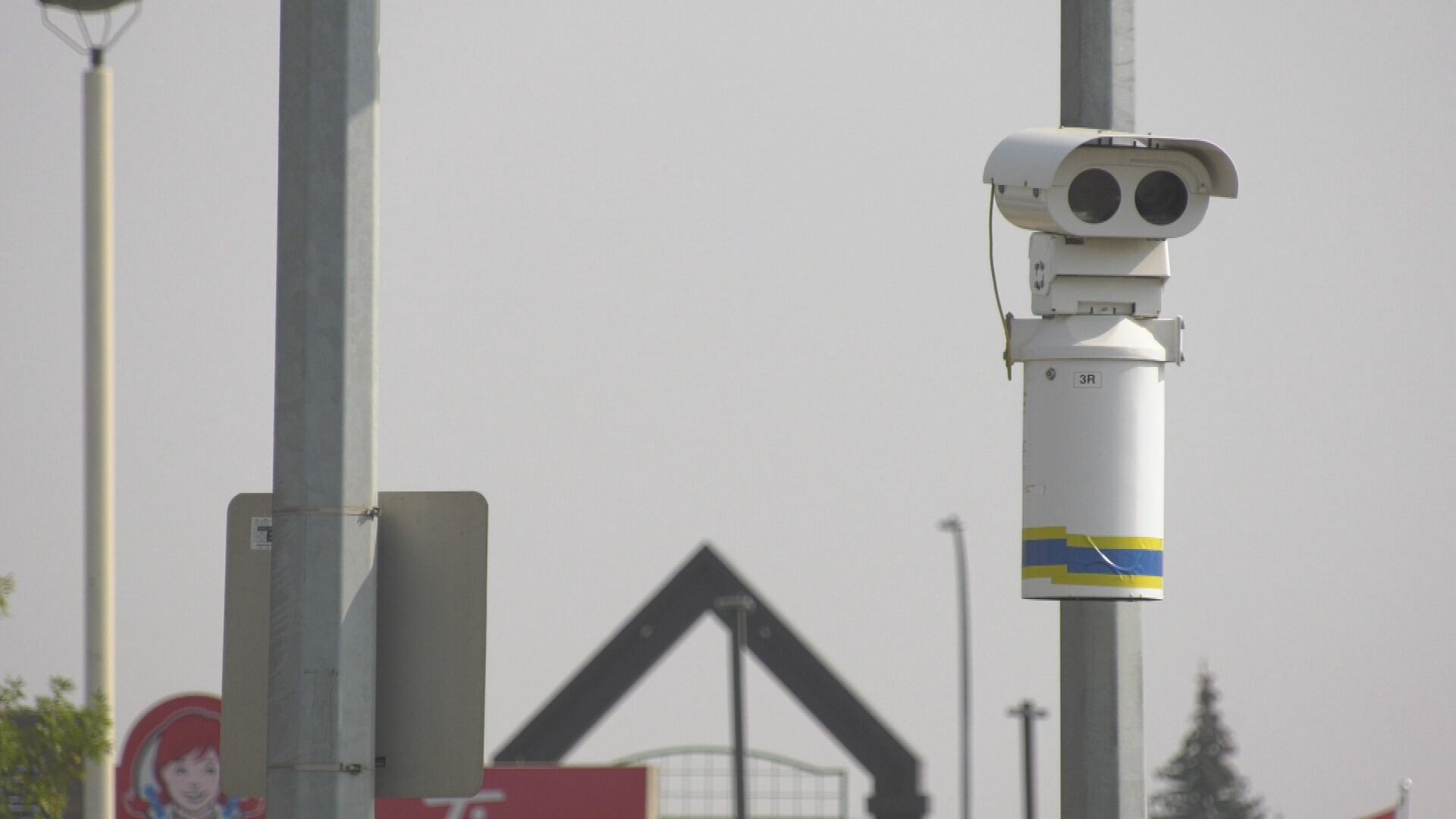
Toronto’s speed camera program is under renewed scrutiny as vandalism and political backlash mount, but road safety experts say the evidence is clear: automated speed enforcement works.
Hundreds of cameras have been vandalized in Toronto this year and Premier Doug Ford has threatened to shut the program down, calling the cameras a “cash grab.”
“I’ve driven by speed traps not even close to school areas,” the premier said last week.
“Some people driving through a neighbourhood and they are five, 10 kilometres over, they are getting nailed. It’s not fair. So, I’m dead against this photo radar that they have.”
Despite the political pressure, road safety advocates point to years of data showing the cameras reduce speeding and save lives.
“What we know is that speed cameras really make the roads safer,” Matti Siemiatycki, the director of University of Toronto’s Infrastructure Institute, said in an interview with CTV Your Morning on Friday.
“The stats show that speeding is reduced, that collisions are reduced, even fatalities are reduced. So, this is an important part of the overall package to make our roads safer.”
While critics argue the devices are more about revenue than safety, Siemiatycki says they aren’t meant to be punitive, but preventative.
“Sure, they bring in money, but the point is safety, and the goal would be that they bring in zero money, because no one is speeding, and everyone has a choice,” he said.
“If you don’t want to get dinged, just slow down.”
Beyond enforcement, Siemiatycki points to the way streets are designed, particularly wide suburban arterials, as part of the reason why drivers speed in the first place.
“Many of our roads are designed to [feel like] small, mini highways,” he said.
“So, the real solution is to try to bring in traffic calming measures ... but that’s been politically infeasible. So in the absence of that, the speed cameras tend to work.”
Some critics argue speed signage could be a better alternative but Siemiatycki says the research suggests signs help, though their effects can fade.
“They actually slow people down a little bit, but it can be fleeting,” he said.
“People kind of get used to it, and then the benefit kind of dissipates over time.”
He believes speed cameras should remain part of a broader traffic safety strategy, one that also includes transparency, signage, and accountability for how fine revenue is used.
“We could also ring fence the money so that the money that’s raised is used only for traffic safety and road improvements,” he said.
“I think that would also be a way just to build confidence in our community, that we’re not just trying to tax people... that really this is first and foremost about road safety.”
According to Statistics Canada, about 2,000 people die in road collisions each year, a toll Siemiatycki says is too high to ignore.
“Speed kills,” he said.
“Even going 10 kilometres over the speed limit … can have a huge impact, both for motorists and certainly for pedestrians or cyclists or other people on the roads.”
With files from CTV News Toronto’s Jermaine Wilson, and CP24’s Codi Wilson and Bryann Aguilar

