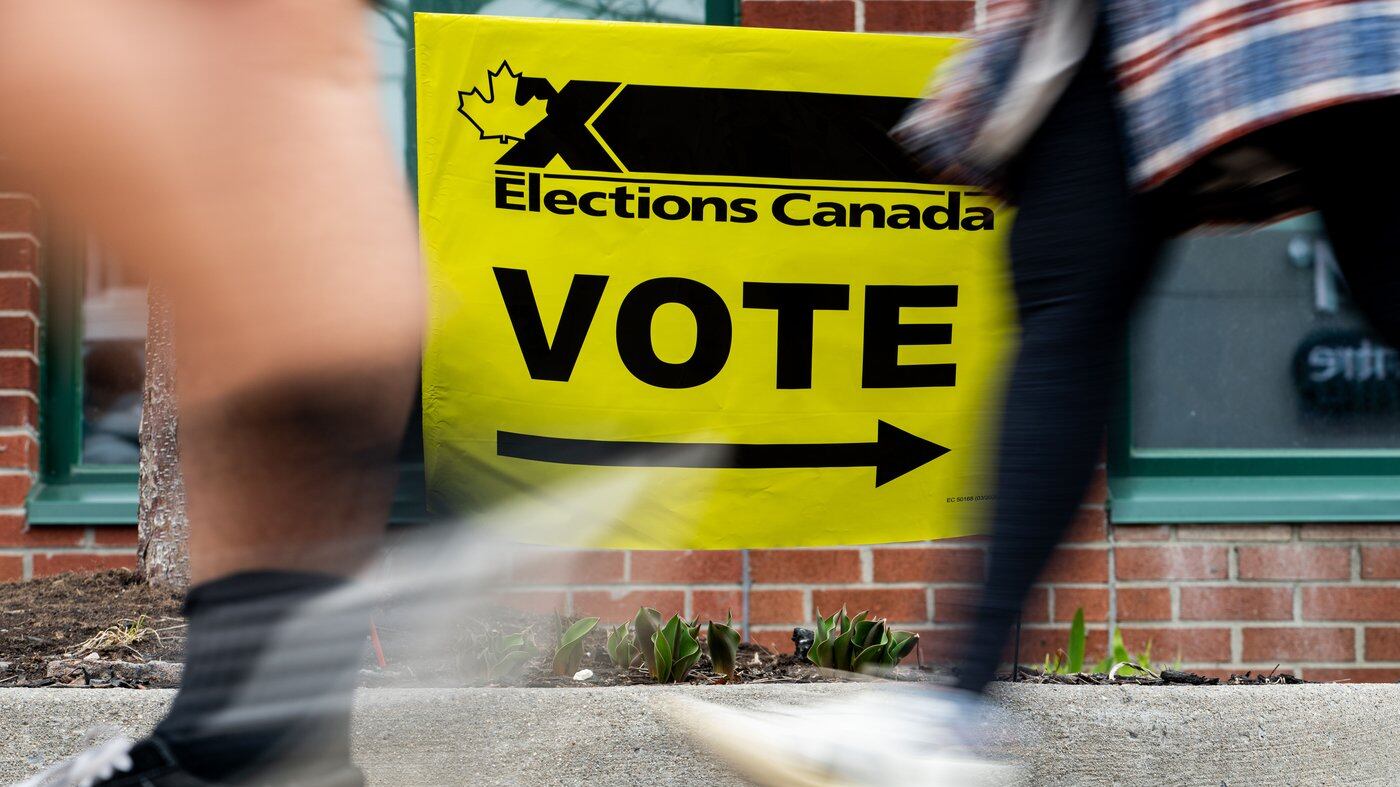
Canada’s 45th election that saw Mark Carney’s Liberals sprint to a near majority cost less than the previous election, but reveals changes in voter behaviour.
Elections Canada says Canadians are voting earlier and the organization needs to adapt.
According to a new report tabled in the House of Commons, the April 28 election is estimated to have cost $570 million. That is less than the $574.2 million price tag for the 44th general in the fall of 2021.
Currently, the Liberals hold 169 seats in Parliament, with the Conservatives at 144, followed by the Bloc at 22 seats, the NDP with seven seats and the Greens with one lone seat.
The seat totals in the House of Commons could still change depending on the outcome of a legal challenge in Quebec Superior Court that will be heard in October.
The most significant change in the last election involves a trend toward earlier voting. There were 19.8 million Canadians who cast a ballot in April, representing 69 per cent of registered electors. Of that number, a record 44 per cent or 8.7 million people cast ballots before election day – the highest number in any Canadian election.
Stephane Perrault, Canada’s chief electoral officer, says advance polling is here to stay because people want convenience. It’s also a trend pushed by the political parties.
“Candidates want their known supporters to lock in their vote early. The campaigns are inciting voters to go in and vote so they can focus on the undecided electorate,” Perrault said at a news conference after the report was tabled in Parliament.
That trend puts pressure on Elections Canada to put more resources toward advance polls that can be challenging to do when a snap election is called.
“In a non-fixed date election context for a short election period of 36 days, our system may have reached it’s limit,” said Perrault. In a news conference, he cited challenges with finding locations for advance polling sites on short notice.
“The overall pressure to deliver a wider range of services in a shorter period of time increases the risk of errors, so we have to look at the controls,” he said, adding that extending the minimum election period by a few days could help.
Mail-in ballots
The report also revealed that 140,885 electors living in Canada chose to cast their ballot by mail. This was not as high as the more than half a million voters who cast a ballot by mail during the 2021 pandemic-era election.
A problem with mail-in ballots did lead to contested results in the riding of Terrebonne, Que., where the Liberal candidate was declared the winner by just one vote after two recounts. In its report, Elections Canada says 115 special ballot mailing labels were issued and that the postal code for the local Elections Canada office was wrong on some of the labels.
That resulted in five ballots being received late, and 16 ballots not reaching the elections office. At least one was returned to the voter by Canada Post after the election.
Although Liberal Tatiana Auguste currently sits in the House of Commons, her win is being challenged by the Bloc Quebecois and will be heard on Oct. 20 in Quebec Superior Court.
Elections Canada also shed more light on how it adapted to the large ballot of 91 candidates in the riding of Carleton, Ont. That was the riding previously held by Pierre Poilievre that he lost to Liberal rookie Bruce Fanjoy.
The organization said the “size and complexity of the ballot required more time and effort at nearly every stage.” Elections Canada adapted by starting the counting of advance votes six hours before the polls closed on election day.
During the August byelection in Battle River—Crowfoot, more than 200 candidates put their names on the ballot to compete for the seat, including Poilievre. To accommodate the record-setting size of the ballot, Elections Canada mandated that voters would write down their candidate of choice while referring to a list of names. Perrault said that Elections Canada may approve that practice again in future elections if there is a long list of candidates.
Security incidents
Elections Canada officials also revealed that there were 44 security incidents reported, and 29 of those incidents required police intervention.
The report states that three involved physical assault such as shoving and punching, while another three related to criminal activity. Twenty-three incidents involved “disruptive or threatening behaviours including confrontation over voter identification and tampering.”

