Marie Louise Pachano says she never wanted to come back.
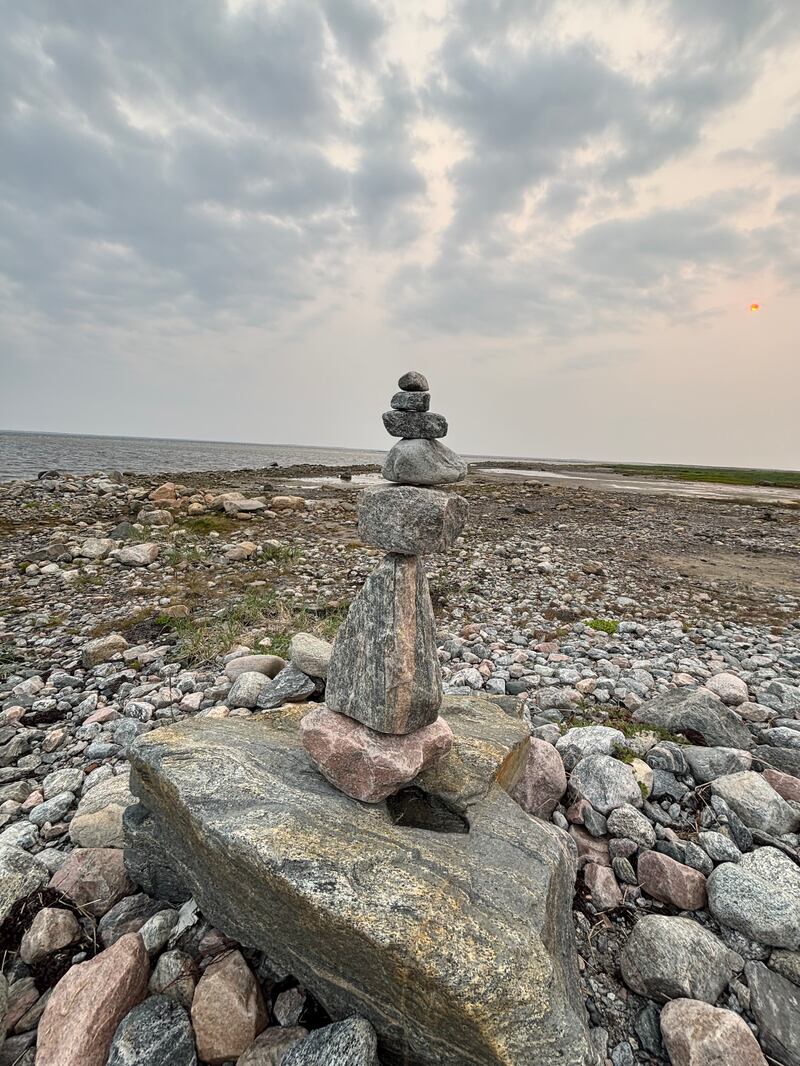
In fact, the only reminder of the place where she spent some of the worst years of her life is a simple wooden cross, draped with a purple ribbon.
It marks the location of the Sainte Thérèse de l’Enfant Jésus school, a Roman Catholic residential school, in Fort George, Que.
“I didn’t want to even see where this place was again,” she told CTV News. “I never wanted to talk about it for so many years. I didn’t want to tell anybody because I thought nobody would believe me.”
Now, standing in a clearing in the woods near where the school’s hospital once stood, Pachano says it’s time to be brave.
“I knew I needed my freedom. I didn’t want to be sad all the time because it’s sticking in there,” she said, gesturing to her chest. “The sadness, the fear, the anger, and I wanted to be happy.”
Pachano’s journey back to the site of her former residential school has taken decades.
She started as a student in 1966, when she was six years old.
Despite her mother working as a housekeeper at the institution, and her younger brother also attending the school later on, Pachano says she wasn’t allowed to communicate with them.
“I saw him, but I was not allowed to talk to him. I know he used to cry, but I couldn’t give him a hug. It was very hard,” she recalls.
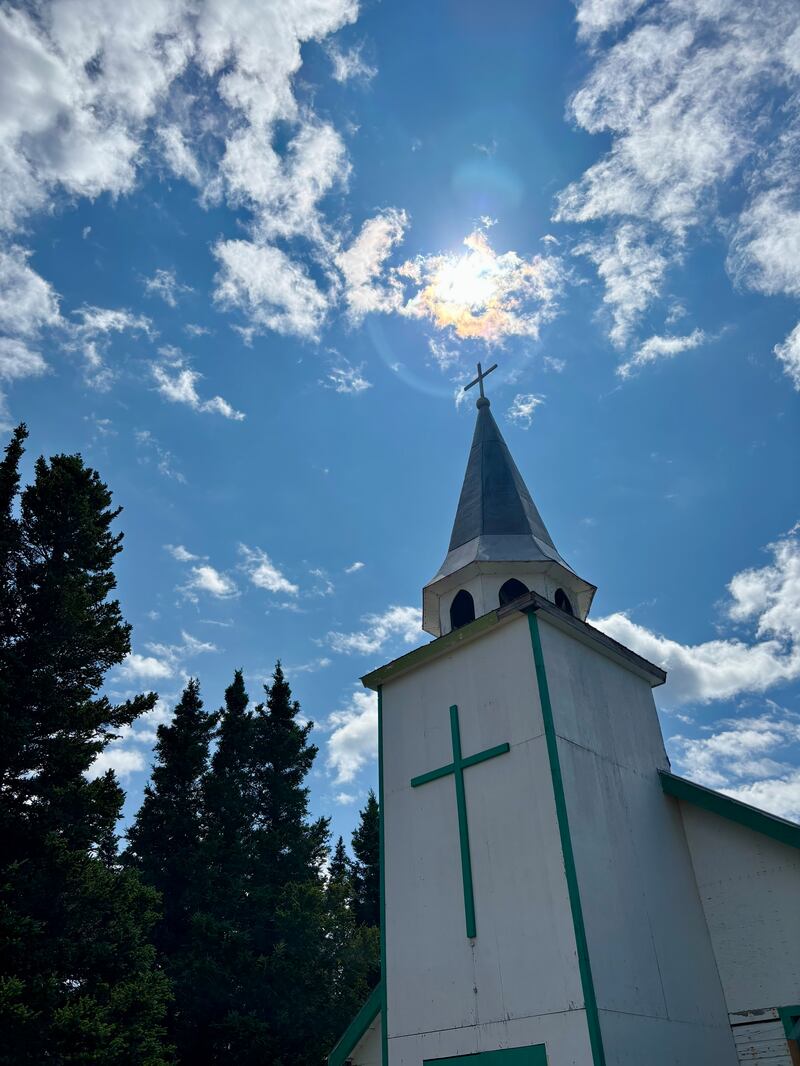
The Catholic school opened in Fort George in 1937 at one end of town.
A second school, the Anglican St. Philip’s School, opened in 1933 and was located at the other end.
According to the National Centre for Truth and Reconciliation (NCTR), the Catholic school’s enrollment was around 80 children in the 1950s.
By the 1960s, when Pachano began, it was overcrowded.
Additionally, according to the NCTR website, by the mid-1950s, the Anglican school was also “in deplorable shape and overcrowded.”
Claims of abuse
Pachano says she grew up in a community located on the banks of La Grande River near James Bay.
She was forced to live at the school.
“I asked my dad why,” she said. “The priest told us, ‘You have to take her [there] and you’re going to receive something,’ which they never did.”
In addition to being cut off from her family, Pachano says she wasn’t allowed to speak her native Cree.
She recalls an incident where she was caught speaking her language with a classmate, and as a result, both were locked in a basement.
She tearfully remembers being identified not by her name, but only by a number — 25.
“I felt neglected. I wanted to be called by my name,” she said. “I wanted to be Marie Louise.”
A classmate of Pachano, Reggie Tumatuk, says he was known as number 14.
He remembers also only being able to see his siblings from a distance at mealtime.
“It was scary,” he said. “I was in a bunk bed, and I remember my first night, I didn’t stop crying. Somebody pushed me off the bed for me to stop, and I guess that’s when I learned my lesson not to cry.”
Both Tumatuk and Pachano claim abuse was a constant threat at the school.
“The priest used to come to our dorms at night, which was not very nice,” Pachano tells CTV News.
Tumatuk adds that the abuse was a daily occurrence.
“Especially with the sexual abuse that we encountered during those times,” he said.
The claims have not been tested in court.
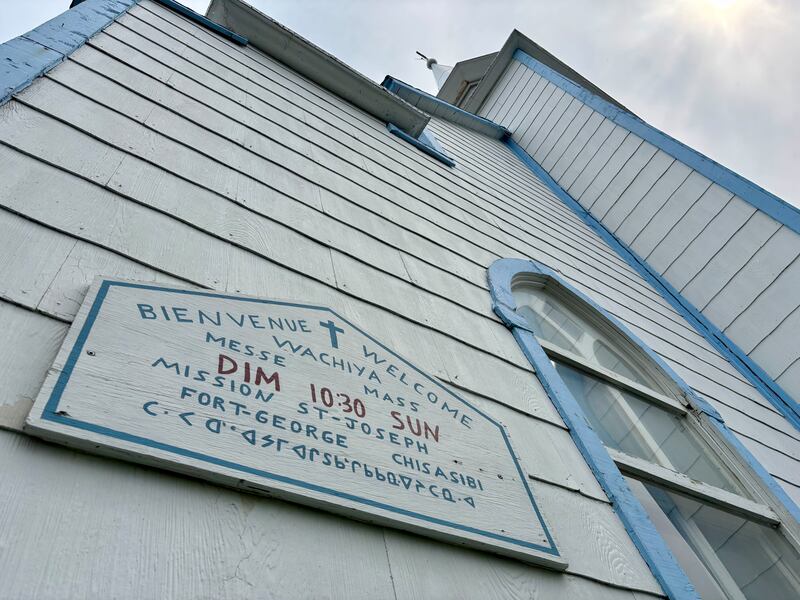
The Missionary Oblates, which ran the Fort George Catholic residential school “with government funding and supervision” from the 1930s to the 1970s, says it is collaborating with “different groups of researchers seeking historical clarity on the schools, the cemeteries and the allegations of abuse.”
It tells CTV News that understanding what happened at the school is “an essential step in the healing process for victims and witnesses of events at the school, as well as the parents who put their trust in the promise of the school.”
@ctvmontreal The search for children’s remains continues at two former Quebec residential schools. residentialschools tiktok viral trending mtl montreal
♬ original sound - CTV News Montreal - CTV News Montreal
“The Oblates regret having participated in the structure of the residential schools, in the separation of families, in the breaking of cultural transmission through the schools, in the often-harsh discipline and in any abuse that may have happened,” said Raymond Marquis, an Oblat de Marie-Immaculée (OMI).
He noted that the missionary’s archives are open to anyone seeking information.
“We hope that our archives and any search of the Fort George Catholic Residential School grounds can bring closure to the families still seeking to know what may have happened to members of their families,” he said.
Not just numbers
Unconfirmed rumours of death also circulated around the school.
According to the NCTR, “the National Student Memorial Register includes the names of 33 students who attended the Fort George Anglican and Catholic residential schools.”
“It is important to note that this is not a final number,” the NCTR stresses. “As this work continues...this number may change...These names are not just numbers — they represent children, families and communities whose truths must be acknowledged and remembered.”
George Pachano, the head of Chisasibi’s search committee, says that while many of the reported deaths were attributed to illnesses like tuberculosis, the committee believes malnutrition and a lack of care while sick may have contributed as well.
He explains to CTV News that searches are now being done on the grounds of the two schools in the hopes of finding the bodies of children whose deaths were recorded, but whose burial sites are unknown, as well as to verify the stories of former students who claim classmates simply vanished.
“They tell you, ‘We think something happened because there was one kid that disappeared all of a sudden and they tell us he went home,’” said Pachano, adding that children from 21 different communities from Northern Quebec and Ontario were brought to the school. “We don’t know where he went home to, but one morning he wasn’t there.”
He adds that since families tend to live on the land, communicating with them was difficult, and sometimes they would only find out what had happened to their child months later.
One of the complexities of the searches is relying on the students’ memories of potential incidents from decades ago.
“People say, ‘I think I saw something 60 years ago from when they were four, five or six years old,” said Pachano. “You’re not certain, but we just want to be sure to verify the stories for confirmation.”
Burned and buried
In the 1980s, the Village of Fort George was moved inland because of a Hydro-Quebec dam project on La Grande River.
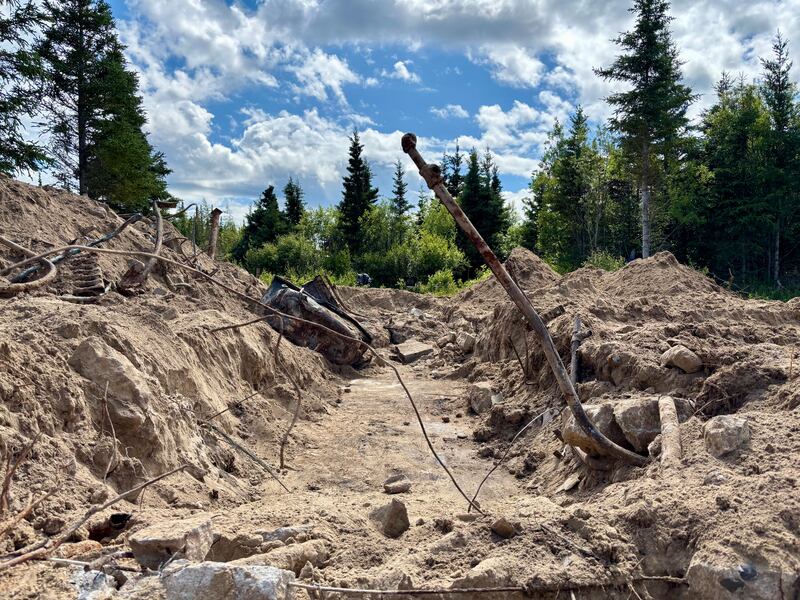
The schools were burned and buried, leaving a trail of debris and rubble underground, but not a single definitive outline of where each building once stood.
That’s where Adrian Burke, the head of a team from Université de Montréal, comes in.
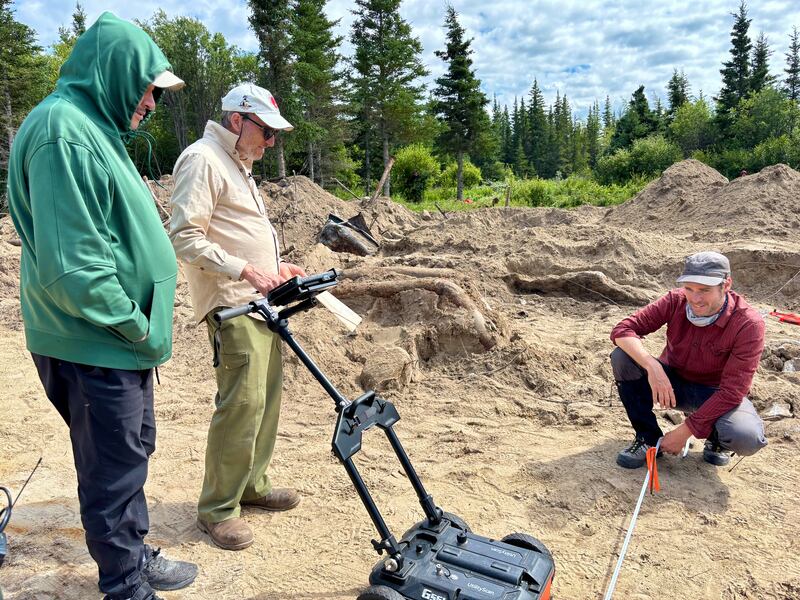
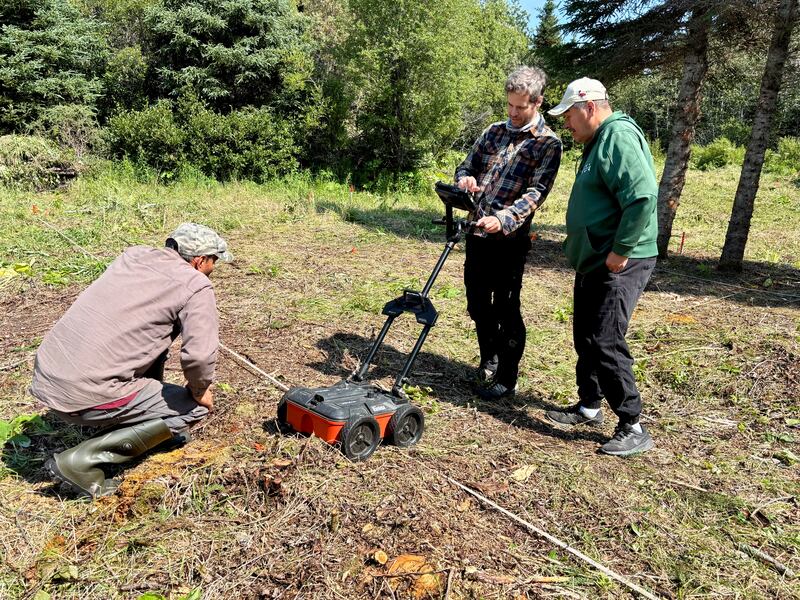
His group is conducting ground-penetrating radar (GPR) searches in the hopes of providing answers to some long-buried questions.
“We got together as many old maps, photos and aerial photos, basically trying to reposition and locate where the buildings were,” he explained to CTV News.
Once the overgrown brush and branches are cleared out, the team maps out a grid on the ground.
Then, they run a GPR machine back and forth across the area to get a look below the surface.
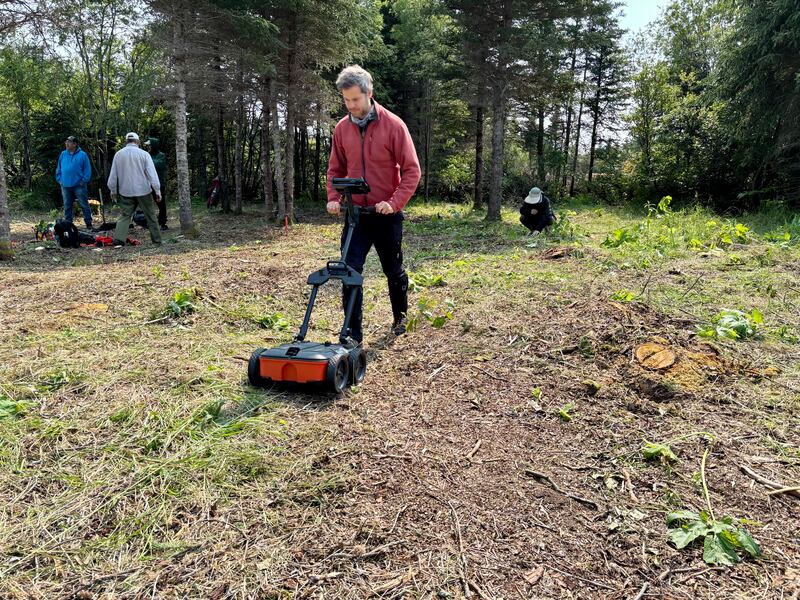
“It has an antenna that sends out an electromagnetic wave that’s similar to a radio, microwave or cell phone,” Burke explains.
“It’s basically measuring two things. It’s measuring the time that it takes to go down and come back, but also the speed. If the wave goes down through the ground and hits a big rock or a pipe in the ground, that’ll usually bounce back and we can see it.”
Finding a body, especially a child’s remains that may not be in a casket, has proved difficult so far.
“If there’s no coffin, it’s definitely harder,” said Burke. “Usually, you’re hoping to see at least the shaft, and then you have some idea of where the ground was disturbed.”
The composition of the soil in Fort George is also acidic, meaning human remains may degrade faster — especially children whose bones and teeth may not have been fully developed at the time of their death.
A difficult decision
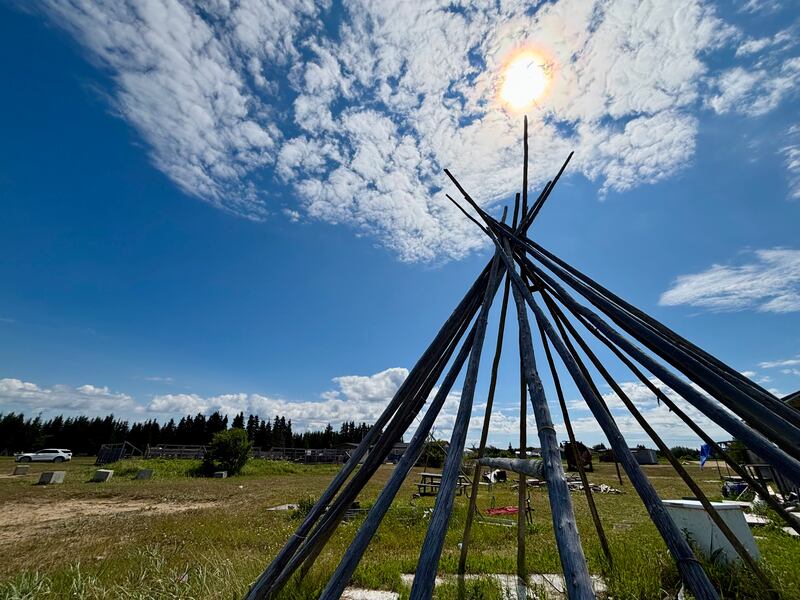
The decision to start searching the grounds came after many community meetings and consultations with former students.
Ultimately, in 2022, the Village of Chisasibi made the difficult decision to officially approve the project.
“Those sorts of meetings are hard meetings,” said Pachano. “It’s a topic nobody wants to talk about, but we did talk about it. It was hard to attend those meetings because it’s friction between families in the same community.”
Since then, some early GPR work has started, and human remains detection dogs were brought in to give archeologists a clearer idea of where to focus.
“We did hit the anomalies, but we don’t know what they are. So, this year we’re a little bit more focused in certain areas,” said Pachano.
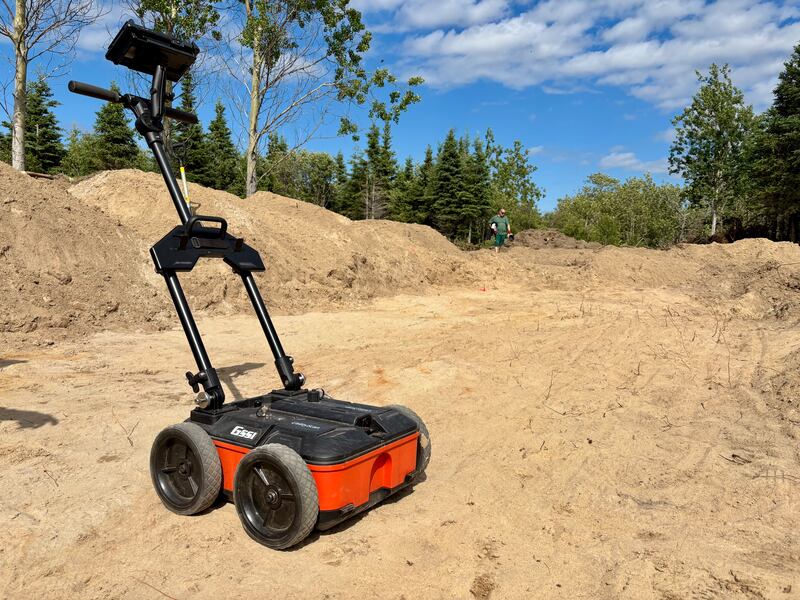
Last summer, an excavator was brought onto the site of the Catholic school to dig up the foundation of the buildings.
“They took GPS points where the dogs indicated, and based on survivors’ testimony, we discussed the best way to examine those areas,” said Burke, whose team includes a bioarchaeologist who specializes in human remains.
The group is also training First Nations and Inuit people in the technology so they can lead the searches in the future.
“It’s better, in a sense,” said Burke. “There’s a higher level of trust if it’s an Indigenous person doing the work, especially in this very sensitive kind of setting.”
One of those people is John Lameboy, who is learning to run the GPR machine on the site where he was previously a student.
The researchers say their plan is to eventually take the GPR data back to the Université de Montréal, complete their analysis in the fall and compile a report to present to the community.
No more funding
When the community approved the searches in 2022, the federal government provided $225,655 in funding, but that money, according to Pachano, is rapidly running out.
“They [the federal government] stopped the funding on March 31, 2025, but we had funds available from last year, so we’re going to use those,” said Pachano. “Following that, I don’t know. We’ll have to find other sources.”
The financial troubles also come at a time when critics have started questioning the spending — and the need to search altogether.
Chisasibi Deputy Chief Mark Wadden counters, “You see Amber alerts. You see somebody who’s gone missing. They spend so much money, so much effort on trying to find and resolve and investigate this. How would you feel if nobody went to go look for your child that went missing?”
He insists that, though the decision to dig up old wounds has been harrowing, the hope is that it can provide some comfort to former students and their families.
“We know it’s a way of healing as well, even though it’s a difficult truth,” he said. “We need to proceed.”