A University of Winnipeg professor is part of a team of researchers who may have found signs of life on Mars.
Ed Cloutis, director of U of W’s Planetary Spectrophotometer Facility, took part in a study that examined samples collected by NASA’s Perseverance Mars Rover from a location on the “Red Planet” believed to be an ancient river channel.
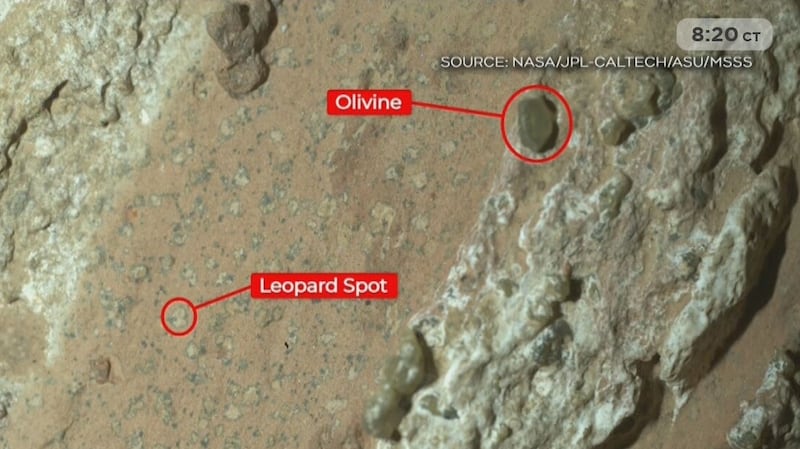
Through these samples, researchers discovered rocks on Mars that contain minerals and elements, including carbon, that are essential for life.
“There’s a lot of signs that indicate that even if life wasn’t there, it was at least habitable,” said Cloutis, who’s been involved in Mars exploration for more than 30 years.
Cloutis explained the current thinking is that though Mars’ present environment is uninhabitable, billions of years ago, it used to be much more Earth-like.
“The suggestion is there could’ve been life there, but it’s probably long dead,” he said.
Cloutis said the results from Perseverance are “intriguing,” however, the samples still need further analysis before any conclusions can be reached.
With files from CTV’s Rachel Lagacé

