As wildfires become a growing threat in parts of Canada, one home under construction in B.C.’s Okanagan has been designed to stand up to flames.
“It’s got a two-hour fire rating, so when a wildfire happens to pass through this property, it has a very good chance of surviving the wildfire,” said builder Mark Faber, of Westcan Contracting.
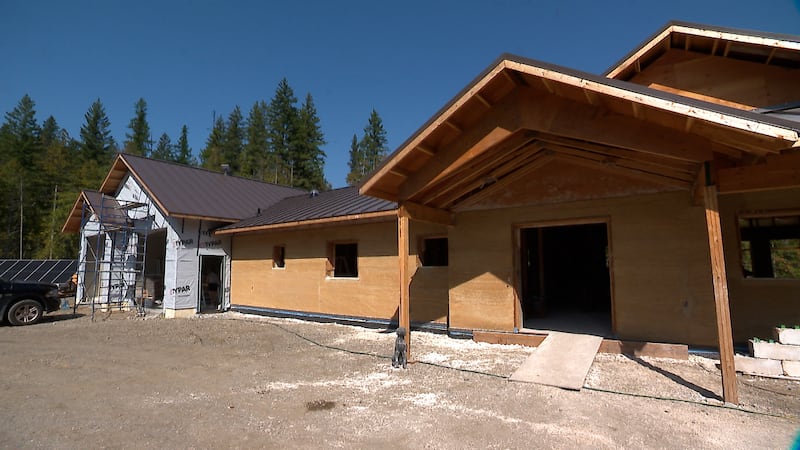
The home in Lumby is being built using hempcrete, a mixture of hemp, lime and water. The hemp-based mixture replaces traditional insulation and drywall, encasing the home’s wood frame, and helping the house stay cool in the summer and warm in the winter.
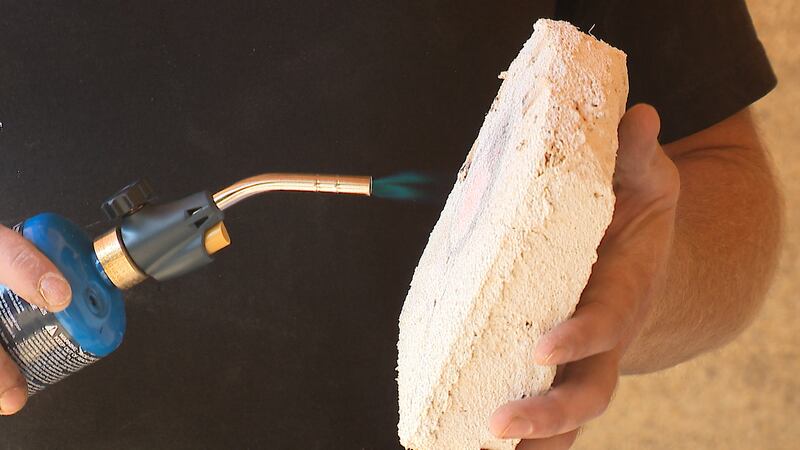
On the outside, the home is coated in a fire-resistant lime plaster that acts as armour in the event of an inferno, along with other fireproof features.
“We have a metal roof, metal fascia, metal soffit, metal clad windows to accompany the hempcrete wall system. And that together as a system creates a wildfire resistant home,” Faber said.
Fire resistance was the biggest selling feature for owner Kathy Haslett, who estimates she’s paying 15 per cent more than a standard build, but believes it is a worthwhile investment.
“What are you saving? You’re saving a tonne,” said Haslett. “If a fire comes through and it doesn’t burn, you’re not losing your home and everything in it.”
The home’s designer says hempcrete offers much more than peace of mind in wildfire country.
“I am all for hempcrete. What I love about it so much is that it’s material that is healthy for both people and planet,” said Jen Hannah, the architectural designer on the project. “It is wonderful for the environment, because as the hemp has grown it has absorbed tonnes and tonnes of carbon from the atmosphere, and it keeps it locked in. So this kind of a build ends up being either carbon negative or at least carbon neutral.”
Faber had to source the hemp for this project from Manitoba, highlighting one of the issues keeping more contractors from embracing hempcrete builds.
“The reason why we chose to buy from Manitoba is it’s the most consistent, good quality product. There are also facilities in Alberta. Some of them are having issues with consistency in their product,” Faber said. “There’s a decent amount of hemp farming going on in northern B.C. There’s more much in Alberta, Saskatchewan, Manitoba. If we encourage farmers to grow more hemp, we’re going to be able to purchase their waste product from them.”
Hannah says the other major obstacle to growing the hempcrete industry in Canada is simply awareness.
“If people don’t know that it’s an option, they can’t choose it.”
Haslett is hoping to move into the home before Christmas. Faber expects it to remain standing for many decades.
“We expect a house like this to last up to 100 years plus. As the hemp cures over time, it’ll continue to absorb carbon dioxide. The lime calcifies and actually petrifies over time so that it hardens and gets stronger and stronger.”

