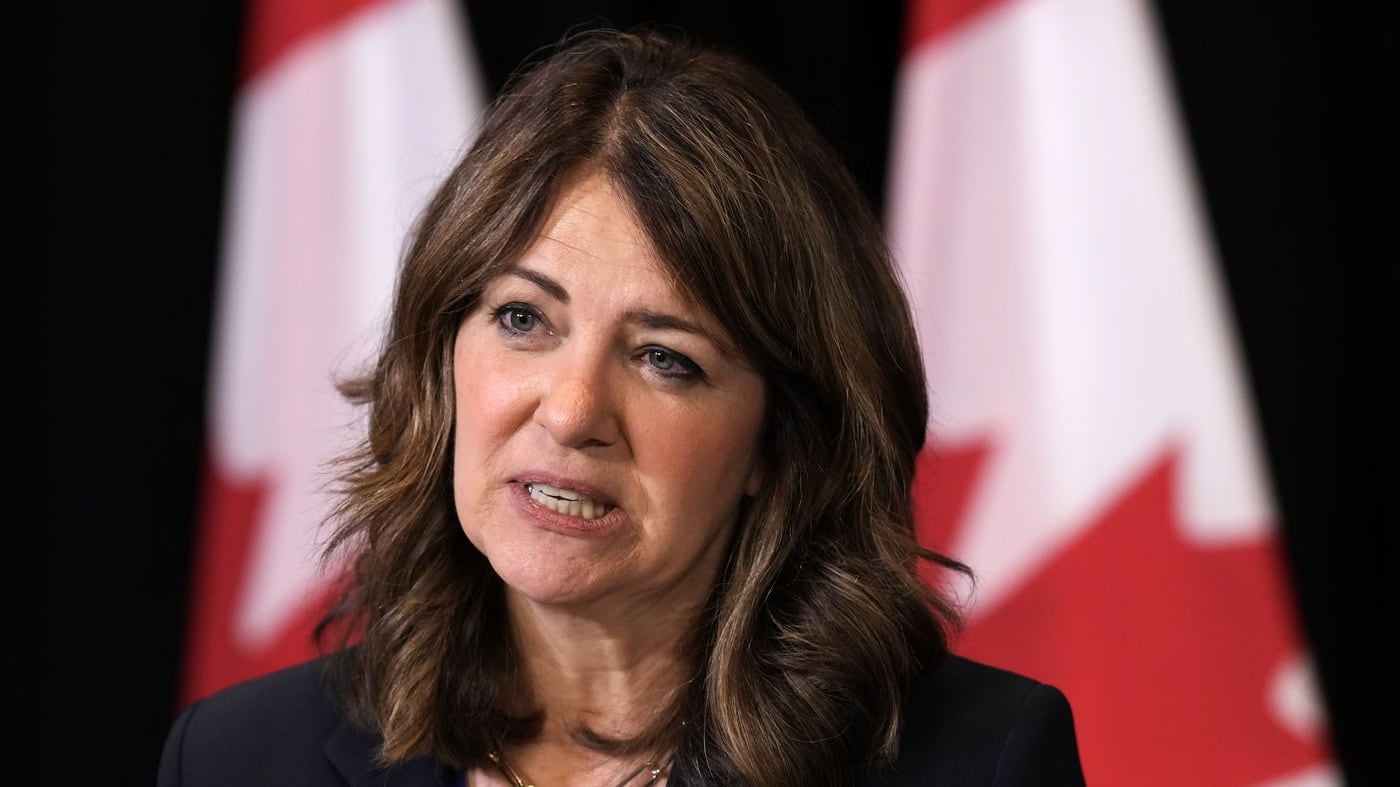
Alberta premier Danielle Smith says negotiations between the province and teachers are down to three differences of opinion that she believes can be resolved.
Appearing on her Saturday radio show, Your Province, Your Premier, Smith expressed optimism in the state of negotiations, saying that all the big things -- classroom size and complexity, and wages -- have been resolved, leaving only three issues left to be resolved.
“I think we have a fair deal on the table and don’t want to push it to a strike when we are close (to a deal),” she said Saturday.
The comments were her first on the topic of a potential teacher’s strike since the labour board ruled on a point of contention Friday and the two parties agreed to reopen negotiations.
The return to bargaining comes a day after Alberta’s labour relations board announced the two sides had resolved a complaint launched by the government accusing the teachers of bad faith bargaining.
The complaint revolved around a union communication document that claimed provincial negotiators didn’t have the power to negotiate non-wage issues, which the province says wasn’t true.
A consent order issued by the labour board Thursday says the parties have agreed the matter is over and the only outstanding bargaining issues are related to pay hikes and COVID-19 vaccines for teachers.
Province’s offer
Smith said the government’s offer includes a 12 per cent wage increase over four years, as well as a grid adjustment that means some teachers get up to 17 per cent over four years. The province also will hire 3,000 teachers over the next three years.
“We have agreed to all of that .. We hope to agree to what’s left without job action,” she said.
Smith said the three issues still outstanding are COVID-19 shots, the timing of the grid adjustment -- the province wants it to start in 2027, Smith said, while the teachers want it earlier -- and an increment for long-service teachers.
Smith said the three unresolved issues as a package would cost the province about $250 million, or the cost of hiring 300 teachers, suggesting the province can’t afford both.
“We just think it’s more important for us to hire new teachers, hire educational assistants, because what we hear from teachers is the class size issue and class complexity issue is the number one priority,” she said.
Oct. 6 strike date
The union, which represents 51,000 teachers, has said teachers will hit picket lines on Oct. 6 if a deal isn’t reached, disrupting classes for more than 700,000 students across 2,500 schools.
The Teachers’ Association, in a statement Friday, said students and families remain its top priority as bargaining resumes.
“The ATA is back at the bargaining table with the Teachers’ Employer Bargaining Association following the issuance of a consent order by the Alberta Labour Relations Board,” the statement said.
“The consent order affirms that both parties are committed to reaching a collective agreement, which addresses the remaining points of unified salary grid implementation, a 1.5 per cent allowance for teachers at the last step of the grid and the coverage of COVID-19 vaccinations.”
The union also confirmed that the chair of its negotiating team, Peter MacKay, resigned Thursday.
“I was hoping to see things through to the end of this round of bargaining, but I don’t see a path to doing so at this point,” MacKay wrote in a social media post.
MacKay could not be immediately reached for comment.
The premier remains confident that the three issues are resolvable.
“We’ve got those issues on the table when we get back to bargaining,” Smith said. “But we’re back to the table and we now have clarity and teachers have clarity about the three issues that are really the ones that are the sticking point.
“We’ve agreed on everything else.”
With files from The Canadian Press
More teachers. More pay. Smaller class sizes. That’s Alberta’s plan for parents, teachers and kids. pic.twitter.com/dl3DvN5Afz
— Alberta Government (@YourAlberta) September 19, 2025

