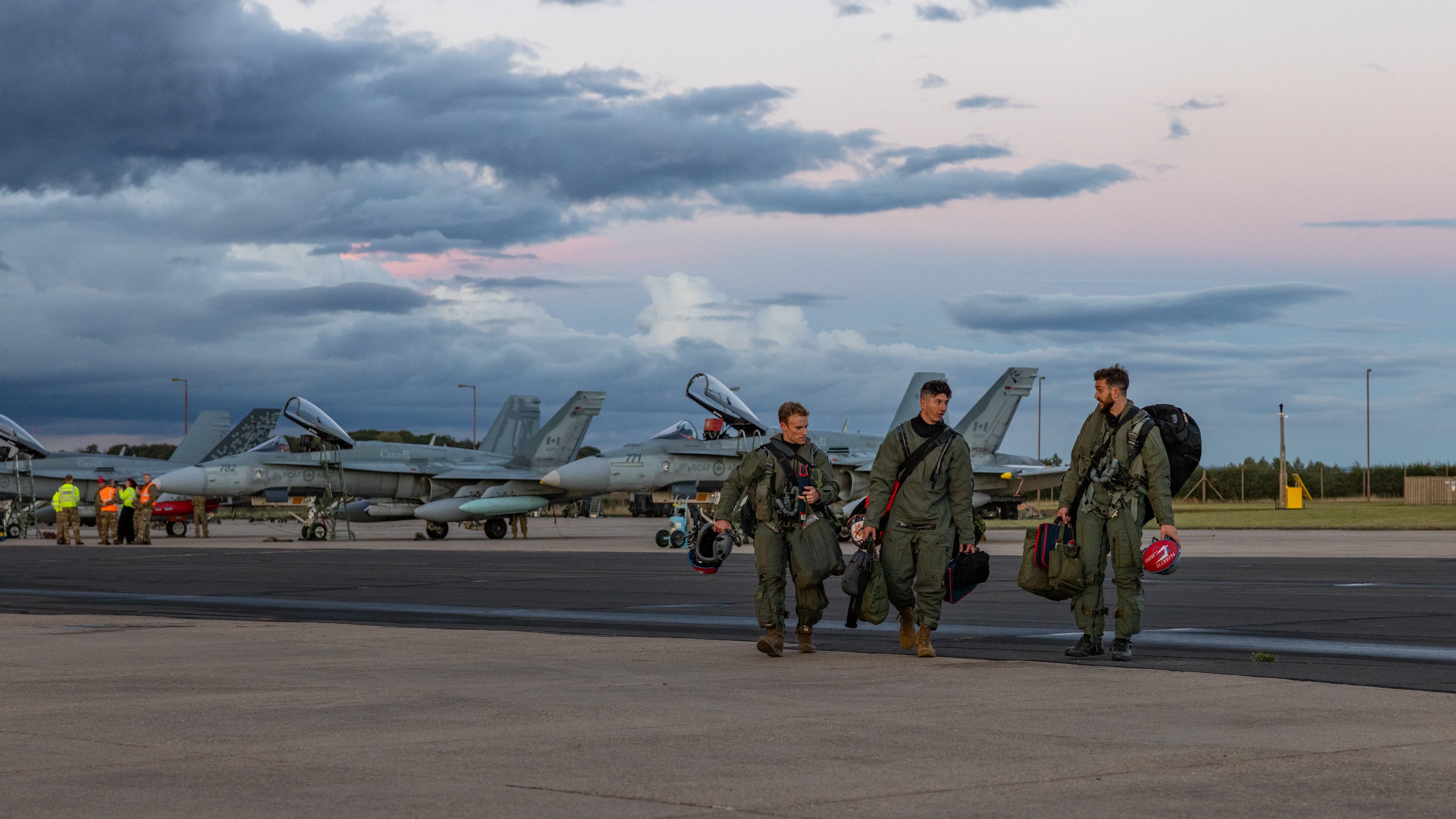
The deputy commander of a detachment of Canadian fighter jets conducting exercises in Europe says the team is prepared to join any NATO response to recent drone incursions on alliance airspace if required.
Maj. Sebastien Tremblay-Verreault, deputy commander of the Royal Canadian Air Force’s 425 Tactical Fighter Squadron, is leading a contingent of eight CF-18 Hornets and more than 150 RCAF personnel currently assigned to war games in the United Kingdom and the Baltic states.
Canada’s participation in the combat drills is intended to bolster its NATO presence and provide invaluable training to aircrews and mission planners alongside partner countries like Germany, Italy, the U.K. and the United States.
But the deployment is happening against a backdrop of increasing tensions between the NATO alliance and Russia, while mysterious sightings of large drones over airports and military installations in Northern and Eastern Europe continue.
NATO warned Russia on Tuesday that it would employ “all necessary military and non-military tools” to defend itself and deter threats after Russian drones and armed fighter jets violated Polish and Estonian airspace.
The alliance has launched “Eastern Sentry” to strengthen its defences near the border with Russia, a move that Global Affairs Canada welcomed in a statement condemning the airspace incursions as “extremely dangerous” provocations.
“We might have to react or adjust as required but it does, in essence, prove that that our presence is relevant here,” Tremblay-Verreault said in a video call Thursday from a U.K airbase, where organizers of the multi-nation Cobra Warrior exercise were monitoring as more drone sightings were reported overnight in Denmark.
“Since it’s happening close to us, it is on our minds and in the minds of our crews,” the deputy commander added. “As these things happen, we’ve been integrating them into operations in order to bolster the NATO presence.”
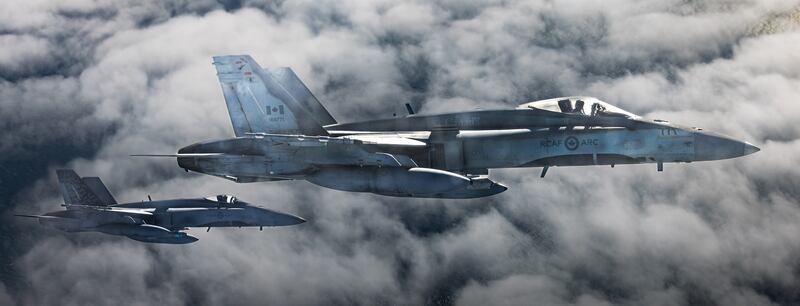
The fleet of CF-18 Hornets is expected to decamp from the U.K. for Estonia in the coming days, where it will link up with the Canadian-led NATO brigade in nearby Latvia for additional combat-readiness drills with forces from across Europe.
A key focus for the RCAF pilots in Estonia will be learning how to take off and land on rural highways – a wartime rapid-deployment skill that has never before been attempted in a CF-18, according to Tremblay-Verreault.
Recent upgrades to the aircraft – particularly, a new radar system and upgraded AIM-9X Sidewinder air-to-air missiles – have helped the fourth-generation CF-18s hold their own among the most advanced fighter jets in Europe, including the fifth-generation F-35, the deputy commander said.
“We’re not the participant that needs to be protected by other participants,” Tremblay-Verreault said. “We are on the front line.”
Canada’s participation in the exercises is part of Operation Reassurance, the Canadian Armed Forces’ primary contribution to NATO security.
In a statement earlier this month, Lt.-Col. Maxime Renaud, commander of the Air Task Force for Operation Reassurance, says the RCAF’s presence in Europe is an opportunity to “develop advanced tactics, and directly contribute to NATO’s defence posture.”
The RCAF detachment is expected to return to Canada by the end of October barring any as-yet unforeseen events.
“We’re kind of standing by and watching,” said Tremblay-Verreault. “We’ve got business to do, so we’re going to do it as per the exercise and try not to think about it. But who knows what might happen.”

