Of 46,000 New Brunswick students surveyed, only 12.3 per cent said they spend less than two hours a day of their free time using a screen.
That means 87.7 per cent are spending two hours or more on screens.
The data, which was gathered by the New Brunswick Health Council, isn’t surprising, says pediatrician Dr. Michelle Ponti.
“I think this is across Canada. It’s across the globe,” said Ponti, who’s also the chair of the Canadian Pediatric Society’s Digital Health Task Force.
But there is a difference between screen time and screen use, she says.
“What were kids doing during that time … was it an educational, purposeful, fun, social use of screens? Or was it something a little bit more, potentially risky, you know, getting into, not-so-nice content or having some difficult social interactions without support, or hours and hours and hours playing video games in isolation?” she said.
That’s why Ponti is encouraging parents to get more involved in their kids’ online lives.
Meanwhile, public health nurse Cynthia Ferguson says she has seen the effect too much screen time can have on children.
She says sleep, vision, mental health and overall development can be impacted, as well as their language, emotional and educational success.
“It’s not about banning, but it’s to have a balance. So how can we live with the technology and how we can live without it?” she said.
Ferguson says the guidelines they give parents include:
- under two years: no screen time
- two-to-five years old: less than one hour
- six years and older: two hours max
Ponti says there’s a nationwide campaign to try to get parents on the same page regarding the age they allow their teenager to get a smartphone.
As long as possible is what’s best, she says, but holding off until at least the end of Grade 8 is what’s advised.
“So that kids can start having their own autonomy and independence and maturity by high school,” she said.
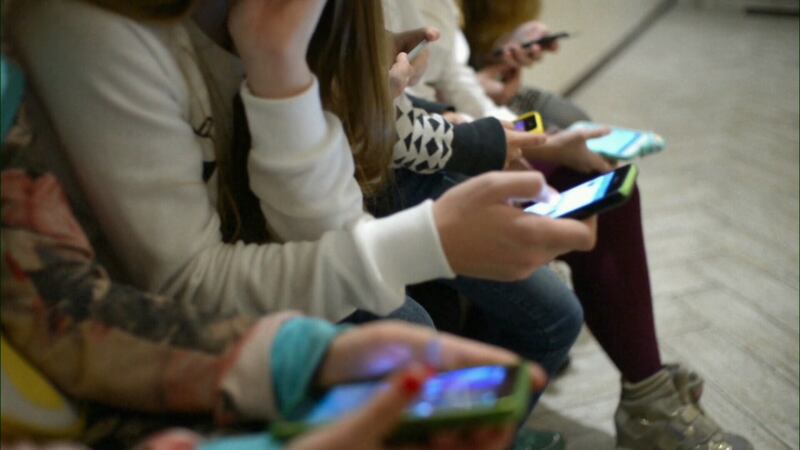
Some students say screens are every day, all day
A group of Fredericton-area students shared with CTV News Atlantic just how much screens are part of their everyday lives.
It begins at school where, for four to five hours, they say they’re working on laptops, building PowerPoint presentations or watching documentaries.
In the evenings, it’s about one hour of homework on the laptop and then about two to three hours scrolling social media.
“I think it’s just such a basic thing that we do every day, it’s kind of your day-to-day thing and it’s hard to stop,” one student said.
Another admitted it can be addictive.
“When I’m on Instagram or TikTok, I watch the videos and then something is interesting so then I just find myself continue watching them,” she said.
But is the guideline of spending two hours or less of their free time on screens realistic?
They don’t think so.
“Cause like, everything’s on social media now. Anything you want to find is just there. If you’re on a sports team, your team roster, your sport has an Instagram account,” another said.
Ponti feels two hours or less of recreational screen time is realistic since there’s already so much a student needs to fit into a day, between sleep, school and exercise.
“So, if you add up all those hours, there’s not that much left in a day for excessive screen time,” she said.
But if we’re encouraging youth to use them in a positive way, that can make a big difference, she says.
“They’re not going anywhere, right? Screens are here to stay. So, let’s use them to enhance our lives, enhance our relationships, rather than sort of pull back and detract from all of that.”
For more New Brunswick news, visit our dedicated provincial page.

