Hundreds of thousands of charges against drivers, including careless driving, speeding, dooring and failing to stop, are being withdrawn before trial as one judge says Ontario’s provincial offences court system is in “shambles.”
That’s a major increase from only a few years ago, court statistics show, as victims injured by cars feel abandoned by a system whose wheels grind slowly but which can drop a case in just moments, and critics worry of a large-scale decrease in road safety in general.
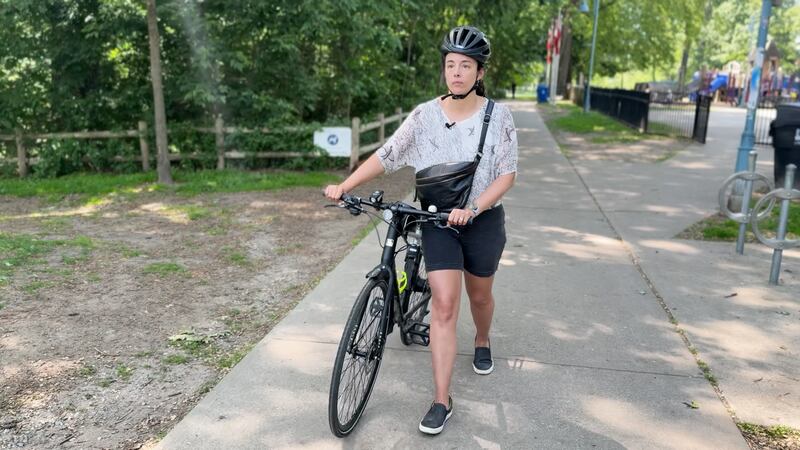
“It’s a huge slap in the face. How could this happen?” said Sabrine Chanda, a 25-year-old Toronto student who was knocked off her bike by a car while riding in a bike lane on College Street at University Avenue last year.
“Someone made a left turn and didn’t look to see who was already in the bike lane,” she recalled. “I was hurt pretty bad.”
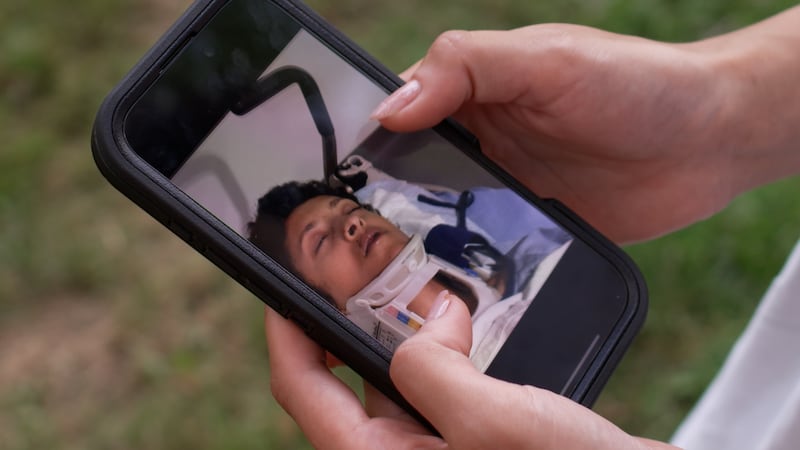
Chanda was knocked unconscious in the collision. Pictures show her facial fractures, as well as injuries to her teeth, cheekbone and jaw. The driver was charged with reckless driving.
But months later, in May, the Crown dropped the charge. A transcript shows the Crown said it did not have disclosure in the case and still didn’t have a DVD that had been requested back in November.
In another case, Sarah Dermody was knocked off her bike when a driver opened a car door into her along Queen Street East in 2023.
“The driver knocked me over on my side, and I hit my hip and my shoulder and my head,” Dermody told W5. She said she felt lucky there wasn’t a car in the lane she was pushed into.
“I now have recurring severe headaches that I didn’t have before the accident. Ongoing shoulder and back issues,” she said.
The driver was charged, but a transcript shows the prosecutor asked to withdraw the charges for lack of disclosure to the defence lawyer.
“It’s really upsetting. It feels like it’s not a priority. Essentially, the driver, and the community, are being told that dooring someone doesn’t matter,” Dermody said.
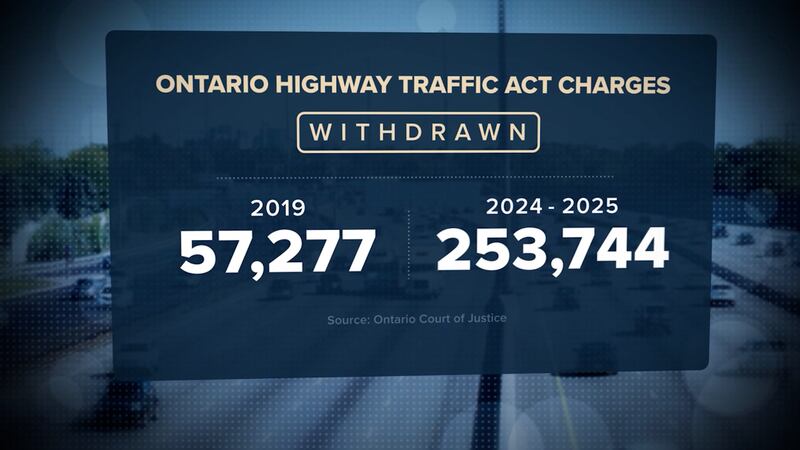
Court statistics show the number of dropped charges are skyrocketing in Ontario. In 2019, about 57,000 Highway Traffic Act charges were withdrawn before trial.
Between April 2024 and March 2025, that number rose to about 253,000 – about 10 per cent of all Highway Traffic Act charges. The highest number of withdrawn charges were speeding at 88,000, running a red light at 38,000, and driving without a permit at 19,000.
W5 checked other provinces for a similar pattern but found nothing comparable in B.C., Alberta or Quebec.
In a frustrated ruling in March, Justice of the Peace Robert Shawyer described the provincial offences prosecution as “a system in shambles. Shawyer blamed a lack of an effective and proper file management system at the prosecutor’s office.
“Instead of having access to a modern file management and disclosure distribution software program, prosecutors are left managing their files and getting disclosure to defendants via a patchwork system that is held together by some bailing wire and twine, with a hope and prayer thrown in for good measure,” he said.
Lawyer David Shellnutt, known as “The Biking Lawyer,” said faith in the system is at stake.
“That small little sense of justice they’re hoping for vanishes. It’s terrifying. What this tells us is that there is not the correct focus on safe streets out there,” Shellnutt said.
“We should have the premier and the minister of transportation talking about road safety and how dozens, thousands, perhaps hundreds of thousands of people are getting away with serious traffic infractions. How do you expect that behaviour on our roadways to change if you’re not even pressing the basic charges against these people?” he said.
The governing Progressive Conservative party is in the midst of drafting legislation that would outlaw automated speed cameras, several years after crafting the legislation that allowed them.
Reached Monday at an unrelated news conference, Ontario Transportation Minister Prabmeet Sarkaria defended the province’s road safety regime, pointing to recent laws that give police powers to impound cars at the roadside for certain offences.
“Ontario – one of the toughest jurisdictions – whether it’s on stunt driving or impaired driving, all of those offenses were increased in fines and penalties,” Sarkaria said.

Those penalties never came in Chanda’s case. She said she is still doing physiotherapy exercises every day, with her degree, and life, still on hold while she recovers.
“This happening means that first this driver is going back out, maybe thinking they’ve done nothing wrong. And then other drivers are getting bolder and bolder and thinking they can (get) away with these kinds of things and not realizing the impact it’s going to have on people,” she said.

