Driving along a quiet Fort Erie, Ont. neighbourhood, it’s nearly impossible to miss which house the Fayemi family live in. Rows of chairs line the driveway -- where high school students, teachers, their friends, work colleagues and the community they built over three years -- fill the seats. Inside the home, a flurry of activity as Taiwo Fayemi stuffs every clothing item she owns into suitcases -- knowing this is likely her last day in Canada.
“It is traumatizing for me, I never ever ever dreamt this [day] will come,” Taiwo told CTV News in an interview on Saturday -- saying she has a flight out for her and her children the next day. “I feel so terrified. Even the little kids, they come and ask me ‘why are we packing?’ I could not tell them.”
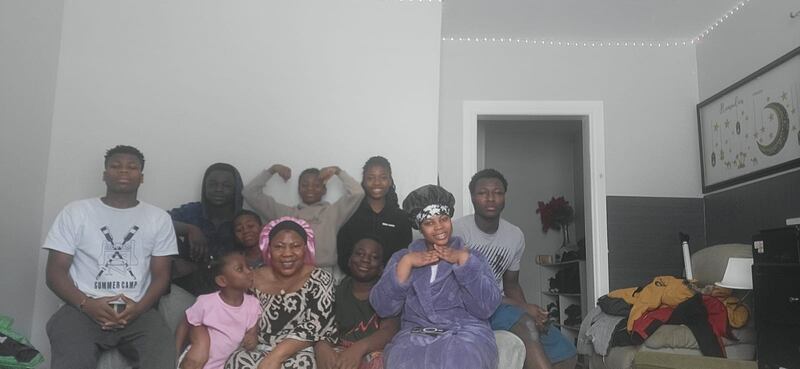
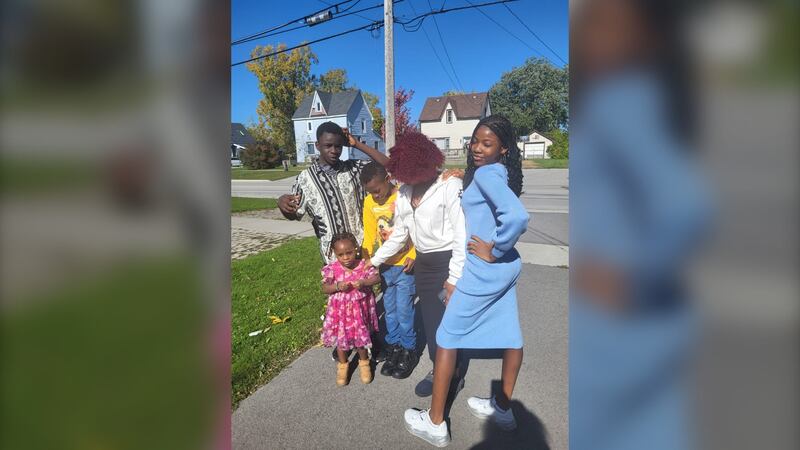
Fayemi lives in her Fort Erie home with nine children between the ages of four and 19. She says six of them are her biological children and three are her stepchildren.
To complicate matters, one of her daughters, Amirat, was diagnosed with Acute Myeloid Leukemia in 2022 and remains in and out of hospital care in Windsor, Ont. according to the family’s legal advisors.
“One of us has to stay -- but they’re not allowing any of us to stay to donate our bone marrow for her,” Amirat’s sister, Biliquees Fayemi, told CTV News through tears. “And the hospital is now saying we are no longer covered by the government, and we have to pay out of our pockets.”
“Now, they’re sending us back and we don’t even know who is going to get us from the airport -- and now we have to pay the hospital bill for my sister so she can continue her treatment.”
“Her conditions are really worsening and it is very, very likely need stem cell or bone marrow donation from one of her siblings -- and if her siblings are getting deported, we are cutting her chances to survive this very, very acute form of cancer almost down to zero,” said Nicole Arghandewal, a postgraduate law student at York University who is helping the Fayemi family.
“We filed an emergency deferral request application to [Immigration, Refugees and Citizenship Canada] and to [Canada Border Services Agency] yesterday and very kindly requesting to hear us out, intervene and stop this deportation,” Arghandewal added.
Family fleeing political violence in Nigeria
The Fayemi family were on a holiday in the United States in 2022 when the childrens’ father, Afeez Fayemi, had to return to Nigeria due to his political obligations, according to their application for permanent residency on humanitarian and compassionate grounds submitted earlier this year.
The family claims Afeez was kidnapped due to his affiliation with the Peoples Democratic Party, but has now been able to escape and is in hiding, fearing for his life, according to Arghandewal.
While the family was in the U.S., Amirat became “extremely ill” and had to be airlifted to a hospital where she was diagnosed with leukemia, according to the family’s permanent residency application.
Given the circumstances and the believed threat of kidnapping to other family members, Taiwo and her family decided not to return to Nigeria. Instead, they travelled up to the border to Canada where they crossed from New York state to Quebec through Roxham Road, a major crossing point for asylum seekers.
The rural road gained notoriety and was eventually closed in early 2023, but not before roughly tens of thousands of asylum seekers had crossed into Canada.
Since then, Taiwo said she’s worked as a personal support worker in Fort Erie while the nine children attended school and volunteered in the community.
“When I heard [personal support workers] PSW is highly demanded in Canada, I pushed myself to serve this country,” said Taiwo. “Despite all the kids I have, I still created time. I completed a program. I was offered a job where I did my internship.”
Deported before humanitarian application heard
The family’s application for refugee status was denied because Taiwo says CBSA officers told her that she did not provide enough evidence that her family would be in danger returning to Nigeria.
“They said they’re not convinced because of the evidence we showed. We were not home when everything happened, so we don’t have the chance to have evidence,” said Taiwo, claiming that there are ongoing violent acts and threats against her family in Nigeria.
“Unfortunately, there is no proper justice, no democracy in the country. If you go against the regime, you’ll be gone by the next day,” said Arghandewal, referencing that Afeez was a candidate for one of the opposition parties. ”Disappearance of family members of opposition politicians, excessive abuse of force by police, unlawful arrests -- they are included in all the human rights reports published by the largest sources
The family, through their immigration lawyer, submitted an application for permanent residence on humanitarian and compassionate grounds that shows it was received by IRCC on March 3, 2025.
But the family claims their deportation date was assigned before they had a chance to have that claim heard.
“We don’t know what’s going to happen in Nigeria, it’s like the government is sending us home in a body bag,” said Taiwo.
IRCC did not respond to our request for comment on this case in time for publication.
CBSA spokesperson Rebecca Purdy told CTV News that CBSA “has a legal obligation to remove all foreign nationals found to be inadmissible to Canada under the Immigration and Refugee Protection Act. The timely removal of inadmissible foreign nationals plays a critical role in supporting the integrity of Canada’s immigration system.”
“It should be noted that humanitarian and compassionate applications do not stay the removal of an individual until an application is submitted and IRCC officer grants stage 1 approval. There are legislated factors that allow or deny access to some of these processes,” she added.

