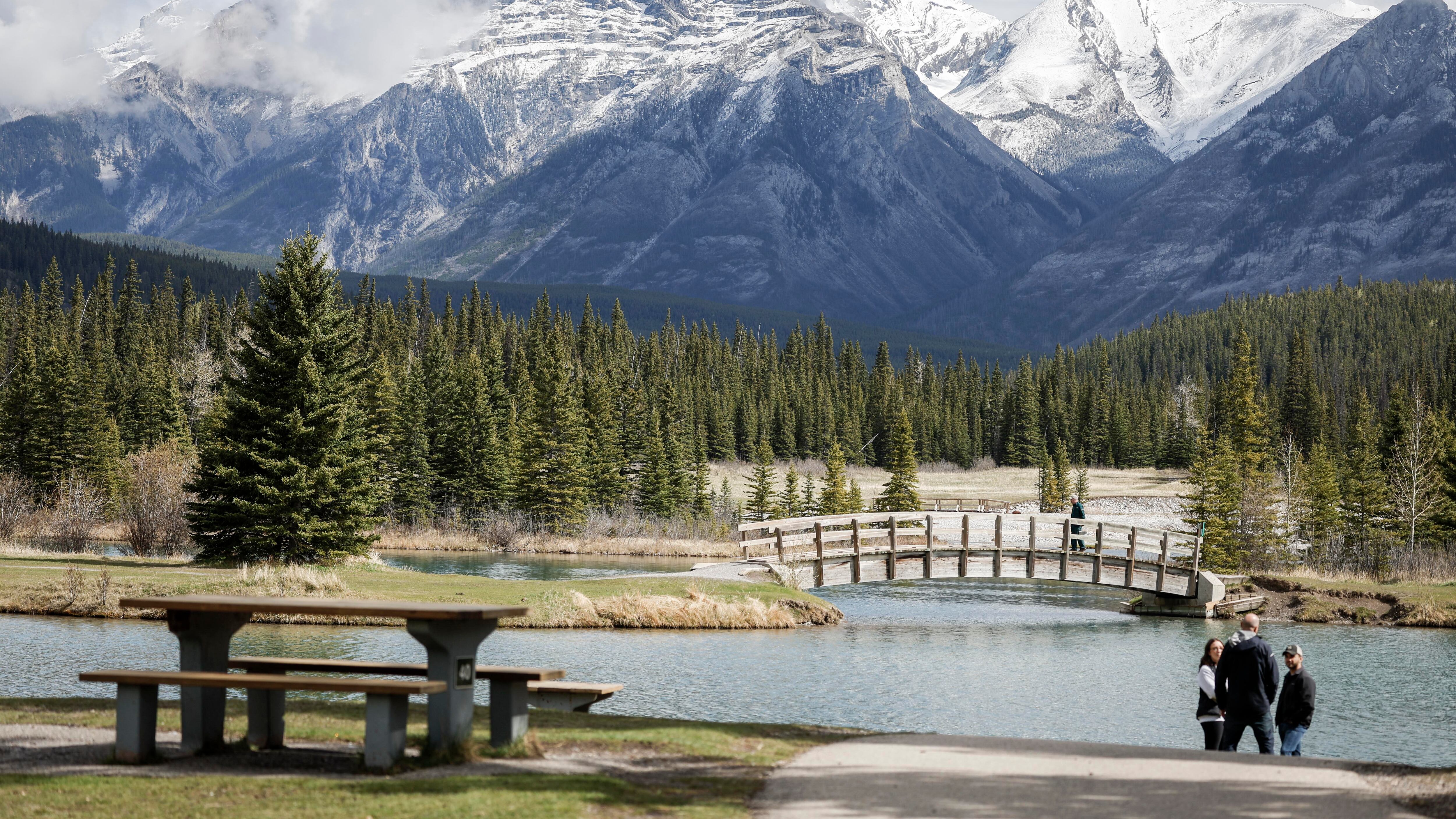
The number of tourists visiting hotspot destinations in Banff National Park has surged, causing major congestion. In response, Parks Canada is conducting visitor use management planning for these specific areas.
“From April until now, our visitation stats show an overall 8.7 per cent increase compared to last year,” said Daniella Rubeling, Banff field unit visitor experience manager.
Banff town, one of the park’s most popular destinations, has a population of roughly 9,000 yet sees 4.2 million visitors every year.
“Last year we had a record 6.7 million vehicles come into the town site, and this year we are trending about six per cent above that,” said Corrie DiManno, Mayor of Banff.
“Our road network gets very overcrowded. The data show traffic congestion starts once we hit over 30,000 vehicles a day.”
The record numbers are putting a strain on residents and on the small area whose land boundary has been fixed since 1990.
“We hear from some residents that there are too many people here, and from others that there are too many vehicles,” said DiManno.
Addressing long-term congestion
Anita Battrum has lived in Banff for decades.
“My grandfather came here in 1907,” she said.
But she has grown accustomed to the crowds.
“It’s for the tourists. That’s what we’re here for. It’s their park. They’re allowed to come and look at it.”
To ease congestion, public transit buses are available to take visitors around town, and parking is available outside Banff’s main street.
The town council is also working with Parks Canada on developing a visitor use management framework to address long-term congestion. The framework is based on one used by the U.S. National Park Service.
“We want to be proactive and position ourselves to handle the level of visitation we are expecting in the future,” said DiManno.
Parks Canada is conducting similar planning for other overrun destinations within Banff National Park, including Lake Louise, Moraine Lake, and Lake Minnewanka.
For Lake Louise and Moraine Lake, short-term measures have already been implemented because vehicle traffic was unmanageable.
“It’s been a dramatic increase, especially in the Lake Louise area,” said Francois Masse, Lake Louise, Yoho and Kootenay field unit superintendent.
“The parking lots were full, and parking started spilling onto the roads. At some point, emergency vehicles could not get through.”
Only shuttle buses are allowed to Moraine Lake, and this mode of transportation is also highly recommended for Lake Louise to ensure a positive visitor experience.
For all areas, the visitor use management framework includes public consultation.
“There will be an engagement with the public on the draft area plan, which will lay out options for visitor use management. The public can provide feedback before any specific measures are rolled out,” said Rubeling.

