Editor’s note: This story is a collaboration between CTV News and the Investigative Journalism Foundation (IJF)
Over a ton of methamphetamine seized in the two largest busts in New Zealand history both came from Canada, hidden in containers of maple syrup and beer. But RCMP have never charged anyone for exporting those drugs, according to an exclusive W5/IJF investigation, raising critical questions about what Canadian authorities are doing to stop the flow of methamphetamine to countries like New Zealand.
In Jan. 2023, New Zealand customs officers intercepted 713 kg of methamphetamine exported from Canada. The drugs had been concealed in bottles of maple syrup.
New Zealand police arrested six men in the months following the seizure. With a street value estimated to be roughly NZ$250 million, or just over $200 million, the seizure is the largest ever at the country’s border, arriving by sea freight.
Then, in March 2023, the tragic death of Aiden Sagala in Auckland became the launching point for a major drug investigation by New Zealand Police.
The 21-year-old died after accidentally drinking pure liquid methamphetamine – concealed in beer cans labelled “Honey Bear House Beer”– that had been exported from Canada.
His boss, Himatjit “Jimmy” Kahlon, was handing out cases of the beer at work and had given Sagala a couple. What Sagala didn’t know was that Honey Bear beer is not a real brand and that Kahlon was involved in a drug trafficking network and had been helping crystallize and prepare the liquid meth for sale.
In getting rid of the excess beer, Kahlon mistakenly gave Sagala a case that still contained cans of methamphetamine. Sagala happened to drink from one of those very cans.
He had been living with his sister, Angela, when he died.
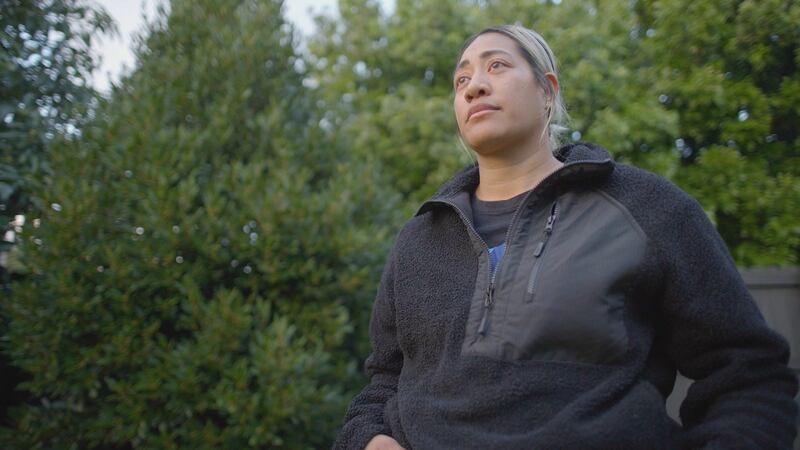
“He was our everything… he just was the life of the house, always brought a smile to everyone’s face,” Angela told W5’s Avery Haines in a recent interview.
“My brother’s a hero because… his death is the reason why they had found out about this. So if he didn’t die, it’d be still going,” said Angela.
Meth den
Following Sagala’s death, New Zealand Police raided a warehouse where Kahlon had been captured on CCTV removing cases of the beer. Police discovered towering pallets of the Honey Bear beer. Nearly 29,000 cans of it had been shipped from Toronto to New Zealand, most containing actual beer.
Police also found shipments of kombucha from the U.S., coconut water from India and additional cases of beer from Toronto, all of which were used to conceal imports of methamphetamine to Auckland.
The warehouse was covered in meth.
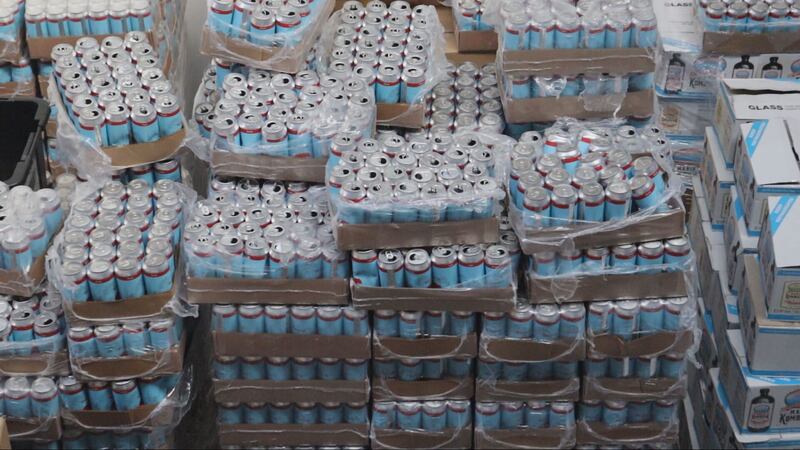
It blanketed almost every surface – on empty beer cans, the floor, in the bathroom and there were white crystals piled in buckets.
In what was dubbed Project Lavender, the police operation ultimately resulted in the seizure of 747 kilograms of methamphetamine, largely stored in that warehouse. It was the largest single seizure of meth in New Zealand history.
Kahlon would be convicted of manslaughter in the death of Sagala, as well as possession of methamphetamine for supply, and was sentenced to 21 years in prison.
- For tips on this or any other story email: joseph.loiero@bellmedia.ca
He is currently appealing that decision.
A second man, Baltej Singh, who’s a respected businessman in Auckland and comes from a prominent family in India, was also charged with running the import operation.
Singh was sentenced to 22 years for importing methamphetamine, possession of methamphetamine for supply, importing ephedrine and possession of cocaine for supply.
On Tuesday, New Zealand Police announced the seizure of real estate property estimated at NZ$36 million (or just under $30 million), alleged to be connected with the importation and supply of methamphetamine in Project Lavender.
RCMP inaction
In a rare interview, RCMP Chief Superintendent and Director General of the National Serious and Organized Crime Program, Mathieu Bertrand, sat down with W5’s Avery Haines to answer questions about what the RCMP is doing to combat the exportation of methamphetamine to New Zealand.
Haines: The largest meth busts in New Zealand’s history, both came from Canada -- maple syrup and Honey Bear beer. Have any arrests been made in Canada for the people who shipped that product?
Bertrand: I can’t speak to that. It’s a very serious issue that those shipments came through Canada, but the RCMP was not involved.
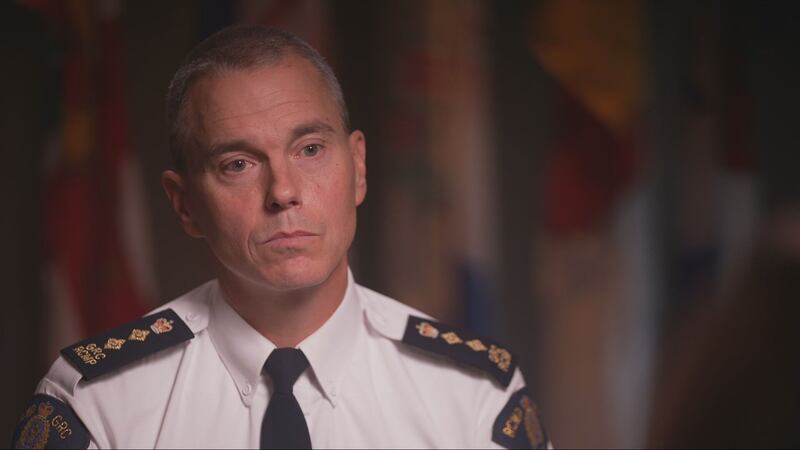
Haines: Why would the RCMP not have been involved in that?
Bertrand: There’s many factors that are considered when determining which agency is best suited to take on a specific investigation. So, in these cases, that would not have been the RCMP, and therefore there’s a partner better positioned to be able to respond.
Haines: Who would that be?
Bertrand: I’m not sure, I’m not familiar with that case.
In a follow-up exchange with W5, an about face.
An RCMP spokeswoman confirmed the agency was indeed involved in the Canadian side of the Honey Bear beer investigation.
“The RCMP did receive intelligence reports from the New Zealand Police (NZP) and investigated it,” according to an emailed statement to CTV News.
“The RCMP assisted with information-sharing and international coordination. The team assisted with background checks, a cursory analysis of the network, engaged with New Zealand Police (NZP) intelligence unit, engaged with the CBSA Targeting Liaison Officer, and liaised with the international desk,” the statement added.The spokeswoman also confirmed the RCMP investigation did not lead to any charges against the people responsible for exporting the meth that killed Sagala and will not provide additional details as to what their investigation entailed or why no one was charged.
RCMP have directed any further questions about the Honey Beer bear case to New Zealand Police.
Searching for answers
W5 has obtained court documents from New Zealand that provided some leads as to who was responsible for the meth shipment from Canada.
They revealed the Canadian company that shipped the Honey Bear beer was Petrichor Beverages Inc. The documents also included a residential address in Surrey, B.C. and the name Azizdeep Sandu. W5 and the IJF then obtained Canadian corporate documents and shipping records confirming Petrichor was directed by an Azizdeep Singh Sandhu at that Surrey address.
When Haines visited the Surrey house, the current residents confirmed a person named Azizdeep used to live in the basement but had since moved.
The Canadian corporate documents show Petrichor was incorporated in 2021 — the year before the beer was shipped to New Zealand — and does not appear to have shipped anything else in its brief existence. The Canadian federal government dissolved the company in 2024 for unspecified “non-compliance.”

The corporation documents also listed a cell number for Sandhu.
When Haines reached Sandhu by phone, he denied being the director of Petrichor, or being involved with the Honey Bear beer shipment or methamphetamine. He said he’s a truck driver. Sandhu also stated the RCMP have never phoned him.
Sandhu did confirm that he used to live at the address in Surrey, B.C. which was listed in the New Zealand court documents. He says he now lives in Delta, B.C.
Sandhu requested Haines follow up with him by email, but he has not responded to those messages. Following a phone call by Haines to him, Haines’ phone number was subsequently blocked, Sandhu’s photo was removed from his WhatsApp profile, and the security settings on his Facebook page were tightened – the same profile that includes the quote, “Nothing is illegal until you get caught.”
Land title documents confirm an Azizdeep Singh Sandhu owns a house in Delta, B.C. They show the house is worth $1.3 million and was purchased in March 2023, the same month Sagala passed away.
Haines visited the house in Delta, B.C. but several knocks at the door went unanswered.
Two and a half years after his death, Sagala’s sister, Angela, cannot believe no one is being held responsible in Canada.
“That’s just shocking,” said Angela. “It makes me even more angry now just hearing about that. If the police on our end have done everything to give the information over to Canada… it needs to be more.”
This is part 2 of a 4-part series collaboration between W5 and the Investigative Journalism Foundation looking into Canada’s role as a major exporter of methamphetamine. Tomorrow, part 3 looks at the cartel footprint in Canada.

