Editor’s note: This story is a collaboration between CTV News and the Investigative Journalism Foundation (IJF)
A high-ranking RCMP officer is painting a disturbing picture of the cartel footprint in Canada.
In a rare interview, RCMP Chief Superintendent and Director General of the National Serious and Organized Crime Program, Mathieu Bertrand, revealed to W5’s Avery Haines that at least seven cartels are active in Canada.
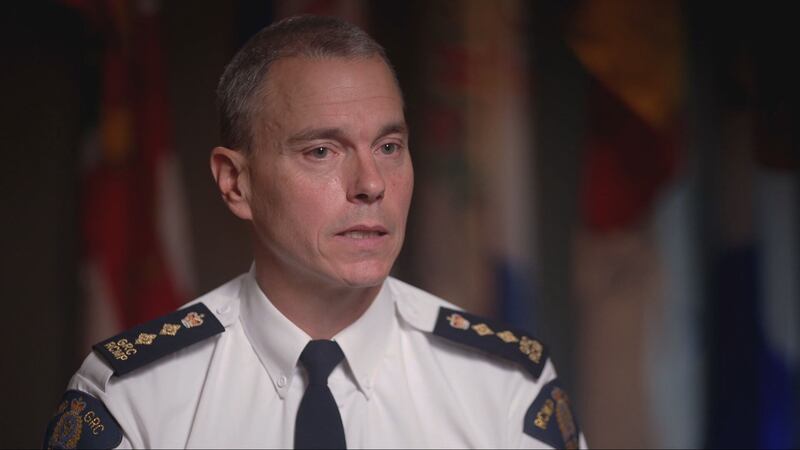
“We are aware that they [cartels] are a source of a lot of the illicit goods coming into Canada. These organized crime groups, whether they be in Canada or abroad, are using Canada as a trans-shipment point,” said Bertrand. “Those groups… are very much involved in crime impacting Canada.”
Earlier this year, the Canadian government listed those seven cartels as terrorist entities, noting that “their drug trafficking activities are a risk to our national security and must be stopped, using all tools available.”
Those seven cartels are international criminal gangs with roots in South and Central America. They include:
- La Mara Salvatrucha, or MS-13
- Cártel del Golfo
- Cártel de Sinaloa
- La Familia Michoacana
- Cárteles Unidos
- Tren de Aragua
- Cártel de Jalisco Nueva Generación
When asked by Haines if each of those seven cartels are active inside Canada, Bertrand responded, “Yes.”
According to a 2023 RCMP intelligence document obtained by the IJF, international gangs, including Mexican cartels, are increasingly using Canadian ports as a transhipment point to send their meth to countries like New Zealand and Australia.
- For tips on this or any other story email: joseph.loiero@bellmedia.ca
New Zealand, where meth is more expensive than anywhere else in the world, is seen by transnational crime groups as a “golden nugget,” according to a senior New Zealand police officer. In Mexico, meth costs about $500 a kilogram. In Canada, that same amount sells for $10,000, while in New Zealand one kilogram sells for almost $300,000.
New Zealand Customs data obtained by W5 and the IJF indicate that Canada is the number one exporter of methamphetamine to New Zealand in the world. From 2020 to 2024, New Zealand seized more meth from Canada than from any other country -- 1,200 kilograms -- with an estimated street value of about $350 million.
“These organized crime groups, they’re Fortune 500 companies…They study the market just like we do…They know that there’s vulnerabilities in certain countries,” Bertrand said.
When pressed on whether Canada is one of those vulnerable countries, Bertrand insisted that we are not. Despite that, Bertrand revealed exclusively to W5 that starting in 2026, the RCMP will station a liaison officer in New Zealand to better share intelligence with customs agents there.
Lab busts
In the last two years, RCMP have dismantled 11 meth labs across Canada, including a bust in 2024 that dismantled the largest most sophisticated lab in Canadian history, linked to a Mexican cartel.
When RCMP raided a farm in Falkland, B.C., it was like a scene out of the hit TV series Breaking Bad.
Investigators in full hazmat suits emerged with drug- cooking instruments and a cache of weapons, including AR-15 assault rifles and submachine guns -- many of them loaded and ready for use.
Eighty-nine firearms were seized in total, along with high- capacity magazines, body armour and explosives.
The haul of drugs was massive., Iincluding a total of 700 kg of methamphetamine.
RCMP noted drug chemists at that laboratory were using a method to produce meth that is preferred by Mexican cartels. At the same time they raided the lab in Falkland, RCMP conducted related searches in Surrey, B.C., including one on a shipping container where they found meth destined for export.
Meth down under
Many of those exports often end up down under.
Tim Fitzgerald, the Deputy Commissioner of National Operations with the Australian Border Force (ABF), noted that cartels are increasingly using Canada transhipment point for their drugs.
“Some meth appears to be manufactured within Canada and others, cartels moving it into Canada and then trans-shipping through Canada to Australia in an attempt to disguise the origins of the goods that they’re concealed in,” said Fitzgerald.
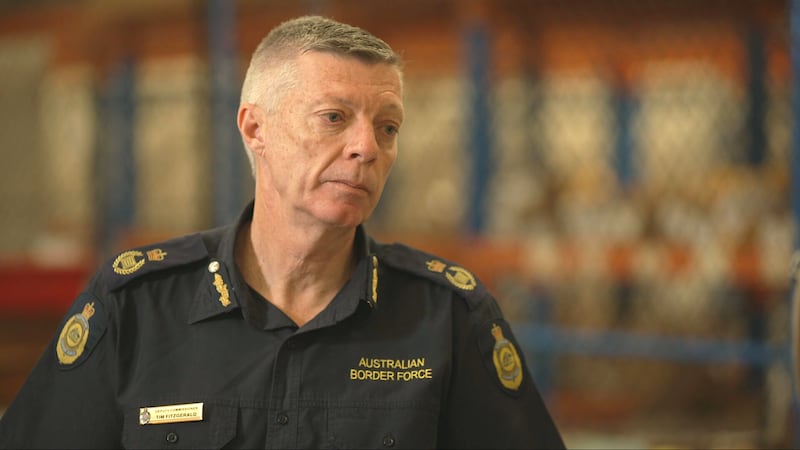
According to Fitzgerald, shipments from Canada raise less suspicion at the border in Australia than from countries like Mexico.
“But that doesn’t mean we’re not looking,” added Fitzgerald.
Suspicious package
Australia’s largest mail sorting facility is located in suburban Sydney. Approximately 60 per cent of the country’s mail gets sorted there.
While W5 was touring the facility with Fitzgerald, one of his team members flagged a box mailed from Canada.
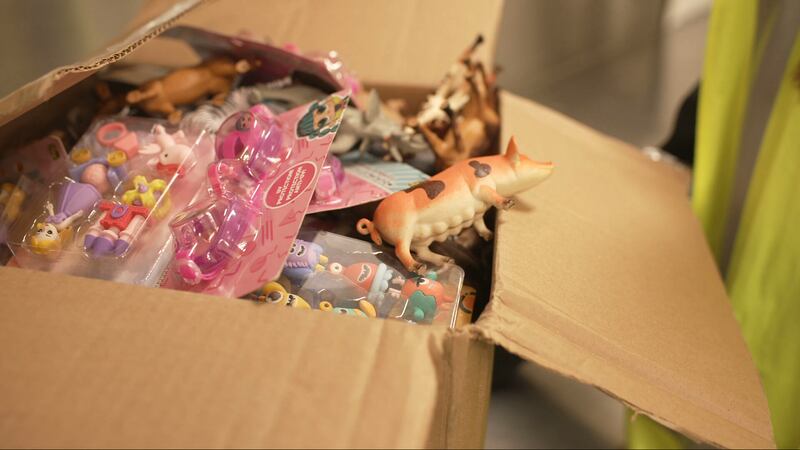
Vera Petros, an ABF officer, noticed a light orange colour inside the box when it was x-rayed – a potential indicator there were drugs inside. So she set it aside.
The package, shipped from Nobleton, Ont., was filled with plastic toys. Upon further inspection, Petros noticed some of the toys looked suspicious.
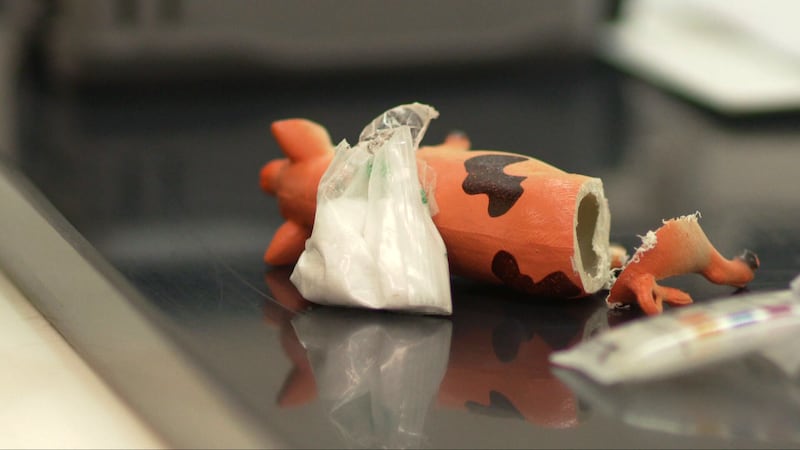
One in particular: a plastic pig.
“We can see a little bit of glue residue on the side. So what we’ll do is cut into it and just see what we can find on the inside.”
Petros sliced open the pig. Inside, there were two small baggies stuffed with white powder, which she then tested.
“That is methamphetamine from Canada,” Petros confirmed.
While a number of the toys were filled with methamphetamine, the amount was not enough for an international police investigation.
This is part 3 of a 4-part series collaboration between W5 and the Investigative Journalism Foundation looking into Canada’s role as a major exporter of methamphetamine to New Zealand and Australia. Tomorrow, rare interviews with New Zealand gang leaders and the devastating impact meth from Canada is having on just about every community in New Zealand.

