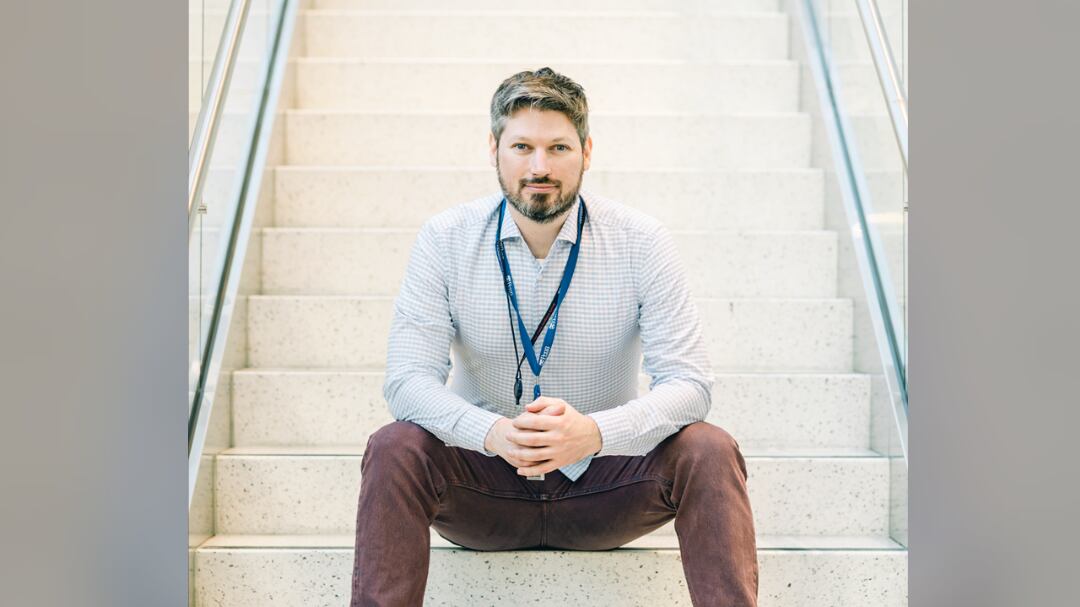
After more than a decade of growing his career in cancer research in Australia and then being recruited to a coveted position in the U.S, Canadian-born scientist Wes Wilson packed up his lab at Penn Medical in Philadelphia and has moved 800 kilometres north to Toronto.
“This is, it is kind of surreal,” said Wilson.
The move was sparked by an innovative program called Canada Leads, launched in April by Toronto’s University Health Network. Its mission is to reverse decades of scientific brain drain by offering salaries, lab space, and collaboration opportunities to promising young researchers around the world.
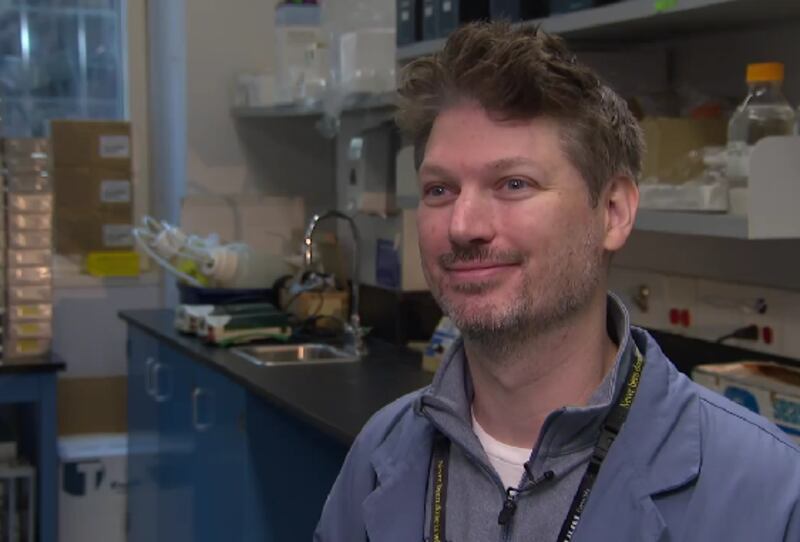
For many scientists like Wilson, who is now 40, the U.S had long been the land of opportunity. That began to change in 2025 as the new Trump administration began to slash research funding, curtailed scientific programs and gutted support for public health initiatives.
“The current environment in the United States around biomedical research is definitely one of hostility... and that has made working in those environments unpredictable.”
Wilson says he witnessed clinical trials stopped midstream, and hundreds of staff laid off. Some colleagues, he says, are still planning their exits.
“People are talking about Europe. People are talking about Canada and Australia. It’s a weird situation,” he said.
But he admits he might not have moved back to Canada were it not for the program.
“To have that secured funding, to know that this work is going to have an impact on patients, was a deal breaker,” said Wilson.
UHN, which includes Toronto General, Toronto Western and the Princess Margaret Cancer Centre, raised $30 million in philanthropic donations to fund the campaign, the first and one of the largest in the country to date. So far, a hospital official says that 25 scientists from the U.S., Europe, Japan, New Zealand and Canada have accepted offers. Another 75 position are expected to be filled in the coming months.
“It’s about sending a message,” said Brad Wouters, Executive Vice President of Science and Research at UHN. “Canada wants to be a place that preserves and promotes science, in stark contrast to what’s happening in the United States right now.”

Wouters says the response to the call for applicants has been overwhelming.
“We’ve got a registry where individuals can sort of put up their hands saying they’re interested in the Canada Leads program. There’s over 600 people that have done that, and if you look at the distribution, about half are from the United States, but a third are from Canada, and the others are from the rest of the world.”
Wouters says the recruiting team is making four to five offers every week. The program, he says, is also helping to retain home-grown talent.
“Many Canadian scientists leave early in their careers for the U.S because that’s where the funding is… and with programs like this, we can keep them here," he said.
“What’s not what’s keeping them from coming here are opportunities and funding. Because when we’ve made this funding available, we’ve seen massive interest in this and massive opportunity,” he added.
Crisis as opportunity
Wilson has been working on advanced cellular therapies, called CAR-T, for brain tumours and other cancers. Witnessing colleagues being laid off, studies -- some years in the making -- cancelled, was profoundly life-changing.
“It was devastating,” said Wilson.
“Research takes time and long-term funding. When your clinical trial is suddenly defunded midway, that’s not just a waste of money, it’s a betrayal of the patients who volunteered.”
The Scarborough-born native says one of the highlights of the new position is that he is working with legendary Canadian oncologist Dr. Tak Mak, the scientist behind the ground-breaking discovery of the T-cell receptor in 1983, which helped lead to new therapies used in cancer treatment today.
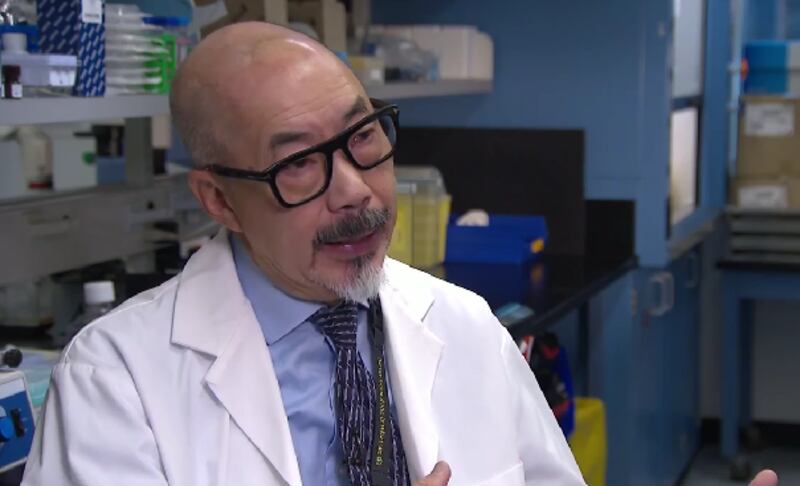
“To be in his lab now, collaborating, it is mind-blowing,” said Wilson. When I was an undergrad, I saw him speak and thought, ‘This guy is a god.’"
For Mak, now 79, Wilson brings a critical skillset for the modern era of medicine -- an understanding of biology and expertise in using AI to extract data.
“Everything in medicine is AI now,” Mak said. “We are flooded with data, decades worth of it, but unless someone knows how to merge biology with clinical knowledge and AI, we can not make sense of it. Dr. Wilson fits the bill exactly.”
Wilson will be working on research into liver and pancreatic cancer along with melanoma, and has his eye on glioblastoma, a deadly brain tumour, part of his work at Penn Medicine.
A national funding gap
Few hospitals or research groups in Canada can fundraise for programs like UHN’s. An informal survey of hospitals and research agencies in Canada by CTV News found few were actively pursuing talent looking for a new home.
Not surprising, said Wouters.
“Research isn’t always seen as urgent when you’re trying to keep emergency rooms open.”
The largest funding of research and development has traditionally been the federal government. But data from the World Bank shows that Canada now ranks sixth out of seven G7 countries in science funding, and sits below the OECD average.
“The Canadian government is not really very supportive of research overall.” said Mak who says too many Canadian ideas and the jobs they create are lost to other countries.
“We have to fund fundamental science that will drive technologies... that can help Canada. We cannot sit back and just read the newspaper and find out what other people have done and that we have missed.”
Research by Support Our Science, a national advocacy group, found that for every dollar invested in research, there is a nearly $5 return as discoveries create jobs and new markets for Canadian products, said Stephen Holland, deputy director of the organization and PhD student at the University of Ottawa.
“Canada has this moment, this window,” said Holland. “But we need to build the infrastructure to support these researchers. We can’t just attract them, we have to keep them.”
With the federal budget expected Nov. 4, many in the scientific community are awaiting signs of a renewed commitment in a field, with more than 2,700 researchers from the country signing a letter to Prime Minister Mark Carney to help fund research that could lead to new industries.
When CTV News contacted the finance department for any sign that that additional support for research and development might be in the upcoming budget, officials wrote that they “will not comment on what may or may not be under consideration.
For Wilson, meanwhile, the move home has also been a learning opportunity. He’s navigating the challenges of finding an affordable apartment and bemoans the loss of Hudson’s Bay -- but welcomes steady access to Tim Hortons coffee after years of U.S supply.
“It’s fresh, affordable and decent, he says with a laugh.

