Several libraries offering free radon testing kits in New Brunswick ran out of kits within two days of the province rolling out Canada’s first publicly funded radon testing program.
“Thirty-five libraries in New Brunswick Public Library Service have temporarily run out of kits and additional test kits are being shipped today and tomorrow,” Jean-Claude D’Amours, minister of post-secondary education, training and labour said, noting that demand had exceeded the province’s expectations.
“Anyone who wants a kit will get one as more kits have been ordered,” D’Amours said.
Radon forms naturally when radioactive metals break down in rocks, soil and groundwater. It’s an invisible, odourless gas that seeps into homes and buildings through cracks in the foundation.
NB Lung highlights how radon is the leading cause of lung cancer in non-smokers and the second leading cause of lung cancer overall.
Melanie Langille, president and CEO of NB Lung said her organization has been advocating for years for improved access to radon testing and mitigation.
According to a Health Canada survey released last year, one in five Canadian homes have radon levels at or exceeding Health Canada’s guidelines of 200 becquerels per cubic metre (200 Bq/m³)
“In New Brunswick it’s one in four,” Langille said. “We see so many folks that don’t have the means to buy a test kit to see if their home is one of the ‘one in four’ in New Brunswick that have dangerously high levels of radon gas.”
CTV News spoke with Langille before learning that the province would replenish the kits at libraries that had already run out. She said her organization is thrilled New Brunswick has launched this program – a first in Canada but is also disappointed that the supply wasn’t sufficient and urged New Brunswick to rapidly restock the libraries.
“It’s so important to test your home for radon because every home that is in contact with the ground has some level of radon in it. The question is how much?” Langille said.
Heather Hogan, a lung cancer patient for over a decade, has also been advocating for better access to testing and access to radon mitigation. Her husband, Progressive Conservative MLA Bill Hogan, introduced a motion last fall that was voted unanimously on to see free radon testing across New Brunswick.
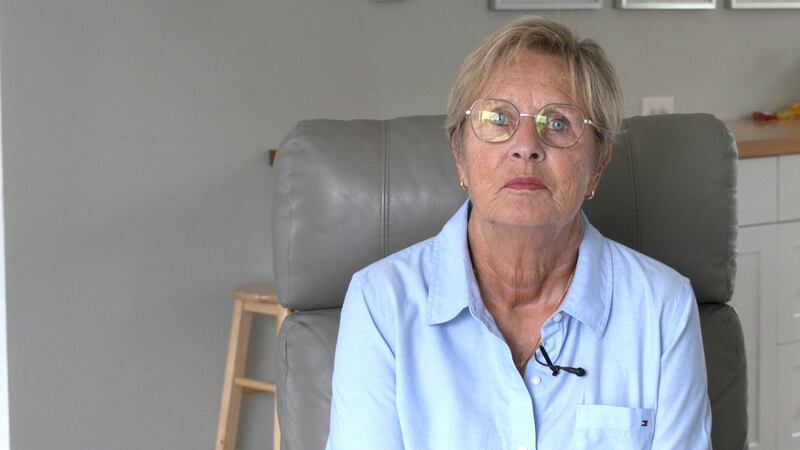
“It is a personal thing, but this affects a lot of people,” she said.
Hogan was diagnosed with Stage 3 lung cancer 13 years ago. She sought treatment and it appeared she was cancer-free, but recently the cancer came back. Before she had lung cancer, she hadn’t thought much about radon, but now she wants to make sure others do, she added.
“We know is that radon is the second highest lung cancer producer,” she said. “We need to find out those homes and those families that are in danger.”
When Health Canada did a cross-Canada survey of radon levels last year, she tested the home she had lived in for more than thirty years, only to learn it had radon levels of 430 becquerels per cubic metre – which is more than twice as high as Health Canada’s guidelines.
They chose to get their house mitigated immediately. Their mitigation system cost around $4,400, but she is aware that not everyone can afford to mitigate their homes. Hogan’s hope is that along with the free testing, more support could be provided to help people install mitigation systems.
“The government cannot pay for every house to be mitigated. However, are there ways that we could that grants could be offered for part of it?” she said.
Jeff LeBlanc, president of Radon Repair based in Moncton, tests homes for radon and installs mitigation systems.
LeBlanc explained that radon gets trapped underneath the house and then into the house. He installs mitigation system that includes a fan that creates an air suction to redirect the radon outside.
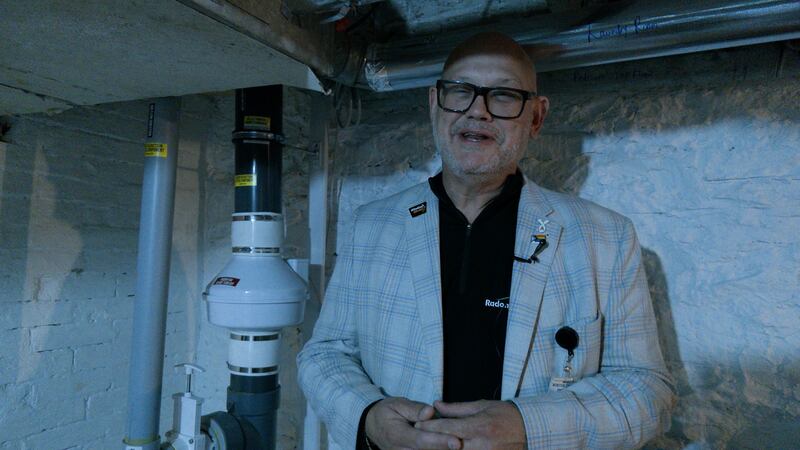
“We take it, and we spit it outside where it should have gone anyway, and it dissipates into fresh air,” LeBlanc said.
Depending on the house, a typical mitigation could cost between $2,500 and $4,000 before taxes, he said.
When it comes to using a 90-day tests like the government is offering, the important thing is to test the air that you’re breathing, he said.
“The radon is going to be higher in the basement or lowest levels. But, if you don’t spend more than four hours a day in that area, then you should test the next lowest level where you spend four hours a day,” he said.
While he’s glad people are talking about radon, LeBlanc pointed out that the province’s free kits are competing with certified members like himself who are selling kits. His business has received some cancellations and reminds that they offer testing services and radon testing kits as we as well for a fee.

