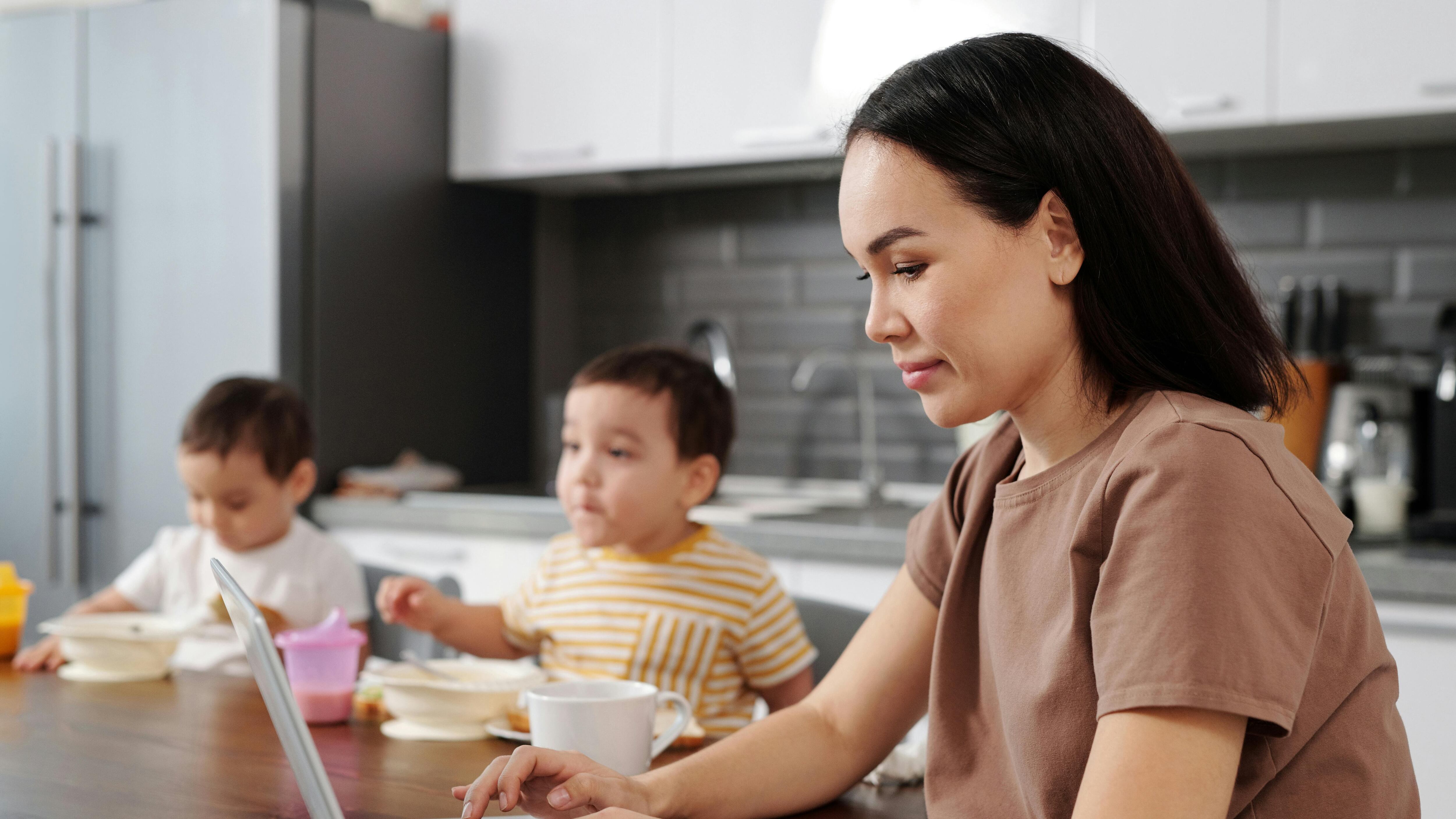
As companies across Canada enforce return-to-office (RTO) orders for employees, some wonder how to balance their responsibilities, especially mothers who juggle caregiving with their full-time careers.
The unpredictability and additional responsibilities mothers face on a day-to-day basis eased slightly for some when remote work became a norm throughout and after the COVID-19 pandemic. But recent changes requiring employees to come back to the office have upset that balance, according to one expert.
Only nine per cent of Canadian workers prefer to work in the office full-time, according to a survey by the Angus Reid Institute published in July.
Andrea DeKeseredy is a PhD student in the Department of Sociology at the University of Alberta who focuses on gender, work and family in Canada. She told CTVNews.ca on Tuesday that women face challenges like the lack of flexibility and increased responsibilities at home with the reversal of remote working conditions.
“One of the biggest differences here is that culturally, women are far more likely still to be the primary caregivers to children. And men are more likely to make more money, specifically fathers, when compared to mothers,” DeKeseredy said.
This is where the term “motherhood penalty” makes an appearance, she said.
“After women have kids, they take a pretty big pay cut due to the family work conflict that stems from having all of these responsibilities in the home and also the responsibilities at work,” she explained.
“In an ideal world, everybody would be equal. The effects of all these things would be felt equally, and it wouldn’t be a problem.”
‘Harms everyone’
Research by Institute for Research on Public Policy from 2023 showed that nearly 75 per cent of completely remote employees reported positive impacts on job satisfaction, compared to around 53 per cent of hybrid employees, and in-office workers.
Meanwhile, RTO orders across the country, including from employers like Rogers Communications, major banks and the Ontario public service were met with opposition from public-sector unions across the country, arguing that remote work could give people improved work-life balance.
According to DeKeseredy, when it comes to decisions about who will take on child-care responsibilities, one parent is often prioritized over the other – usually the parent who cannot work remotely and probably makes more income. Most of the time this is the father, she says, which leaves the mother to navigate through sick days and crises in the home, while also handling her work responsibilities.
She said RTO mandates are a step backwards from the conditions seen in many work places five years ago.
“One of the few positive things to come out of the pandemic was the reimagining of work,” she said. “All of a sudden, women had far more tools at their disposal to try to manage that unpredictability and pivot when family responsibilities popped up.”
According to DeKeseredy’s research, remote work options were paramount when it came to flu season.
“People that had access to remote, flexible options were far more likely to stay home from work when they were sick and also keep their kids home from work when they were sick,” she said.
Early returns to office meant parents who no longer had the flexibility of remote work ran out of sick days, which eventually led them to sending their children to school when they were ill, DeKeseredy added. Rather than the illness being contained at home, kids are at risk of spreading it on to each other and other families. Similarly, parents who run out of sick days and come into work may spread their illness to their colleagues.
“It really harms everyone, not just the kids, but the whole community,” she said.
‘Flexibility paradox’
Meanwhile, DeKeseredy spoke about two other terms in connection with her research – “flexibility paradox” and “flexibility remote stigma.”
Remote work can lead to resentment, as some assume these workers who are looking for options that allow them to balance their responsibility aren’t working as hard, and should be paid less, she said. That is called the “flexibility paradox.”
“Sometimes, when women and mothers are the ones working from home, they’re further stigmatized at work for it,” she explained. “They’ll make less money a lot of times.”
Additionally, when women work remotely, they take on more responsibilities in the home,which can tilt the balance between roles a mother and a father play in a family, leading to a “flexibility remote stigma.” This includes domestic labour, such as cooking and cleaning, and emotional labour, meaning handling relationships and making sure that the home is running smoothly.
While the RTO orders have primarily affected the mothers in a household, the inconvenience of travelling to the office and back, and the lack of time for family has affected the fathers and the children adversely as well.
“Not only does Mom need the option for workplace flexibility, increased sick days, increased paid family leave, but so does Dad,” DeKeseredy said.
“Until we get to that point where employers are more understanding of the unpredictability of family life and the conflict that it causes, we’re not all just solely relying on Mom to shoulder those burdens.”

