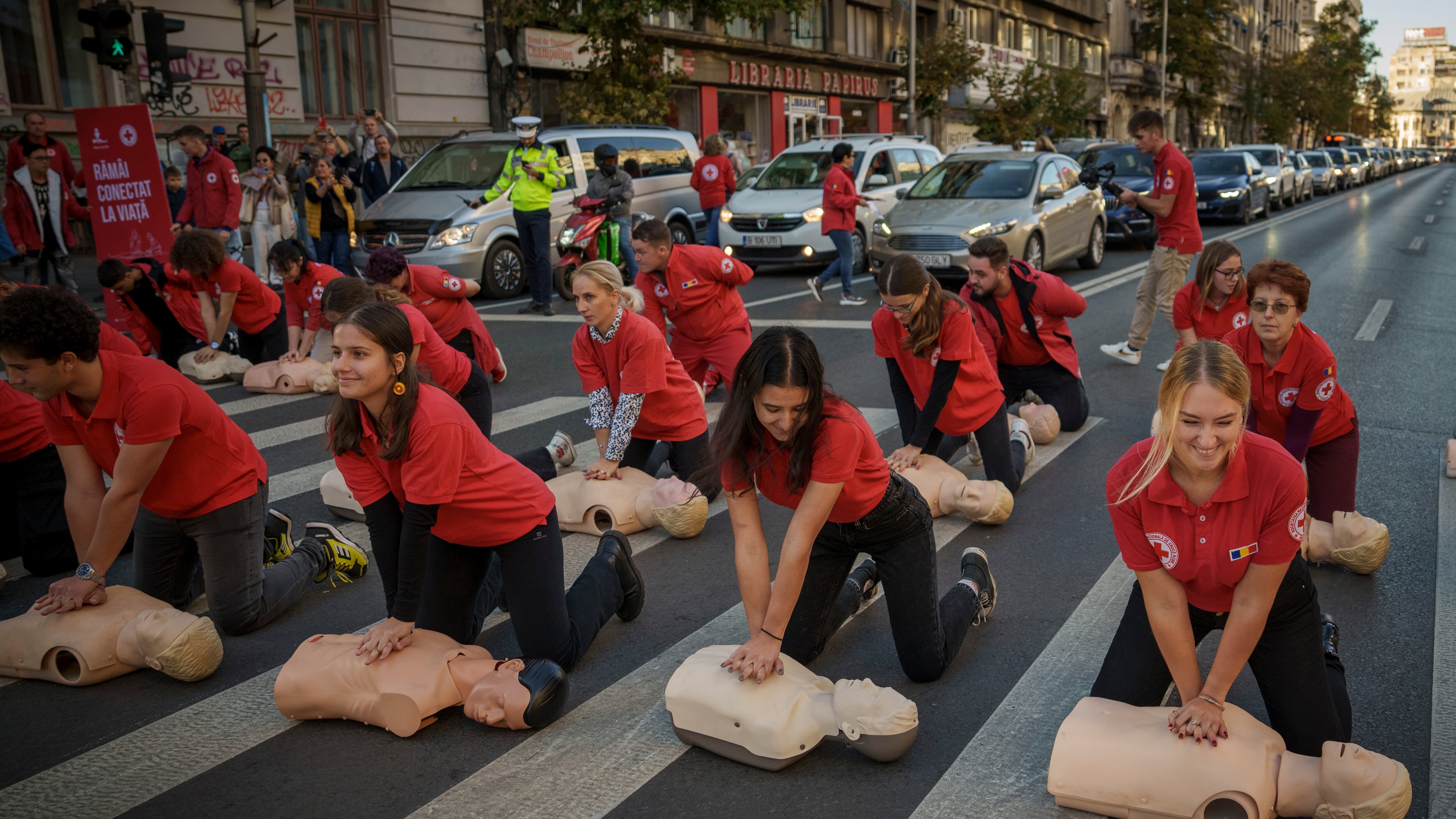
The Heart and Stroke Foundation of Canada has released new CPR guidelines.
The five-year update to the Canadian Guidelines for Cardiopulmonary Resuscitation (CPR) and Emergency Cardiovascular Care (ECC) was published Wednesday. It includes a renewed emphasis on lay responders providing life-saving rescue breaths when performing CPR on children and infants.
“Children are not just small adults – their physiology and causes of cardiac arrest differ significantly,” McGill University pediatrics professor and guideline contributor Dr. Farhan Bhanji said in a news release. “Unlike adults, paediatric cardiac arrests often stem from respiratory issues, making oxygen delivery through breaths essential to improving outcomes.”
According to the Heart and Stroke Foundation, approximately 60,000 cardiac arrests occur outside of hospitals every year in Canada, which is about one every nine minutes. While the survival rate is less than one in 10 in most communities, performing CPR and using a defibrillator can double the chance of a patient living.
Other notable updates to the guidelines include encouraging CPR training for children younger than 12; having 911 operators provide instructions for CPR rescue breaths for children and infants; reinforcing public access to naloxone; and training lay rescuers to respond to opioid-related heart attacks.
You can find the updated CPR guidelines on the Heart and Stroke Foundation’s website. The guidelines form the basis of resuscitation programs across Canada.
Anyone who witnesses a cardiac arrest is advised to immediately call 911 and shout for an automated external defibrillator (AED) before quickly starting CPR. The AED should be used as soon as it is available.
“Working closely with partners and stakeholders, Heart & Stroke is committed to advancing resuscitation,” foundation CEO Doug Roth said in the news release. “In addition to establishing and localizing the guidelines for Canada and embedding them in our resuscitation training programs, we are raising public awareness, increasing CPR skills and AED access, and funding life-saving research.”

