


Prime Minister Mark Carney says trade talks with the U.S. “had been making progress” on affected sectors like steel and aluminum until President Donald Trump suddenly ended negotiations with Canada over Ontario’s anti-tariff ad.
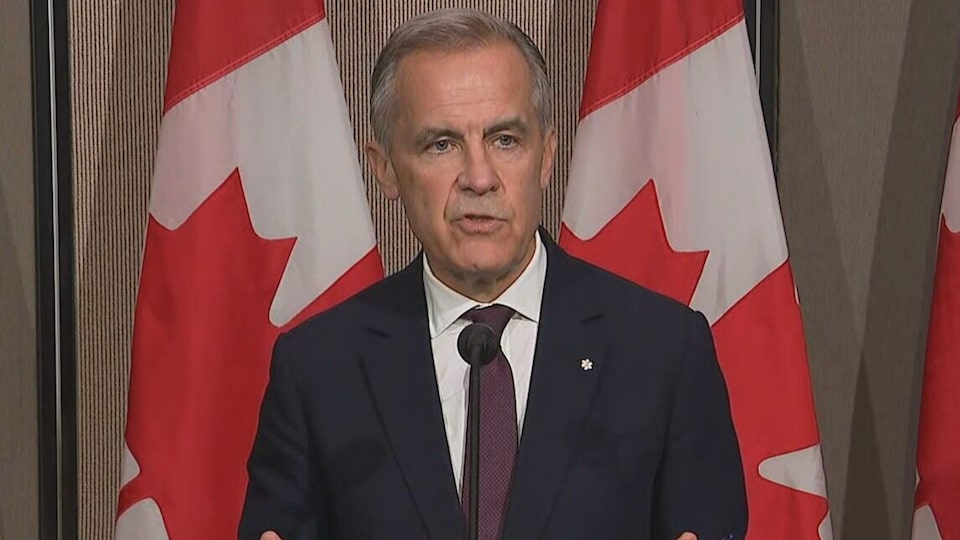
“There were a series of very detailed, very specific, very comprehensive discussions ... up until the point of those ads running,” Carney said Monday while speaking to reporters on the sidelines of the ASEAN summit in Malaysia.
“I would suggest you take the president at his word for his reason. And that is the reason why, from the perspective of the federal government, which I’m responsible,” Carney added.
The prime minister also said he has not spoken to Trump since talks ended on Thursday.
This was the first time Carney took questions from the media after Trump abruptly ended trade talks on Thursday over Ontario’s anti-tariff ad that featured the voice of former Republican U.S. president Ronald Reagan.
Then on Saturday, Trump announced an additional 10 per cent tariff on Canada because the Ontario government didn’t immediately pull down the ad, which continued to run in U.S. markets until Monday.
Last week, Carney did not dismiss the possibility for a new sectoral tariff deal with the U.S., saying “we’ll see” when asked whether Canada can expect an agreement on sectoral tariffs by this month’s APEC summit.
Government sources, meanwhile, had also told CTV News that Canadian officials were hopeful there could be movement on a steel and aluminum deal by APEC.
In a statement to CTV News last Friday, after Trump announced he was ending talks, White House spokesperson Kush Desai indicated the two countries hadn’t been making much headway in the negotiations.
“The Trump administration has repeatedly sought to address Canada’s longstanding, unfair trade barriers,” Desai wrote. “These good-faith efforts with Canadian officials have not led to any constructive progress.”
Asked if he is upset at Ontario Premier Doug Ford over the ad, Carney wouldn’t answer directly but said “it doesn’t pay to be upset.”
“I’d say the fault, which is that, in any complicated high stakes negotiation, you can get unexpected twists and turns, and you have to keep your cool during those situations,” Carney said.
“It doesn’t pay to be upset. Emotions don’t carry you very far, and we had made progress to repeat. And we stand by the progress that had been made.”
When asked if the federal government has any contingency plans – should Trump not want to negotiate – Carney said, “We have lots, yes” and emphasized the importance of building “strong at home.”
“I’m not about to detail those contingency plans, but I will go to the big, obvious plan that is there in plain sight and will be further detailed in the budget on Nov. 4,” he said.
Trump says he won’t be meeting with Carney ‘for a long time’
Like Carney, Trump is in Asia and set to attend the APEC Summit in South Korea later this week.
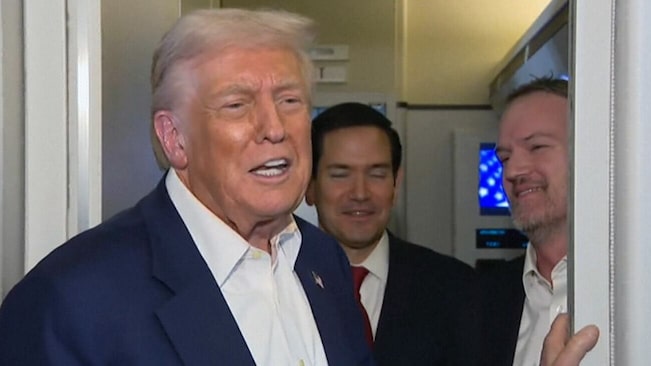
Speaking to reporters on Air Force One on Monday, Trump said he won’t be meeting with Carney “for a long time.”
Trump also said he doesn’t know when the new 10 per cent tariff on Canada will come into effect.
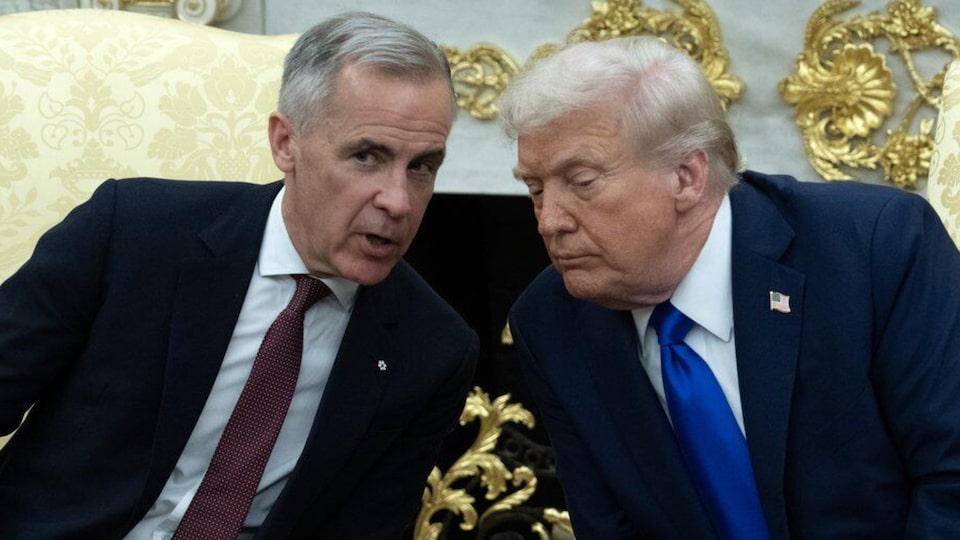
While Carney said he hadn’t yet seen those comments from Trump, he reiterated that Canada “is ready to sit down when (American officials) are ready to do that.”
But when asked how his relationship with Trump soured so quickly, Carney said, “That’s a question for (Trump).”
While Carney has no plans yet to meet with Trump at APEC, the prime minister did confirm a meeting with Chinese President Xi Jinping while there.
Canada’s tariffs on Chinese electric vehicles and China’s countermeasures on Canadian canola products are expected to be a major focus in that meeting.
In a recent interview with CTV’s Question Period, China’s ambassador to Canada said China would remove its canola tariffs if Canada scraps its EV levies.
Carney “wouldn’t speculate” on that possibility on Monday.
Carney dismisses further retaliation against U.S.
While Carney campaigned during the federal election on standing up to Trump, Canada dropped countermeasures on some American goods in August that were put in place by former prime minister Justin Trudeau.
Canada had also rescinded the digital services tax in June after Trump suddenly ended trade talks then over the policy.
Speaking to reporters on Monday, Carney appeared to dismiss any further retaliation against the U.S.
“The reality is that Canada was one of only two countries that had retaliatory tariffs on,” Carney said. “So everybody had focus, but only two countries had those in place. And the value of those retaliations was diminishing.”
Carney also said there was “a cost at home” to those retaliatory tariffs and he stands by the decision to lift them.
‘We achieved our goal’: Ford
Speaking to reporters at Queen’s Park on Monday, Ford said both Carney and his chief of staff Marc-André Blanchard saw the ad prior to it airing.
Ford also said the ad accomplished what he’d hoped, surpassing a billion impressions and reaching American voters.
“We achieved our goal, and our goal is to make sure that we get a fair deal, not a one-sided Donald Trump deal, but a fair deal for the people of Ontario and Canada,” he said.
Ford said the intention was never to “poke the president in the eye,” but rather to “inform the American people.”
Asked whether he believes he owes an apology for derailing negotiations, Ford said his job is to fight for workers in at-risk sectors in Ontario, and he believes that despite word of an imminent deal, some sectors — namely autos — have “slipped to the side.”
“If it wasn’t the ad, he’d look out the door or the the window, (and) say, ‘Oh, the leaves have turned colour, let’s stop,’” Ford said. “Believe me, President Trump is not putting a deal together to benefit Canada. It’s our job. It’s the prime minister’s job to get a deal that benefits all of Canada.”
“It’s not about the ad, it’s about finding every excuse in the world not to get a deal,” he also said.
A federal government source would not confirm or deny whether Carney or his chief of staff saw the Ontario ad in advance, but tells CTV News the “decision was made by the Government of Ontario, and the federal government was not involved in the production or distribution of this ad.”
With files from CTV News’ Spencer Van Dyk

