The 1995 referendum in Quebec saw the highest voter turnout of any election in Canadian history, and was decided by less than 60,000 votes.
Thursday marks 30 years since the fate of a unified Canada stood on a razor’s edge.
The 1995 referendum saw the highest voter turnout of any election in Canadian history, and was decided by less than 60,000 votes.
As the results rolled in, Quebecers and Canadians alike held their collective breath.
The vote was dead even late into the night.
“That level of tension was ‘am I going to have a country or not?’ on both sides,” said Tommy Schnurmacher, former CJAD 800 radio host and author of the book Canada is Not a Real Country, which chronicled the 28-day referendum campaign in October 1995.
In the weeks leading up to the vote, the referendum dominated Schnurmacher’s radio talk show, three hours a day, five days a week, he said.
“The only topic that Quebecers, anglophone and francophone alike, were interested in was the constitutional future of Quebec,” he said in a sit-down interview with CTV News. “Would it become an independent country or would Canada stay united?”
On Oct. 30, 1995, more than 4.7 million Quebecers cast a ballot – 94 per cent of eligible voters.
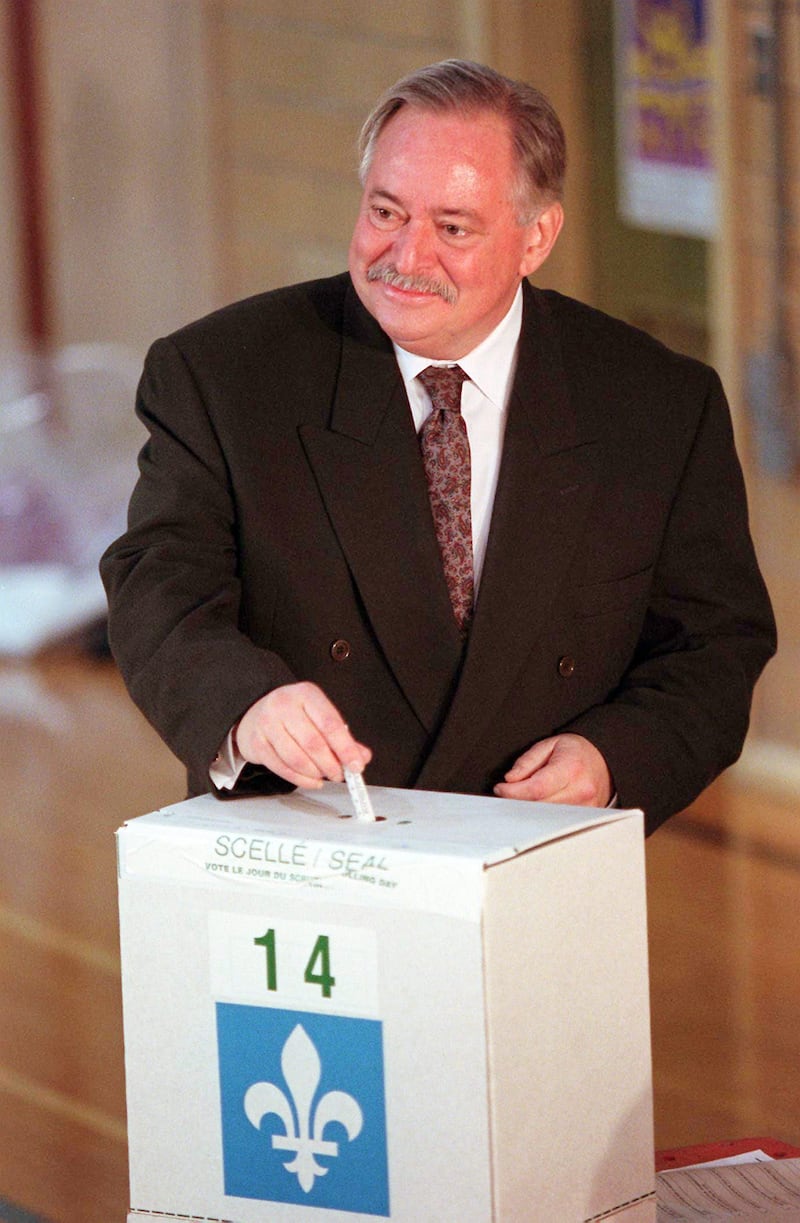
“I am very happy that at last we have come to the moment of decision,” said a confident Jacques Parizeau, then Premier of Quebec, standing on the steps of the voting station where he had just cast his own ballot.
The ‘Yes campaign’ felt its day had finally come.
0 of 30
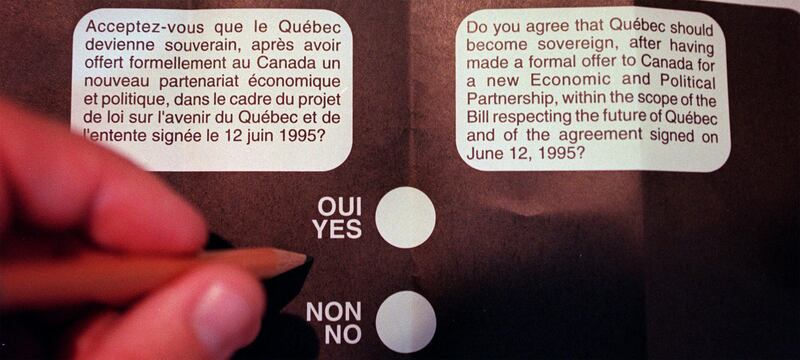
1995 referendum ballot A voter gets set to cast his ballot in Montreal Sunday Oct. 22, 1995 as advance polls open across Quebec for people who will be unable to vote in the sovereignty referendum Oct. 30. (Ryan Remiorz/The Canadian Press)
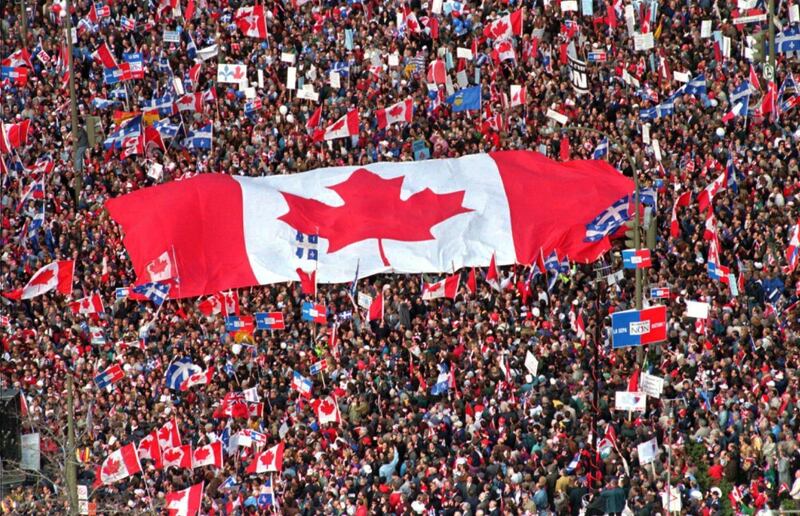
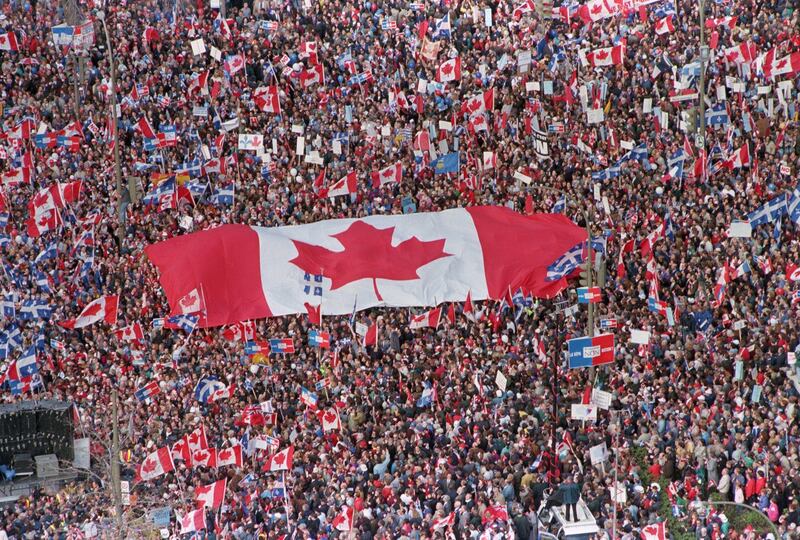
Montreal rally ahead of the Quebec referendum 1995 A large Canadian flag is passed through a crowd in as thousands streamed into Montreal from all over Canada to join Quebecers rallying for national unity three days before a referendum that could propel Quebec toward secession, Friday, Oct. 27, 1995. (Ryan Remiorz / THE CANADIAN PRESS)
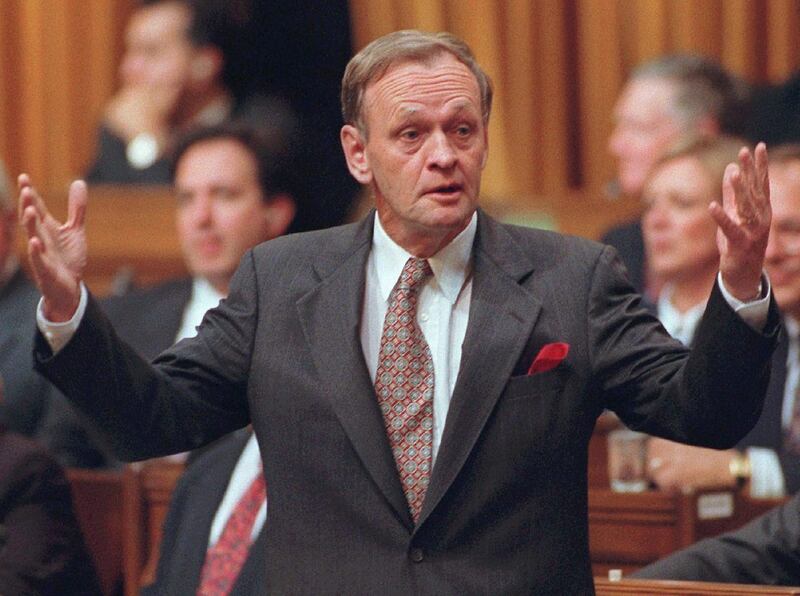
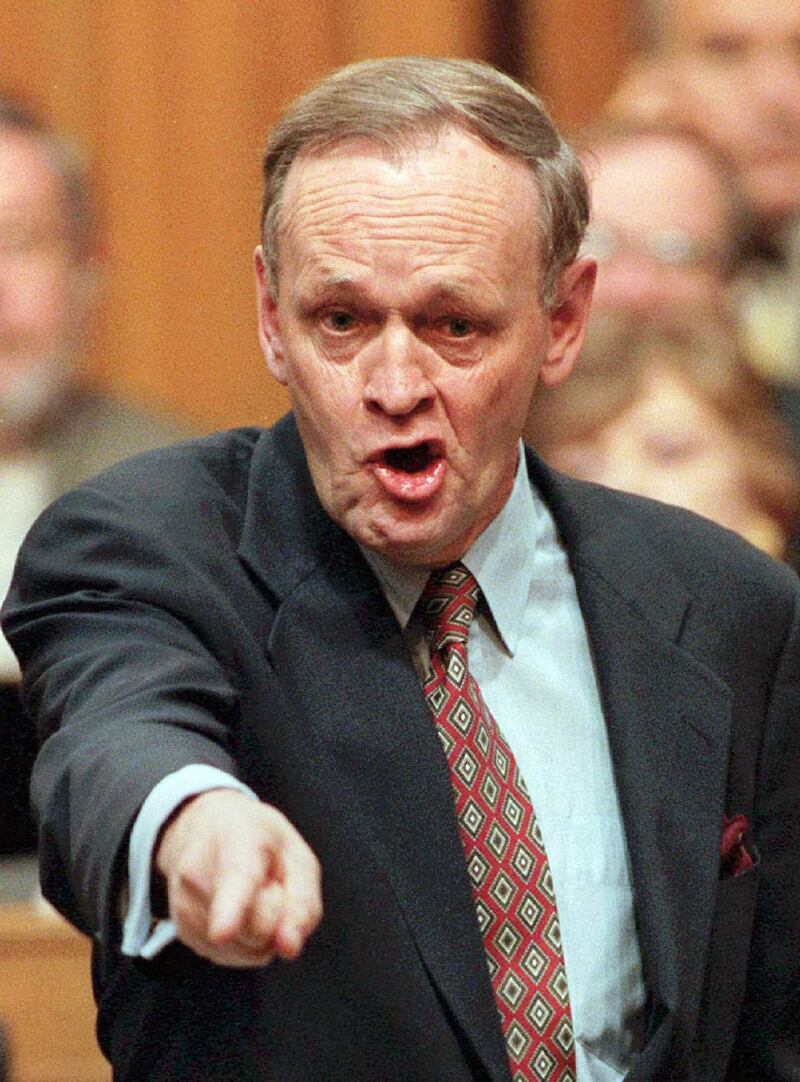
Prime Minister Jean Chretien mocks Bloc Quebecois leader Lucien Bouchard's comments that a YES vote in the upcoming Quebec Referendum is a magical thing, during Question Period in the House of Commons in Ottawa, in 1995. THE CANADIAN PRESS/Tom Hanson... Prime Minister Jean Chretien mocks Bloc Quebecois leader Lucien Bouchard's comments that a YES vote in the upcoming Quebec Referendum is a magical thing, during Question Period in the House of Commons in Ottawa, in 1995. THE CANADIAN PRESS/Tom Hanson
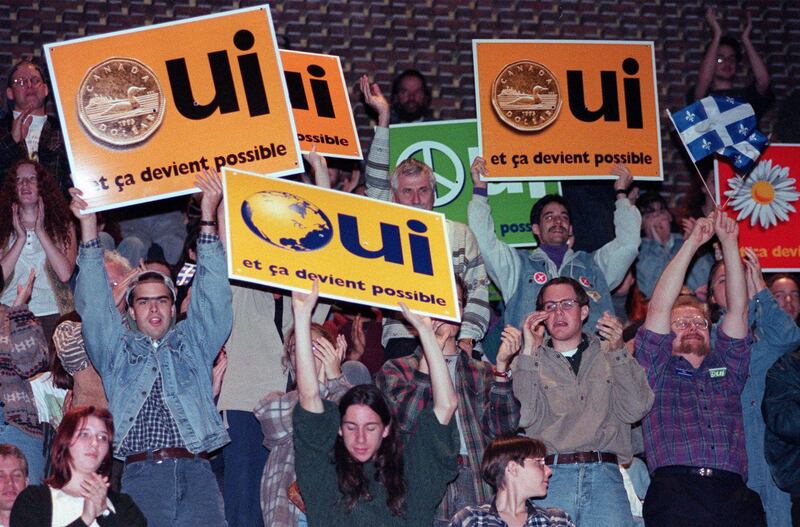
YES SUPPORTERS Yes supporters cheer during a speech by Bloc Quebecois Leader Lucien Bouchard at a junior college in Montreal Tuesday, Oct. 24, 1995. Sunday marks the 10th anniversary of the Quebec sovereignty referendum vote that was held on Oct. 30, 1995. (Ryan Remiorz/The Canadian Press)
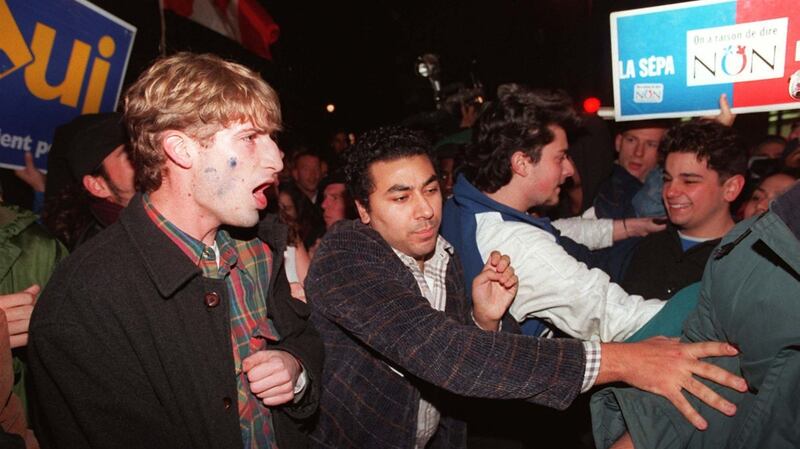
Yes and No camps in 1995 Members of the Yes and No camps clash on the streets of Montreal after the No victory in the Quebec referendum Oct. 30, 1995. (Tom Hanson / The Canadian Press)
Prime Minister Jean Chretien gestures during Question Period in the House of Commons on Tuesday, Dec. 12, 1995, after he was questioned about Quebec holding another referendum. THE CANADIAN PRESS/Tom Hanson Prime Minister Jean Chretien gestures during Question Period in the House of Commons on Tuesday, Dec. 12, 1995, after he was questioned about Quebec holding another referendum. THE CANADIAN PRESS/Tom Hanson
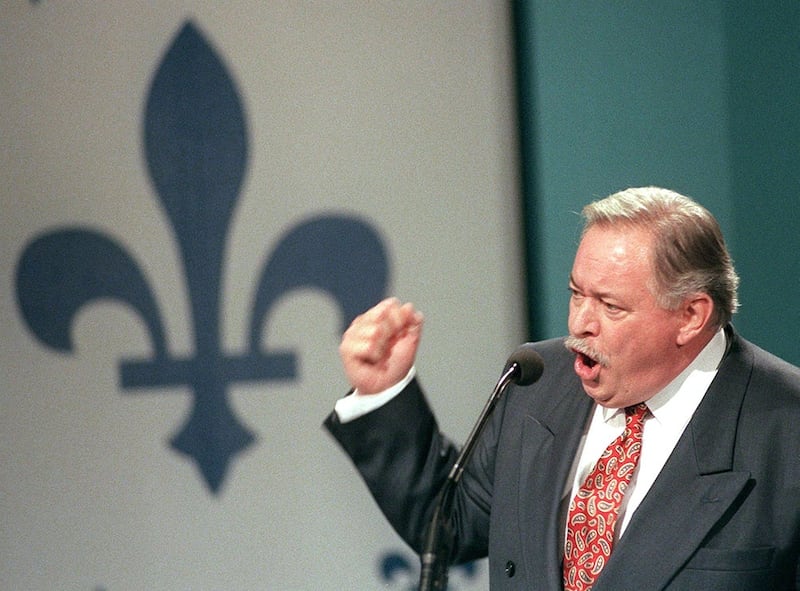
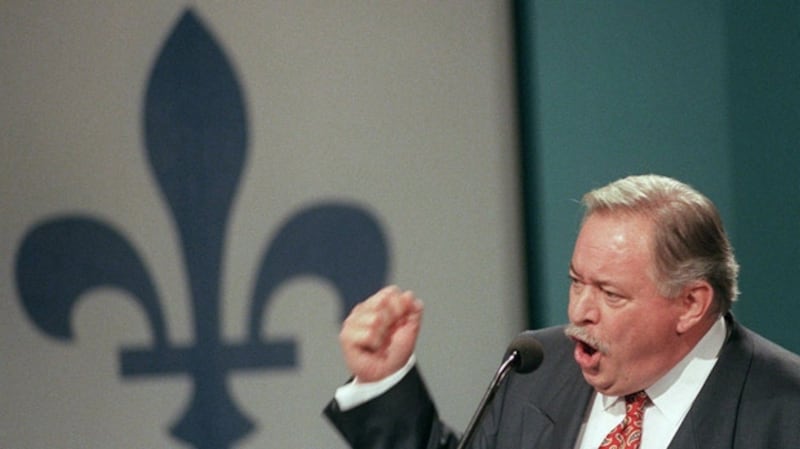
Jacques Parizeau Then-Quebec Premier Jacques Parizeau gestures during his speech to 'Yes' supporters after losing the referendum in Montreal on Oct. 30, 1995. (Ryan Remiorz / THE CANADIAN PRESS)
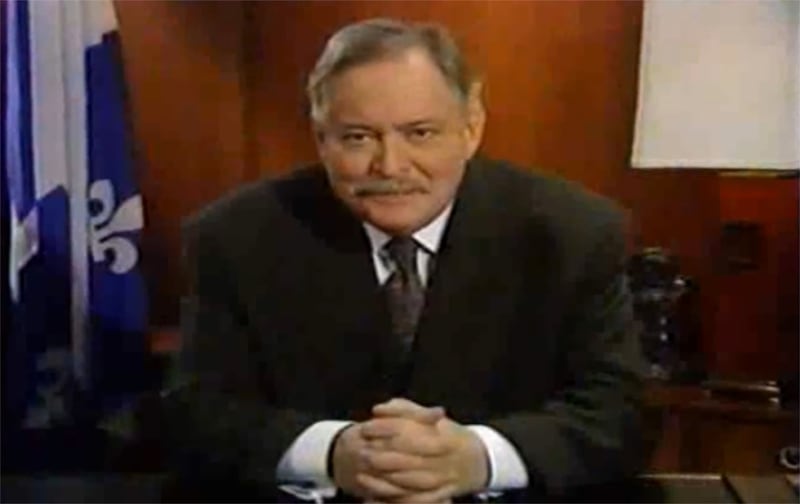
Parizeau The English-language speech Jacques Parizeau prepared in case of a “Yes” vote in the 1995 referendum has been released. (Source: Bibliotheque et Archives nationales du Quebec)
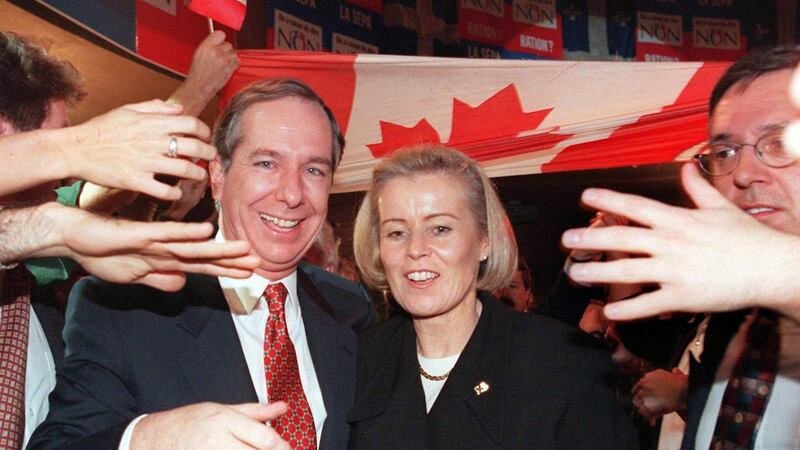
ref2/CP2713503.jpg Quebec Liberal leader Daniel Johnson makes his way through a crowd of supporters with his wife Suzanne Marcil after the No victory in the Quebec referendum Monday night in Montreal. (CP PHOTO) 1995) 1995 (Jacques Boissinot)
REFERENDUM '95 Quebec Referendum photo taken October 29, 1995. (CP PHOTO) 1998 (stf-Ryan Remiorz)
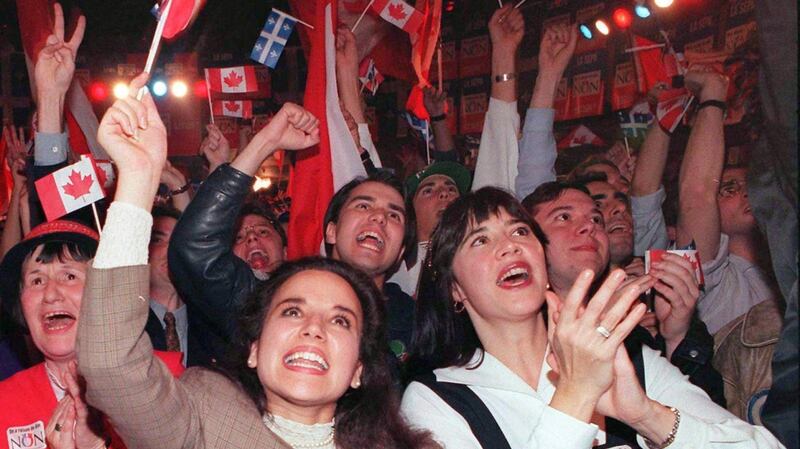
No supporters in 1995 No supporters respond to poll results, in Montreal Monday, Oct. 30, 1995 as the pro-Canada camp move above 50 percent of the popular vote on their way to a slim victory in the Quebec referendum. Sunday marks the 10th anniversary of the Quebec sovereignty referendum vote that was held on Oct. 30, 1995. THE CANADIAN PRESS/Jacques Bossinot
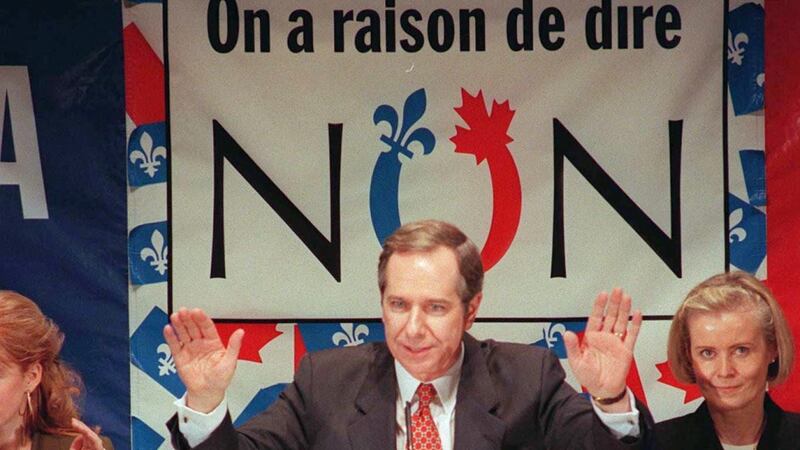
No campaign in 1995 SAYING NO--Daniel Johnson Quebec Liberal Leader and leader of the No campaign in the Quebec referendum delivers his victory speech after the No side won by a slim margin in Montreal, Monday.(CP {PHOTO)1995
Parizeau Quebec Premier Jacques Parizeau gestures during his speech to Yes supporters after losing the referendum in Montreal on Oct. 30, 1995. The wife of former Quebec premier Jacques Parizeau says the longtime Quebec sovereigntist icon has died. Lisette Lapointe says the 84-year-old passed away on Monday night after what she called a "titanic fight." THE CANADIAN PRESS/Ryan Remiorz
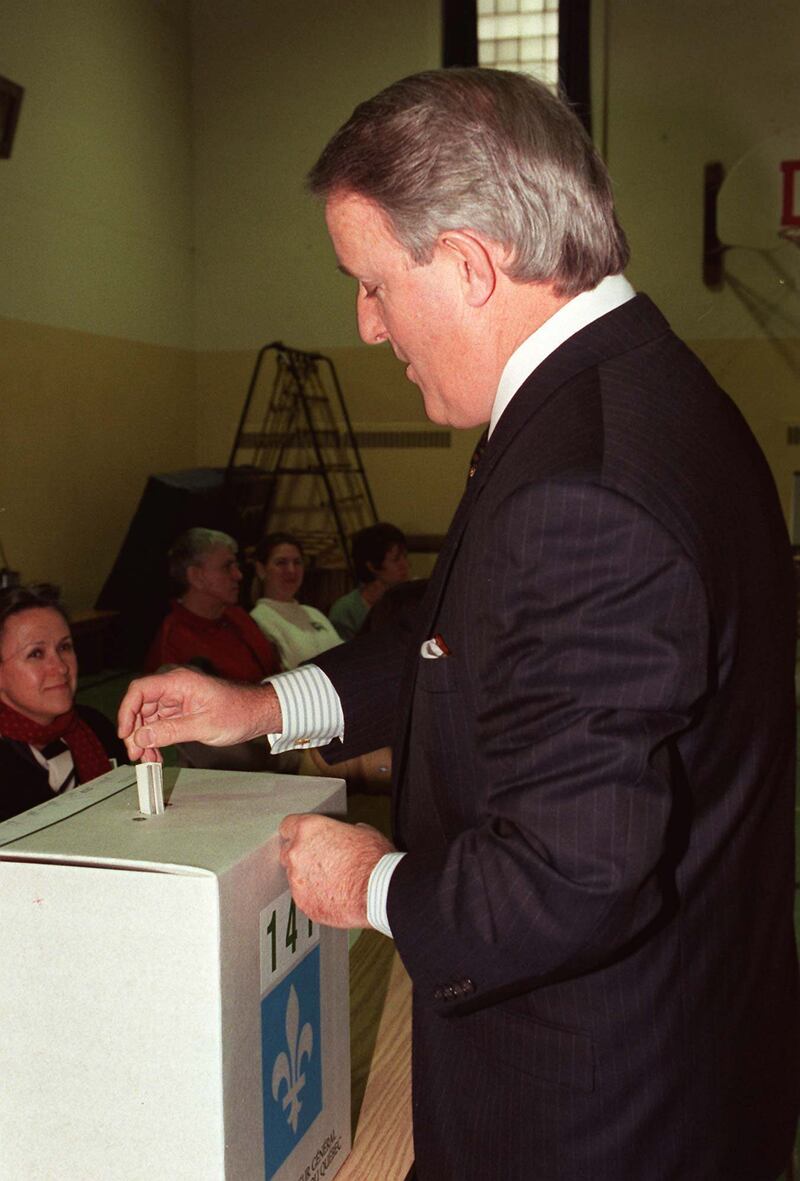
Brian Mulroney (MTL113)MONTREAL, Oct. 30--Former Prime Minister Brian Mulroney casts his ballot in the Quebec referendum Monday in Montreal. (CP PHOTO 1995 (str-Robert Galbraith)ROY
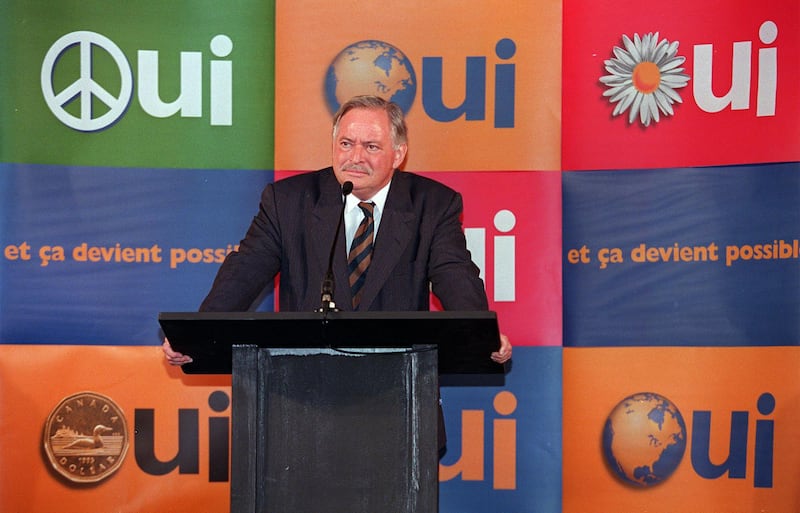
JACQUES PARIZEAU Quebec Premier Jacques Parizeau speaks to business people while campaigning for the Yes in Montmagny Tuesday, Oct. 3, 1995. The referendum vote will be held Oct. 30, 1995. (CP PHOTO/Jacques Boissinot)
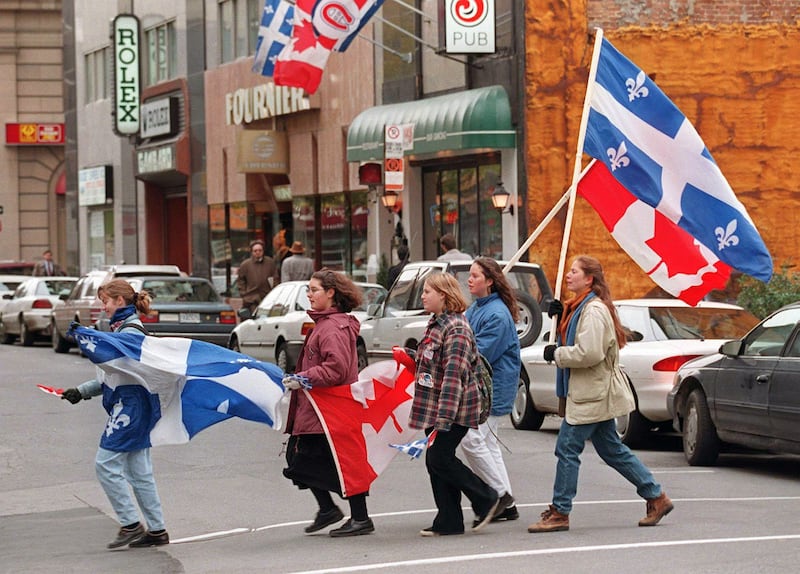
Non supporters (MTL115)MONTREAL, Oct. 30--A small group of Non supporters carry Quebec and Canadian flags as they parade through the streets of Montreal Monday. (CP PHOTO) 1995 (stf-Tom hanson)ROY
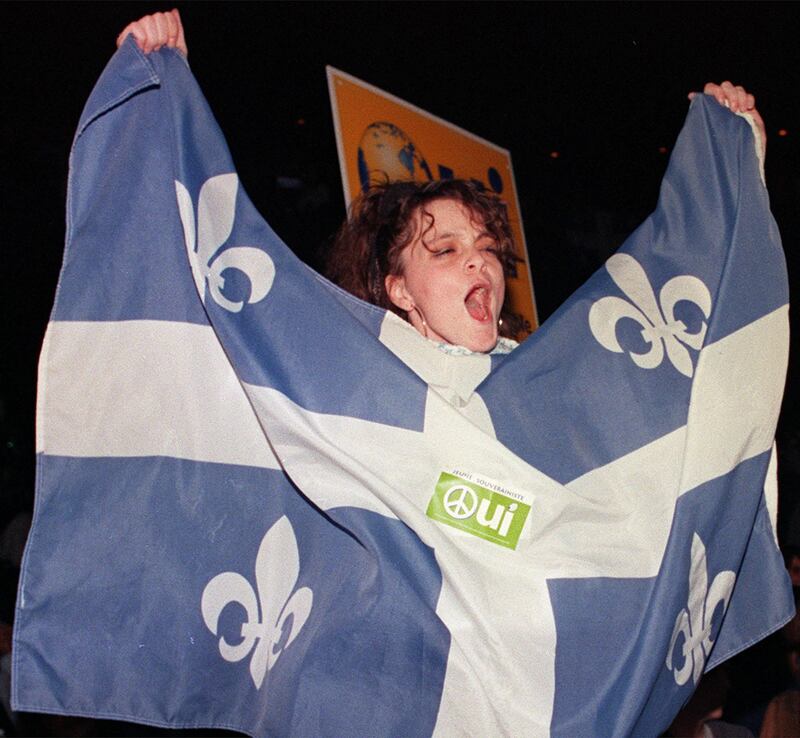
SUPPORTER A supporter cheers and waves the Quebec flag as Quebec Premier Jacques Parizeau arrives at a youth rally in Montreal Thursday, Oct. 19, 1995. The referendum vote will be held Oct. 30, 1995.(CP PHOTO/Ryan Remiorz)
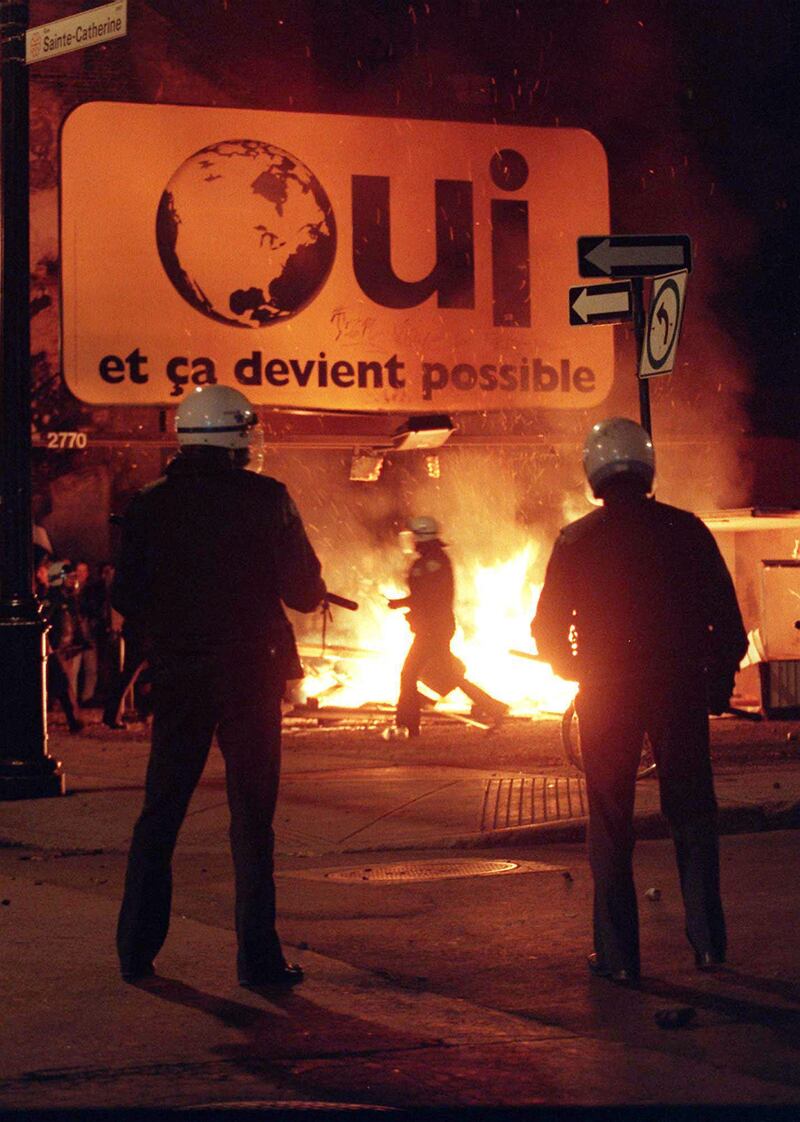
REFERENDUM RESULTS (MTL153)MONTREAL, Oct. 30--Montreal Riot Police watch a fire burn underneath a Oui sign Monday night after the No side won the Quebec referendum. (CP PHOTO) 1995 (stf-Tom Hanson)ROY
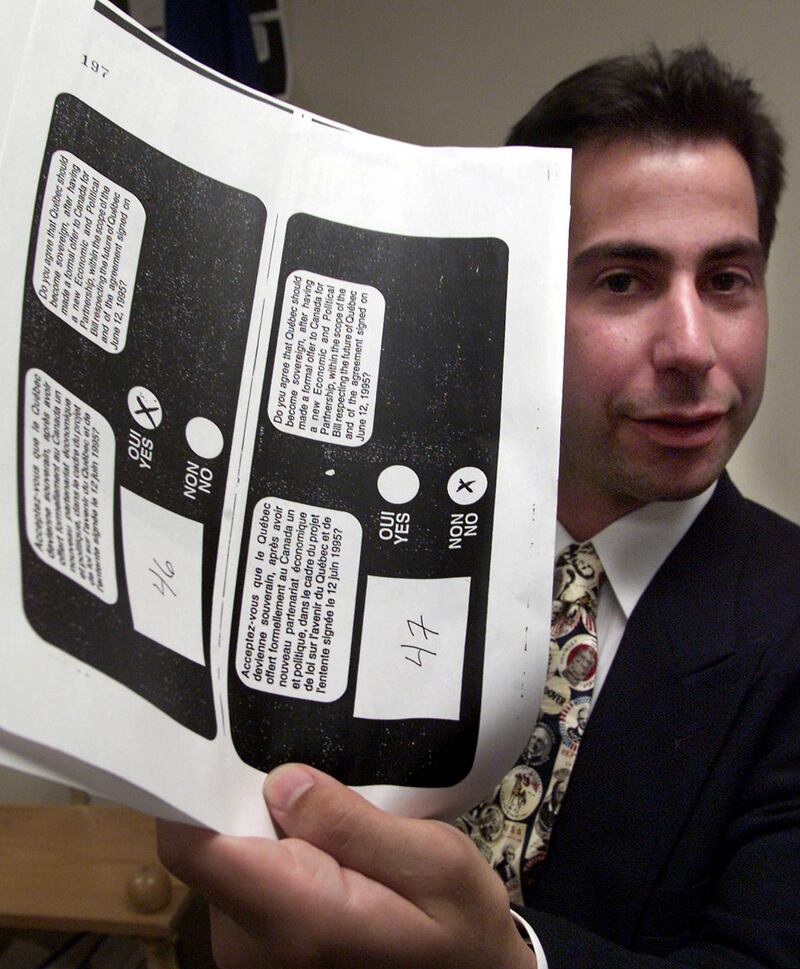
HOUSEFATHER Alliance Quebec president Anthony Housefather holds photocopies of rejected Oct. 30, 1995 referendum ballots during a news conference Wednesday, August 2, 2000 in Montreal. The group maintains that many ballots were improperly rejected by scrutineers who said they were improperly marked. (CP PHOTO/Paul Chiasson)
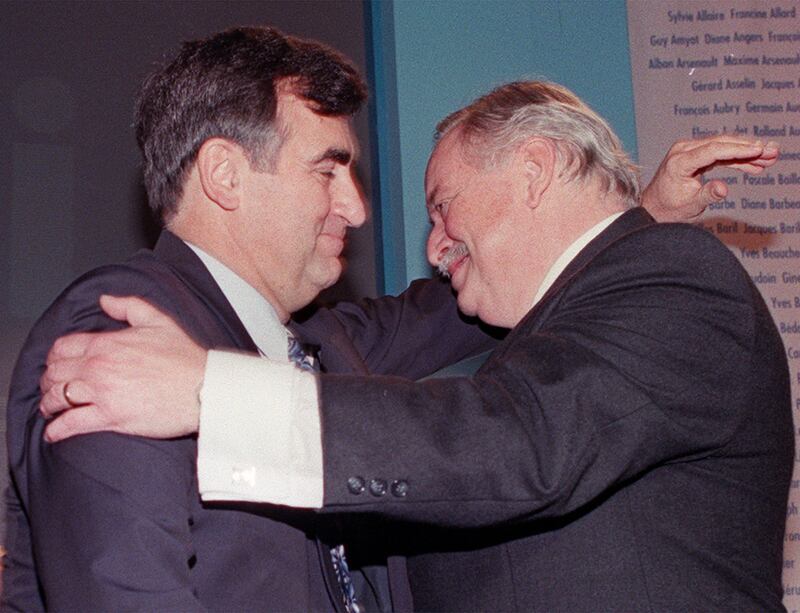
PARIZEAU BOUCHARD Leader of the YES forces Jacques Parizeau, right, embraces Bloc Quebecois Leader Lucien Bouchard at a rally in Montreal Saturday, Oct. 7, 1995. Bouchard was named Saturday as the chief negotiator for Quebec in any talks with Canada after a Yes vote. The referendum vote will be held Oct. 30, 1995.(CP PHOTO/Ryan Remiorz)
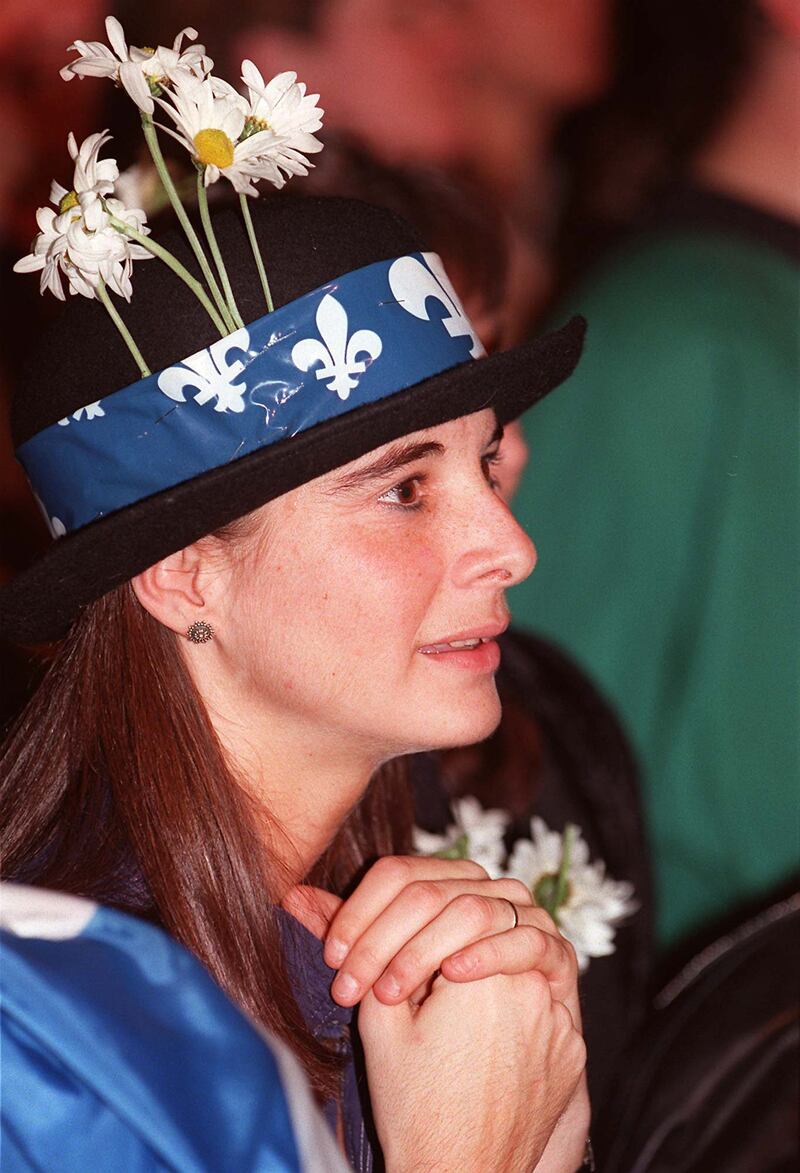
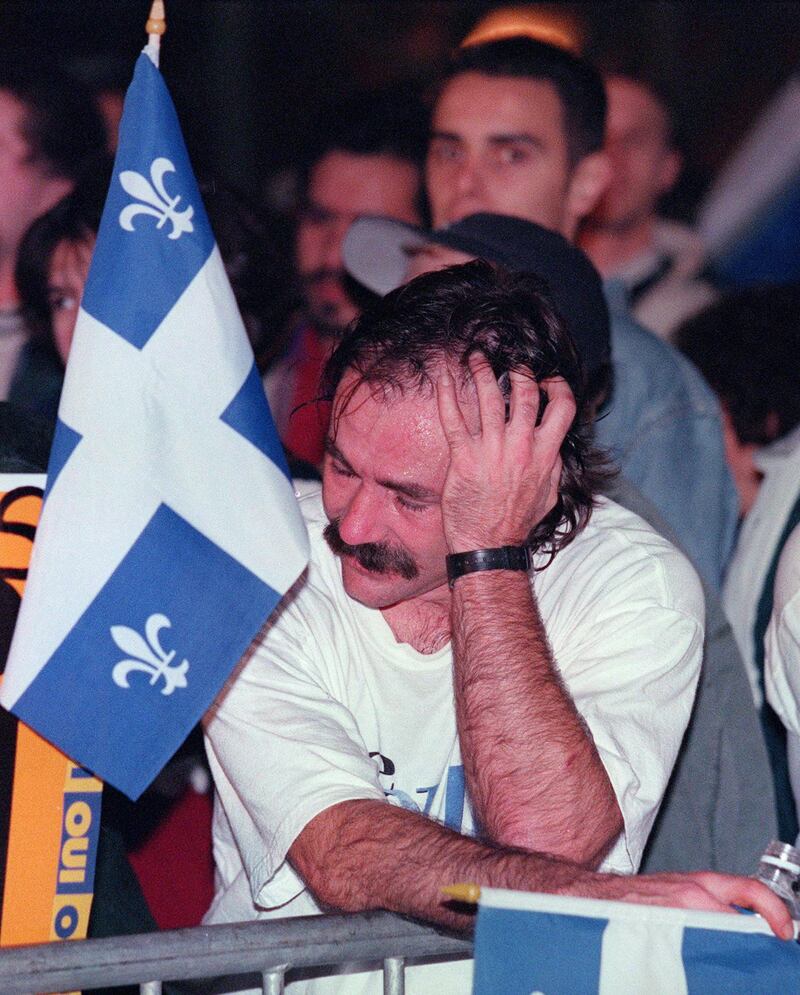
YES SUPPORTER A Yes supporter at the campaign headquarters in Montreal looks dejected as vote results come in on the Quebec referendum Monday night, Oct. 30, 1995. Sunday marks the 10th anniversary of the Quebec sovereignty referendum vote that was held on Oct. 30, 1995. THE CANADIAN PRESS/Tom Hanson
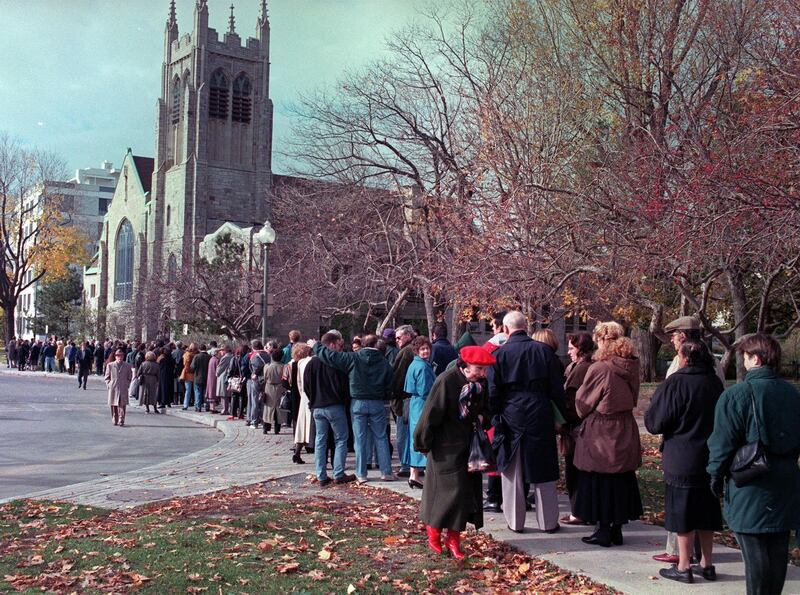
REFERENDUM VOTING Quebecers form a long line at a Montreal church as the wait to cast their ballots in the province's referendum Monday, Oct. 30, 1995. (CP PHOTO/Robert Galbraith)
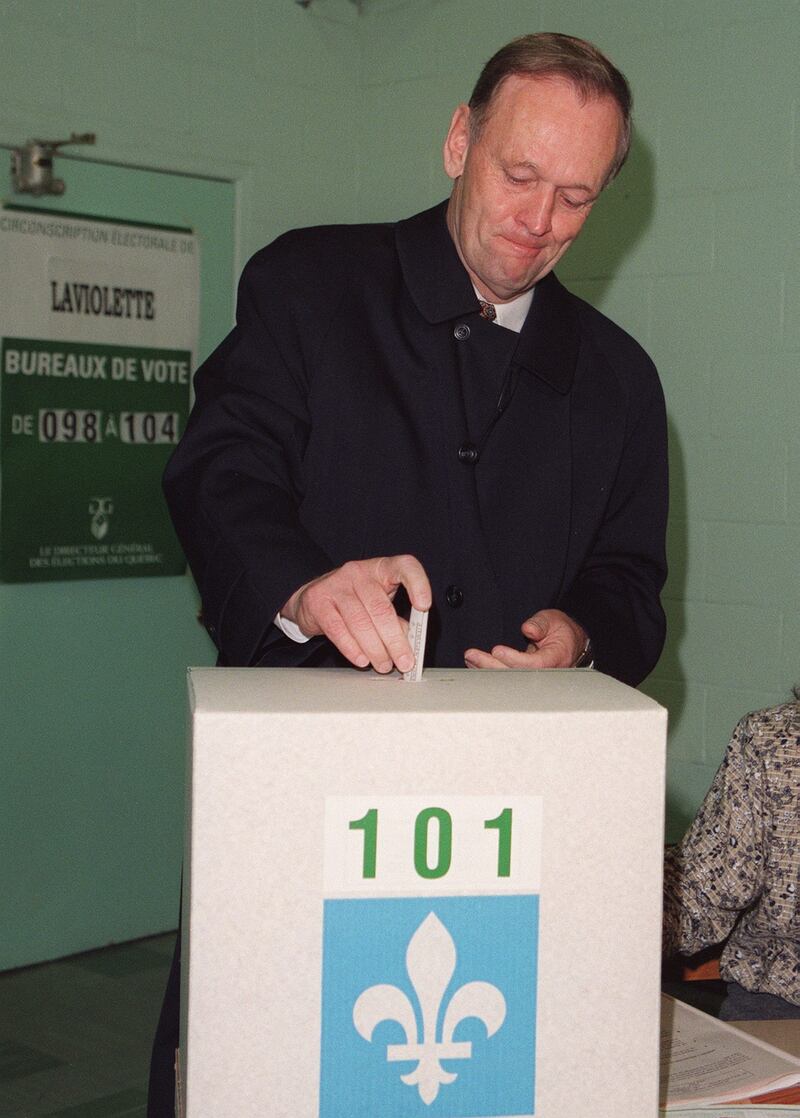
Chretien casts his vote Canadian Prime Minister Jean Chretien casts his ballot, Oct. 30, 1995, in Ste-Flore, a Shawinigan suburb, to vote in the referendum on the sovereignty of Quebec. (CP PHOTO/Jacques Boissinot)
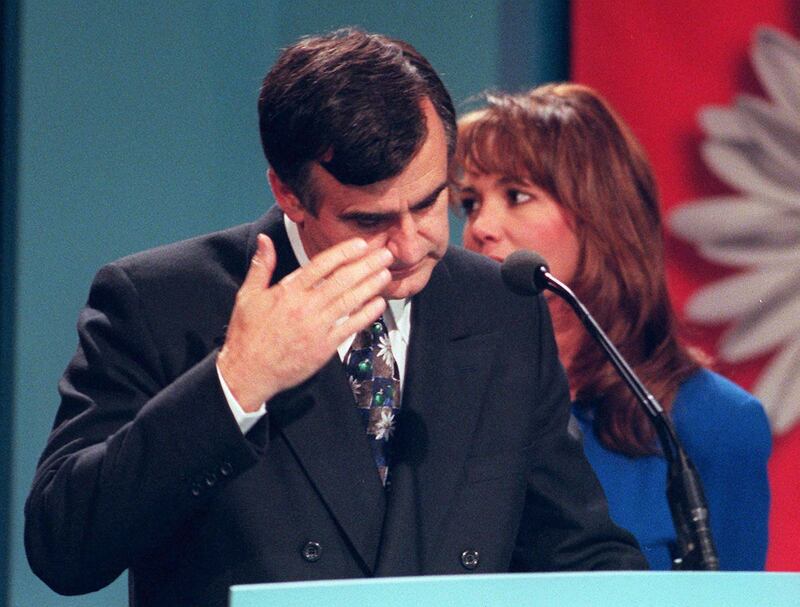
Lucien Bouchard Bloc Quebecois leader Lucien Bouchard wipes his brow as he is joined on stage with his wife Audrey Best after the defeat of the Yes side in the Quebec referendum in Montreal Monday night, Oct. 30, 1995. Sunday marks the 10th anniversary of the Quebec sovereignty referendum vote that was held on Oct. 30, 1995. THE CANADIAN PRESS/Paul Chiasson
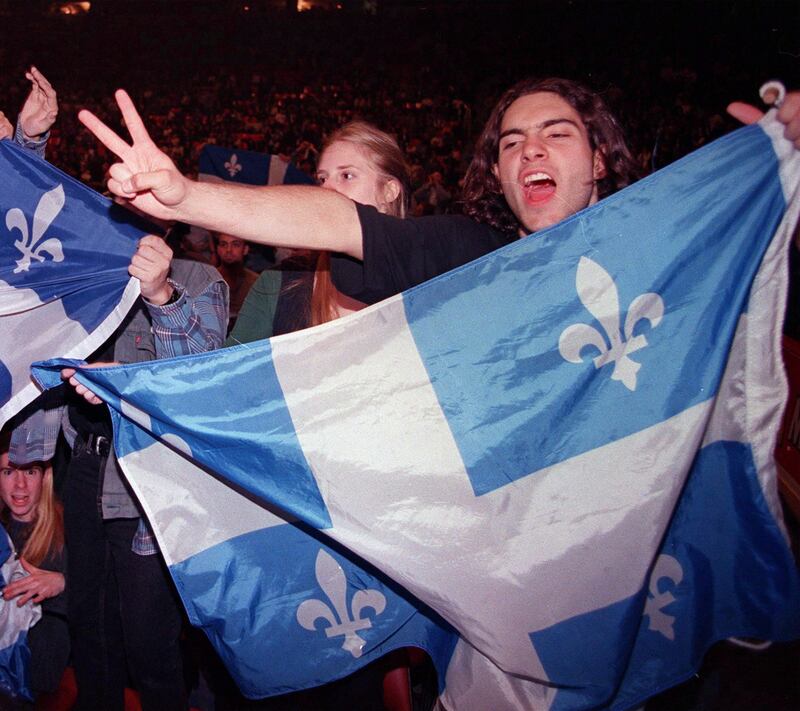
YES CONCERT A Yes supporter holding a Quebec flag chants nationalist slogans prior to a concert of Quebec rock stars in support of sovereignty in Montreal Friday Sept. 29, 1995. Sunday marks the 10th anniversary of the Quebec sovereignty referendum vote that was held on Oct. 30, 1995. THE CANADIAN PRESS/Paul Chiasson
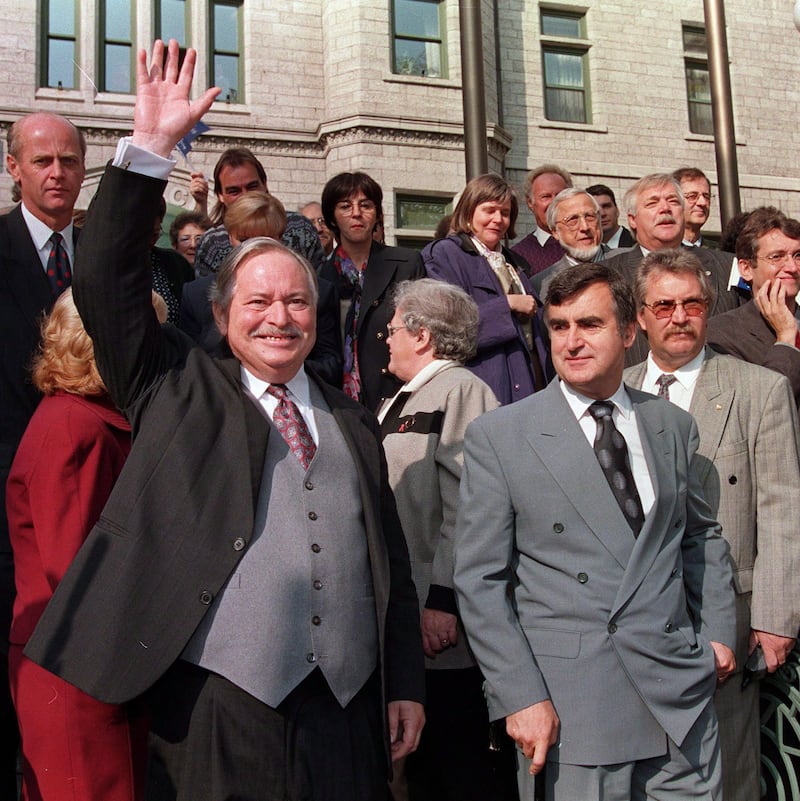
BOUCHARD PARIZEAU Quebec Premier Jacques Parizeau, flanked by Bloc Quebecois leader Lucien Bouchard, waves to supportes as he kicks off his campaign for the Oct. 30 th referendum, Monday, Oct. 2, 1995 at city hall in Quebec City. Former Quebec premier Jacques Parizeau has died at the age of 84. THE CANADIAN PRESS/Jacques Boissinot
YES SUPPORTER (MTL130)MONTREAL, Oct. 30--A Yes supporter appears anxious as she watches the results of the Quebec referendum come in at the campaign headquarters in Montreal Monday night. (CP PHOTO) 1995 (stf-Paul Chiasson) ROY
PARIZEAU VOTES (MTL102)MONTREAL, Oct. 30--Quebec Premier Jacques Parizeau casts his ballot in the province's referendum vote in Montreal Monday. (CP PHOTO) 1995 (stf-Paul Chiasson)ROY
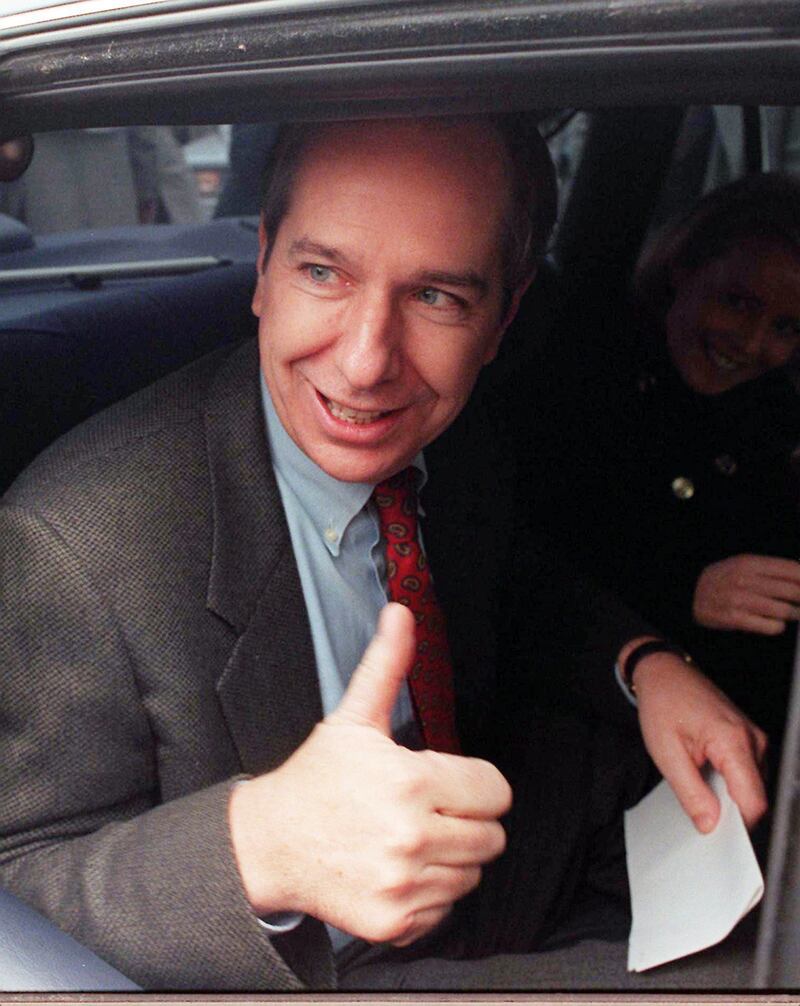
Daniel Johnson (MTL105)MONTREAL, OCT. 30--Quebec Liberal leader and frontman for the No forces Daniel Johnson gives a thumbs-up after casting his ballot in the Quebec referendum in Montreal Monday. (CP PHOTO) 1995 (stf-Ryan Remiorz)ROY
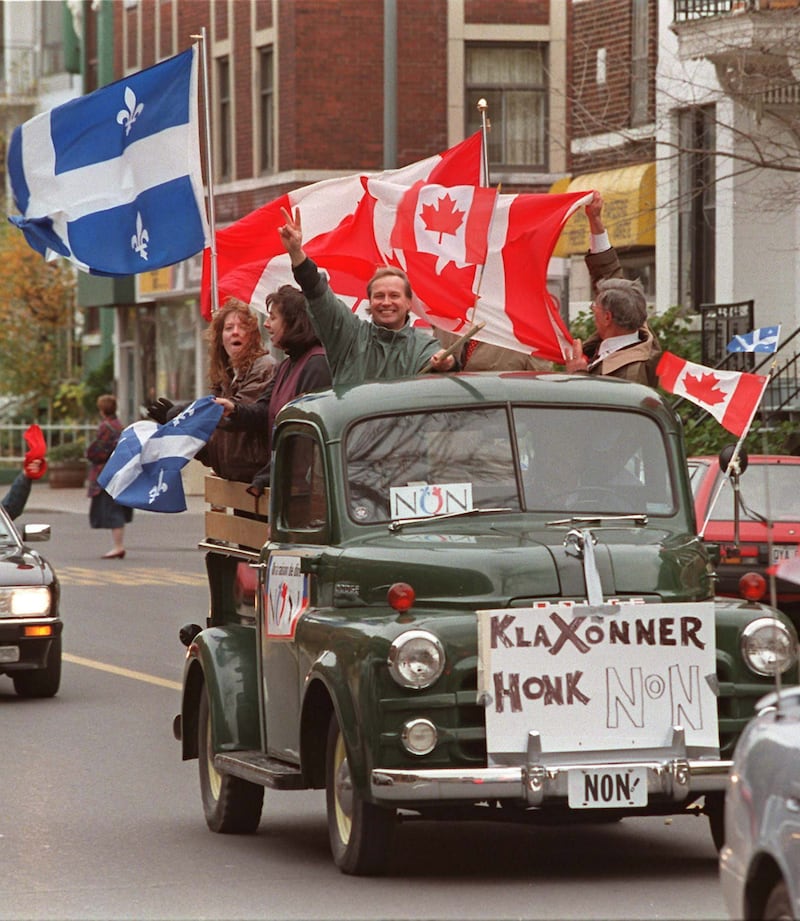
No side (MTL114)MONTREAL, Oct. 30--No side supporters wave Quebec and Canadian flags as they take part in a caravan through the streets of Montreal Monday as the province votes on a referendum on sovereignty. (CP PHOTO) 1995 (stf-Tom Hanson)ROY
A rocky start to the campaign
On voting day, it was the sovereigntists who carried the momentum, but the campaign did not start that way.
“Before the referendum in 1995, the ‘Yes side’ was at 38 per cent,” recalled Daniel Turp, a former spokesperson for the ‘Yes Committee’ charged with courting anglophone and allophone voters.
“I remember people telling me, ‘Are you crazy?’” Turp said.
Pressure started to build on Parizeau, who struggled to gain traction, and the decision was made to put the popular leader of the Bloc Québécois, Lucien Bouchard, centre stage.
Immediately, the move started to pay off.
“Lucien, with his charisma, really changed the course of the campaign,” said Liza Frulla, then Member of the National Assembly for the Liberal Party of Quebec (PLQ), and vice chair of the ‘No-Committee.’
Poll finds most of Quebec a 'no' on holding another sovereignty referendum Despite the PQ clearly ahead in the provincial polls, those same polls show most of Quebec is against holding another sovereignty referendum.
Meantime, the ‘No side’ had grown complacent.
Frulla recalled a rally, early in the campaign, that would prove to be a turning point.
A business leader advocating for the ‘No side’ addressed the crowd, she said, and went over the top with his rhetoric.
“He says, ‘we are going to crush them,’” she said. “I remember vividly that I said to myself, we’re in trouble.”
It was that galvanizing moment the ‘Yes side’ needed, Frulla said.
“The next day, Lucien did a rally, and he says nobody’s going to crush us,” she said.
What followed was a stunning turnaround in the polls.
“It was all about empowerment,” said Turp. “I was excited because, I guess, I thought it could happen.”
The ‘Yes side’ had done a superb marketing job, said Schnurmacher, who recounted that media from around the world had descended on Montreal. “The headline the next morning would have been ‘Birth of a Nation,’ for sure.”
A large Canadian flag is passed through a crowd in this Friday, Oct. 27, 1995 file picture, as thousands streamed into Montreal from all over Canada to join Quebecers rallying for national unity three days before a referendum that could propel Quebec... A large Canadian flag is passed through a crowd in this Friday, Oct. 27, 1995 file picture, as thousands streamed into Montreal from all over Canada to join Quebecers rallying for national unity three days before a referendum that could propel Quebec toward secession. Sunday marks the 10th anniversary of the Quebec sovereignty referendum vote that was held on Oct. 30, 1995. THE CANADIAN PRESS/Ryan Remiorz
Canada comes to Montreal
Just days before the vote, federalists staged a massive unity rally, dubbed the ‘Love In’ in the heart of downtown Montreal.
A hundred thousand people from all over the country were flown, trained and bused into the city to support the ‘No campaign.’
“They were flying in from Vancouver, from Toronto, from the Maritimes,” said Schnurmacher. “Basically saying, please don’t go.”
“That gesture,” said Frulla, who was at the end of a gruelling four-week campaign, “What they did, I thought it was beautiful. It touched us.”
For Turp, and many others on the ‘Yes side,’ the rally amounted to election interference.
“You know, all that money spent outside of Quebec, it’s probably very inconsistent with our referendum law,” Turp said.
The Liberal Party of Canada’s communications director and one other person were eventually charged with illegally financing supporters’ travel to Montreal.
The Quebec Superior Court later dismissed the charges.
YES SUPPORTER A Yes supporter at the campaign headquarters in Montreal looks dejected as vote results come in on the Quebec referendum Monday night, Oct. 30, 1995. Sunday marks the 10th anniversary of the Quebec sovereignty referendum vote that was held on Oct. 30, 1995. THE CANADIAN PRESS/Tom Hanson
Relief and sorrow
In the early hours of referendum night, it appeared as though the ‘Yes side’ might have won, but after some unexpected results in the Quebec City region, and as votes from the Montreal suburbs started pouring in, the tide began to turn.
Quebecers voted to stay in Canada by the slimmest of margins, 50.6 per cent to 49.4 per cent.
“People like me were disappointed that the ‘Yes side’ didn’t win,” said Turp. “But, in a way, I was happy that there had been this democratic process, very peaceful.”
On the ‘No side,’ relief was starting to set in.
“I am still very proud of us,” said Frulla, “We did that respecting democracy to the hilt.”
PARIZEAU VOTES (MTL102)MONTREAL, Oct. 30--Quebec Premier Jacques Parizeau casts his ballot in the province's referendum vote in Montreal Monday. (CP PHOTO) 1995 (stf-Paul Chiasson)ROY
Money and the ‘ethnic vote’
An emotional and embittered Jacques Parizeau addressed his supporters the next day, uttering the infamous words that have dogged the sovereigntist movement ever since.
“It’s true that we were beaten,” Parizeau said in French. “By what? By money and the ethnic vote.”
Both Turp and Frulla recalled hearing the words live while sitting on the TV sets of separate news programs, where they had each been invited to give political commentary.
In both cases, they were immediately asked for their reaction live on the air.
“I was very upset. Very, very upset,” said Turp, who felt all of his hard work convincing English speakers and minority groups there would be a place for them in an independent Quebec, had been spoiled in an instant. “I’ve never believed it was anyone’s fault. Everyone in Quebec has one vote.”
“The only thing I could say is that when you are the Prime Minister [Premier], you are the Prime Minister [Premier] of everybody,” said Frulla, who added she got to know Parizeau later in life, and now believes his emotions had gotten the better of him.
Schnurmacher, like many Quebecers listening, said he was shocked by what he heard.
“I thought to myself, wow. His dislike of ethnics and money, and I know what he was referring to, I said it was real,” he said.
No side (MTL114)MONTREAL, Oct. 30--No side supporters wave Quebec and Canadian flags as they take part in a caravan through the streets of Montreal Monday as the province votes on a referendum on sovereignty. (CP PHOTO) 1995 (stf-Tom Hanson)ROY
30 years later, old battle lines redrawn
A new generation of sovereignist leaders is now pushing to reignite the movement.
Parti Québécois (PQ) Leader Paul St-Pierre Plamondon has promised another referendum in his first mandate as premier, if elected.
“This generation has a right to say yes or no,” said Turp, of the young Quebecers who were either not born or too young to vote in previous referendums.
“It’s not only my generation or my parents’ generation that has that right. Self-determination is something of great importance as a collective right,” he said.
Now 30 years after the fact, Frulla said she is also just as certain in her convictions that Quebec should remain a part of a united Canada.
“Now is not the time,” she said. “With the United States and with Donald Trump, I am so sorry. It does not make sense.”