Diagnosing vision problems in very young children has long challenged eye doctors, but a new tool developed at the University of Waterloo could change that.
Researchers at the university’s School of Optometry and Vision Science have created the Waterloo Differential Acuity Test, or WatDAT, a vision test designed to measure eyesight in children as young as 18-months-old.
The test uses a simple idea: show a toddler four images, three that are the same and one that’s different, and ask them to point to the odd one out. The task is repeated with progressively smaller images until the child can no longer identify the difference — revealing their visual acuity in a way that’s both engaging and age-appropriate.
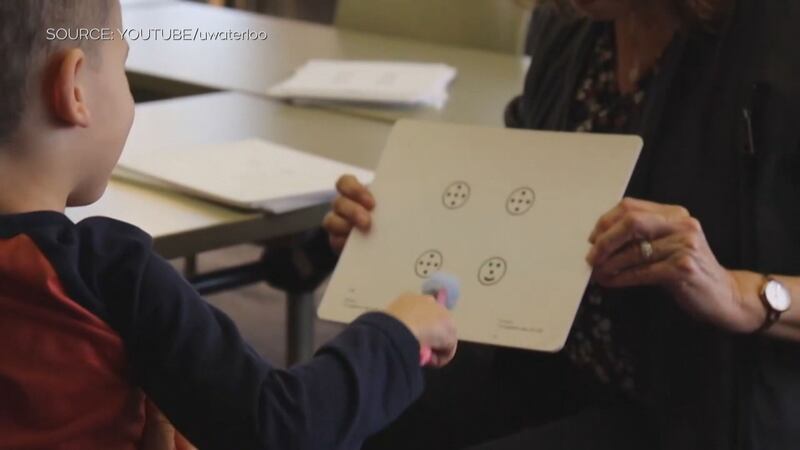
“As you may imagine, working with young children can be challenging, particularly 18 to 36-months-old,” said Dr. Susan Leat, professor emeritus at the University of Waterloo, in an interview with CTV News Kitchener. “Measuring these types of vision problems is important because if they’re not detected or treated, it can affect the child’s learning. It can also affect the child’s general development.”
According to researchers, about 14 per cent of children in this age group have undiagnosed vision issues, such as astigmatism, farsightedness, or amblyopia - commonly known as lazy eye. In rarer cases, young children may also have conditions such as pediatric cataracts, which can interfere with the normal development of their sight.
“These vision problems are not always noticeable by observing a child,” Leat said in a press release. “Children will not complain about poor vision because they don’t know what good vision is. If this test becomes available in clinics, it will allow eye doctors to detect vision disorders earlier, leading to more effective treatment.”
Currently, optometrists often rely on eye movement tests for babies and young toddlers, where a child’s gaze is tracked as they look toward striped patterns. While helpful, those tests can only reveal whether a child can see a pattern, not whether they recognize or interpret details accurately.
Older children are typically shown pictures or letters and asked to identify or match them, but that approach doesn’t work for toddlers who don’t yet have the vocabulary or attention span for those tasks.
That’s where WatDAT comes in.
“We start large and we gradually get smaller,” explained Leat, referring to the process with the shapes. “So this is equivalent to the letter test that an adult would be asked to read when they’re at the optometrist.”
Because the method relies on visual matching rather than language or letter recognition, researchers say it’s easier for toddlers to complete successfully. During testing, nearly all children 24 months and older who were meeting developmental milestones were able to finish the test with both eyes. Even children who were born prematurely or had other health challenges were often able to participate.
Optometrists in Canada, the United States and the United Kingdom are currently beta-testing both printed and digital versions of the WatDAT system. In the digital format, children receive a cartoon reward, such as a dancing Winnie the Pooh, when they point to the correct answer, helping to make the process feel more like a game.
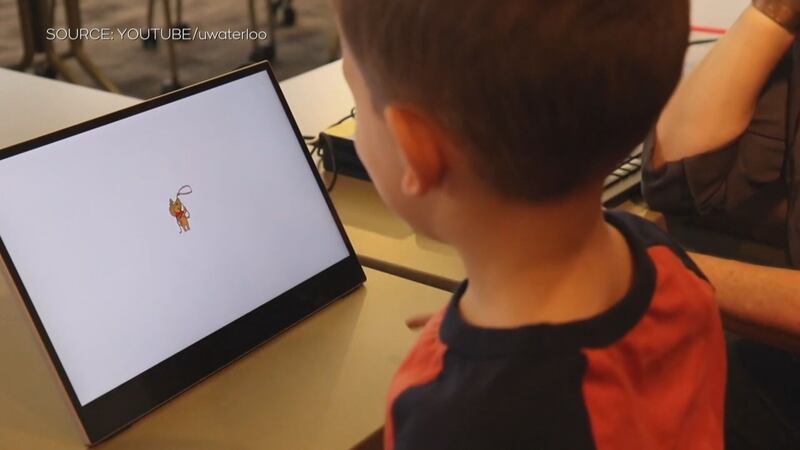
“WatDAT is kind of unique — there’s nothing like it,” Leat said, adding that children seem to enjoy it more because the test feels playful, not clinical.
With the testing phase nearing completion, researchers hope to commercialize the tool so eyecare professionals can use it in clinics around the world.
“Once it’s on the market, it will be available for optometrists and ophthalmologists to purchase,” Leat said.

