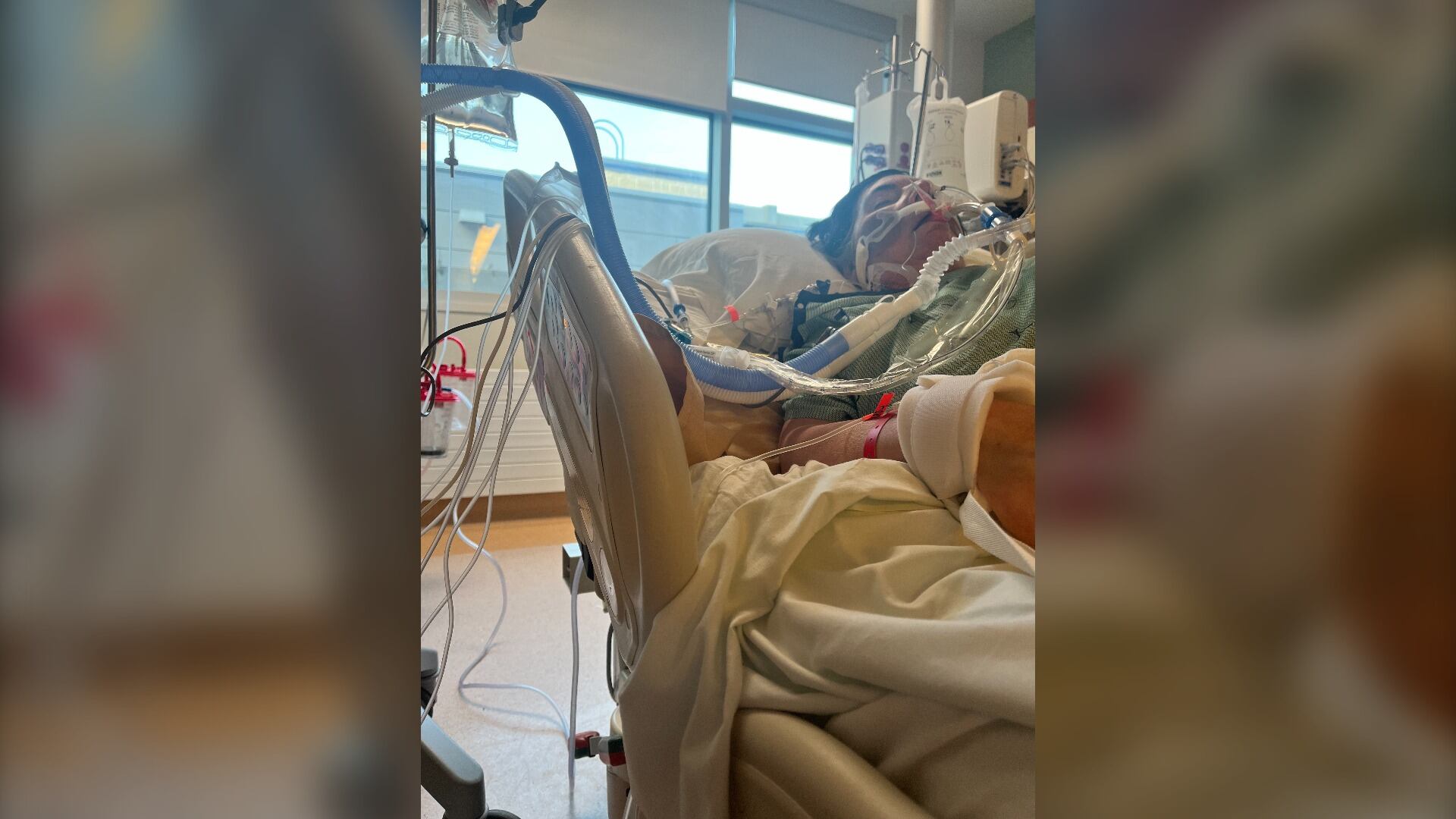
Dec. 31, 2023, was a day Harriet Berkal will never forget – it was the day she almost died.
Berkal says she woke up that morning not feeling well.
Her husband called an ambulance, which took her to Health Sciences Centre (HSC) in Winnipeg, Manitoba’s largest hospital.
Her vitals immediately indicated sepsis, and she was placed on a gurney. She said there was some initial blood work done, but no drastic measures were taken.
She waited for hours, with no help.
“For eight hours, I laid on that gurney and no one checked my vitals,” she said. “I tried stopping nurses, and they just walked right on by.”
Berkal recalls the emergency room being very busy and the hallways were packed with people.
“After eight hours, I started to get worried,” she said. “I was feeling worse and worse. I had less energy, no pain, but less energy and I thought something was seriously wrong with me.”
She said she knew she had to take matters into her own hands.
“If I stayed here, I would’ve become another statistic of a death on a gurney, and I refused to become that statistic,” Berkal said.
“I asked the triage nurse, how much longer? And she said, ‘A long time.’ I said to her, ‘Would it be safe for me to leave?’ This was my litmus test, thinking she would say ‘no,’ but instead she said, ‘leave if you want.’”
And that’s what Berkal did.
Her husband drove her back to their house. They immediately called another ambulance, which arrived in minutes.
“They called ahead to the hospital, to the ‘Gold’ team, which is the medical team that does emergency surgeries, and they said, ‘Prep the OR,’” she recalled.
Berkal had a perforated bowel and was in severe septic shock. Her hands and feet were also turning purple.
Once she got to the hospital, Berkal said she received some shocking news.
“You’re dying and you have two hours to live, and I suggest you call your children to say goodbye,” Berkel said one of the doctors told her. “It’s a lot to take in right away.”
Berkel was taken into surgery and was in a coma in the Intensive Care Unit (ICU) for 11 days.
After a month and a half, she was sent home.
Shared Health, which is responsible for delivering specific provincial health services across Manitoba, including operations at HSC, said they acknowledge wait times continue to be a challenge, which can cause frustration for patients and families.
“Individuals may experience longer waits when there is high patient demand or when critically ill or injured patients require immediate attention,” a statement from a Shared Health spokesperson reads.
“Shared Health and Health Sciences Centre (HSC) is actively working to improve patient flow and reduce wait times. Efforts include increasing staffing levels, enhancing access to same-day and virtual care options, and improving coordination across the health system to ensure patients receive the right care, in the right place, at the right time.”
A broken system
A 20-year Winnipeg firefighter and licensed paramedic, who CTV News agreed to not identify due to fears of repercussions, said they see daily how the broken health-care system plays out on the streets and in the ER.
“Hospitals are understaffed, yet we’re forced to send nearly every patient to the ER or urgent care because there are no real alternatives,” they said in an emailed statement. “The old Quick Care clinics are gone, and the new ‘virtual queue’ only delays transport, not treatment.”
“The whole system is stretched beyond its limits, and more people will die because of it,” they added.
Nick Kasper, the president of United Firefighters of Winnipeg and a 20-year firefighter himself, said none of this comes as a surprise, alluding to the fact that this “has been a chronic issue that has been compounding overtime.”
“We answer a very high volume of medical calls. What we are seeing is the delays in hospital admission, the subsequent offload delays from our partners on the ambulance are starting to impact our offload delay times,” he said.
“We’ve seen situations where fire crews are sitting at a patient’s living room, waiting for a stable transport, and there is an apartment building on fire next door and it’s taking double, triple or even four times the national average response time, which is unacceptable,” he said.
Berkal is hoping that her story can serve as a warning to others about the ongoing state of the health-care system.
“Something minor can kill you,” she said. “You have to advocate for yourself. You strongly have to advocate for yourself.”

