With a looming confidence vote on Mark Carney’s highly anticipated first budget as prime minister, Government House Leader Steven MacKinnon says he believes the opposition parties should support the document because it is “squarely in the middle of Canadian politics.”
The Liberals, two seats shy of a majority government, have already survived two confidence votes in the House related to the budget, on an amendment put forward by the Bloc Quebecois, and a sub-amendment put forward by the Conservatives.
When MPs return to Ottawa after a week in their constituencies, they’re set for another confidence vote on Nov. 17, this time on the main motion to approve the budget. If the budget fails to pass with opposition support, Canadians could be headed into another election.
In an interview on CTV Question Period airing Sunday, when asked by host Vassy Kapelos why there didn’t appear to be much collaboration with the opposition in advance of the budget being tabled, MacKinnon said despite being a couple seats shy of a majority, the Liberals believe they “have a mandate to put forward this budget.”
“But we also believe that this budget reflects the aspirations and hopes of a number of the members of the opposition,” he said, pointing to line items in the budget, such as port infrastructure, where he believes there is “broad consensus.”
“This is a growth budget, a community-focused budget,” MacKinnon said. “We believe that people who may have voted Conservative, or think of voting Conservative, these are concepts that they can support, that they can get behind.”
“It’s a budget that’s firmly planted in the middle of Canadian politics, a middle that we, I must say, has expanded somewhat since (Conservative Leader Pierre Poilievre) has taken his party very clearly to the right,” he added.
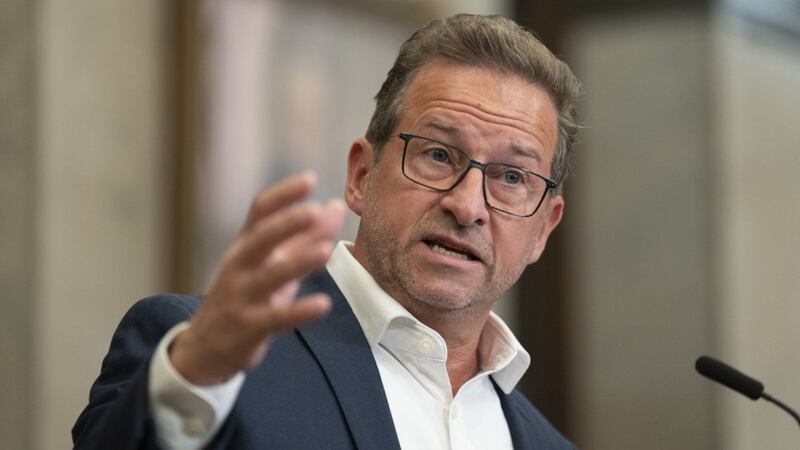
The Conservatives and the Bloc, meanwhile, have already said they won’t support the budget, and have each laid out a series of non-negotiable conditions for their votes. The NDP, for its part, says it’s still mulling its decision.
MacKinnon said he’s “specifically aware” of discussions that took place between Liberal cabinet ministers and their counterparts in the opposition parties, so it’s “unfair to say that some of their hopes and recommendations aren’t reflected in the budget,” as multiple opposition MPs stated this week.
When pressed by Kapelos, however, on whether infrastructure spending is enough to truly reflect the asks of opposition parties — and the Canadians who voted for them — when the Conservatives, Bloc and NDP all have different postures related to the amount of spending in the budget and where it’s being allocated, MacKinnon repeated that he believes the budget is centrist.
“I spoke about being in the middle,” he said. “On one hand, you had Mr. Poilievre wanting to deprive the federal government of tens of billions of dollars in revenue and reduce the deficit. You can’t do that. He didn’t even try and do that in his own platform six months ago.”
“On the other hand, you had the Bloc Quebecois looking for $36 billion in new spending,” he added. “So, it should be no surprise that we were unable to reconcile the specific and public requests of the Conservative Party and those of the Bloc Quebecois.”
MacKinnon in his interview also discussed the government’s framing of the budget as both “generational” and “transformational.”
Kapelos pressed MacKinnon several times on the budget not fulfilling the Liberals’ election promises, particularly on housing, climate, and creating certainty in the economy to encourage investment in Canada at a greater rate.
In response, MacKinnon insisted he believes the budget does what Carney promised it would.
You can watch Government House Leader Steven MacKinnon’s full interview on CTV Question Period Sunday at 11 a.m. ET.

