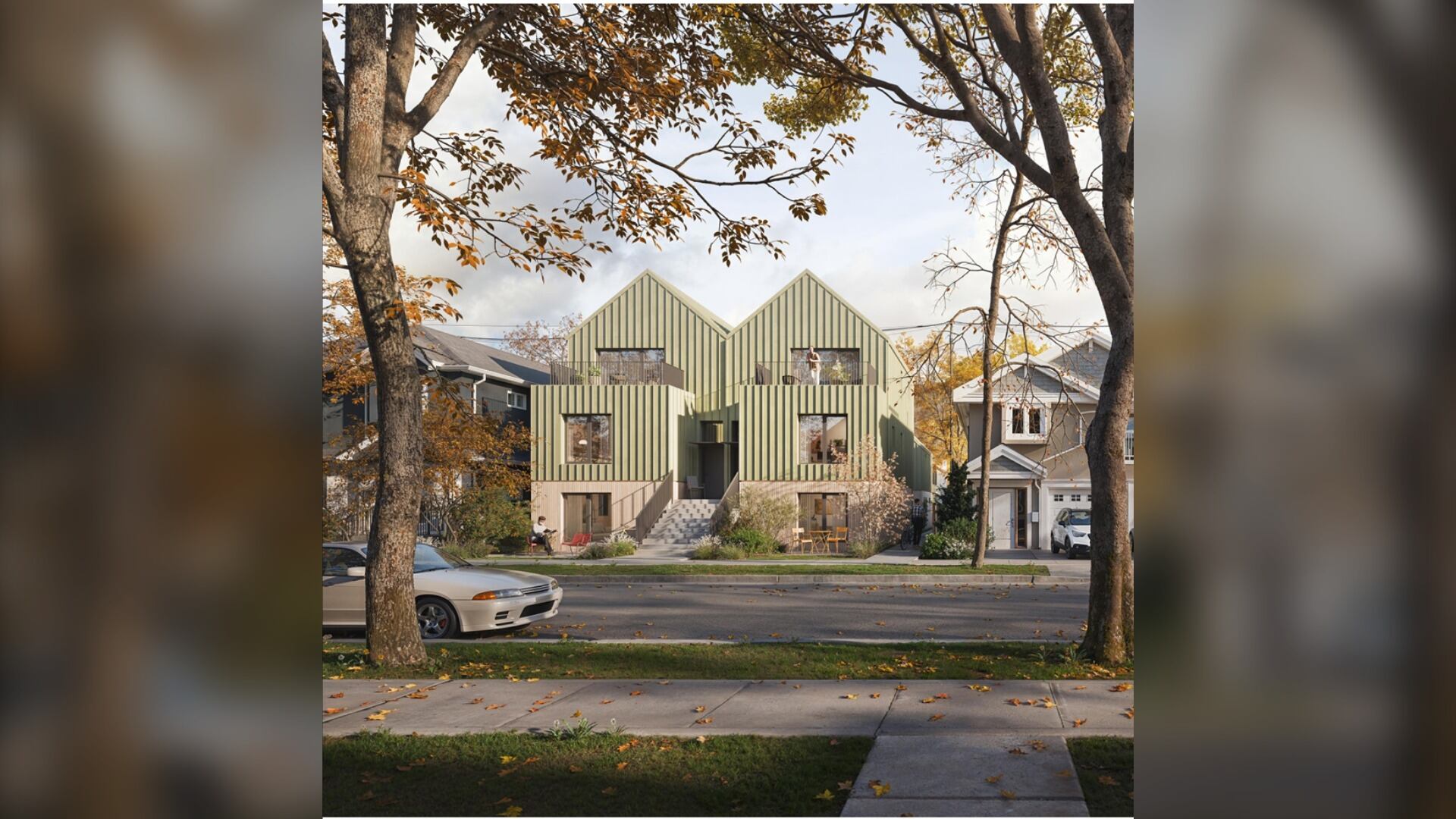
The federal government is hoping its newly finished Housing Design Catalogue will help speed up home construction in Canada.
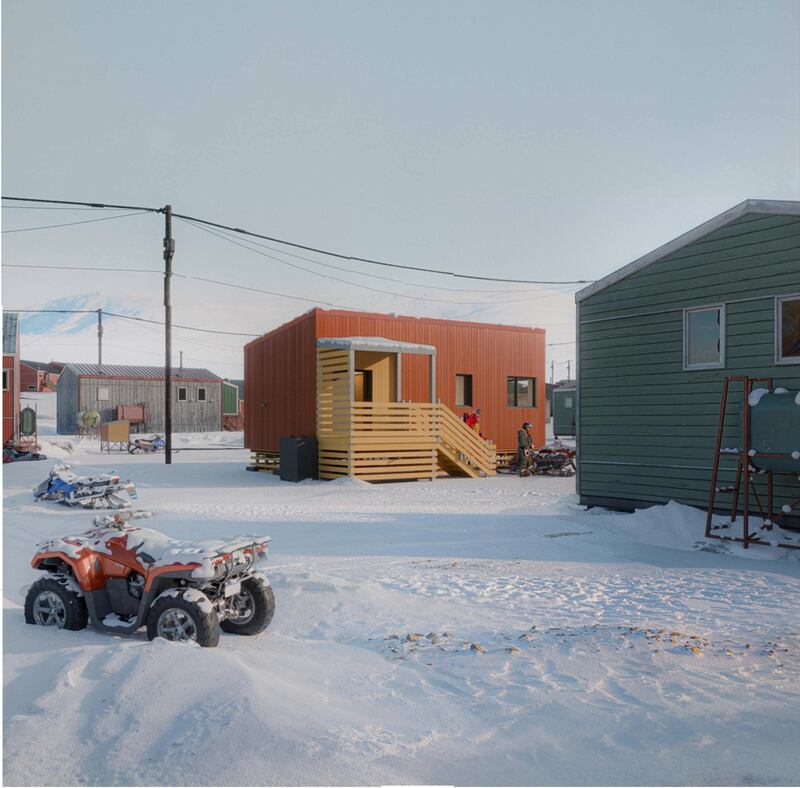
Together with the Canada Mortgage and Housing Corporation, Ottawa has published 50 technical design packages for homes ranging from accessory dwellings to sixplexes and townhomes as part of its Housing Design Catalogue.
The packages, which are free to download and available online, include architectural and engineered drawings, energy reporting documents and templates, building performance reports, user guides and construction estimates.
“All of these packages provide big head starts to builders looking to put these in our communities,” said the CMHC’s Housing Policy and Programs Advisor Daniel Rubinstein. “I am excited to see what users do with the catalogue and how they make them their own, own look and feel.”
The CMHC says the designs are not automatically pre-approved but are “nearly permit-ready.” Municipalities, it advertises, are encouraged to streamline the approval process.
“You would work with a qualified architect and engineer to finish the site and then you can go ahead and submit,” Rubinstein said.
The idea was first floated by the previous Liberal government in late 2023, with $11.6 million in funding allocated to the initiative in the 2024 budget.
At the time, Ottawa said the first phase of the catalogue would be published in Fall 2024. Instead, companies in the building modular, panelized and 3D home industries were invited to submit designs in Fall 2024, with the final renderings, floor plan layouts and key building details published in March 2025. The final technical packages needed for permitting were published in October 2025.
The Director of Planning and Development at the City of Yellowknife Charlsey White says her department has been working with the CMHC on this project for about eight months. The designs, she says, should be approved quickly in her city as they meet their building bylaw and the city’s energy efficiencies and servicing components.
“They are really ready to go drawings,” White said. “You could be looking to cut three to six months off your development timeframe by using these plans and we all know time is money.”
In 2023, the City of Yellowknife conducted a needs assessment that concluded Yellowknife needed about 1,069 new dwellings within the next ten years. To help reach that goal, White said the city recently updated its building bylaw to create ready to build foundation solutions that can be used with these designs.
“We’ve built this with a system that we have already started to implement,” White said.
In a statement, the City of Ottawa said it also collaborated with the CMHC on this project to ensure the designs aligned with upcoming changes to zoning bylaws and building code.
“The City plans to launch a fast-track permitting program in 2026, following the release of the new Zoning By-law,” wrote Lily Xu, Director, Housing Solutions and Investments. “This program will streamline approvals and encourage the construction of high-quality ‘missing middle’ and gentle-density housing across Ottawa, including designs featured in the CMHC Housing Catalogue.”
Will it work?
The federal government says developers asked for the ready to go designs, citing delays and red tape during the permitting process. Ottawa hopes technical drawings it created alongside architects and other professionals across the country will speed up construction, especially for multi-family homes like sixplexes.
While experts admit more supply is needed, many who spoke to CTV News say the design process is not a major problem.
Professor James McKellar at the Schulich School of Business believes the drawings are just nice to have but won’t move the yardstick on affordability.
“It’s some very nice window dressing,” McKellar said. “This is about the lowest lying fruit you can get.”
McKellar says the designs won’t solve the problem of high construction costs, crew shortages and expensive land prices.
“The cost of building is so high that it’s not a design issue. It’s just the overall costs of materials and labour,” McKellar said.
In addition, McKellar said municipalities can still reject the designs because they may not fit a desired lot.
The CEO of BILD Alberta Scott Fash says the designs will likely provide some benefits to individuals who want to start a home building business or build an accessory dwelling on their current property. However, Fash does not believe the designs will make housing costs cheaper or substantially boost supply. What’s driving the supply problem, Fash said, is rising input costs.
“Design hasn’t been an issue,” he said. “Constructive materials have continued to go up, approvals, development charges just all of the input costs to housing have continually gone up over the years as well as the time it takes to get them approved and build them.”
Fash believes larger scale developers who work in high volumes are unlikely to use the designs since they have invested a lot of time and money to create their own.
“For them to drop all that and take this design developed in Ottawa and smack that down in Airdrie, Alberta doesn’t make a lot of sense,” he said about the high-volume housing developers.
What are the costs?
The catalogue does provide rough construction costs estimates, using one major market in each region. For example, the CMHC says Toronto is used as the estimate for the Ontario region, and Halifax for the Atlantic region.
In Ontario, the hard construction costs for a 634 sq. foot accessory dwelling is estimated to be anywhere from $251,000 to $314,000. A 4,842 sq. foot sixplex is estimated to cost between $1.51 million and $1.88 million. In Saskatchewan and Manitoba, a similar 590 sq. foot accessory dwelling is estimated to have a hard construction cost of $205,000 to $256,000, with a 5,738 sq. foot sixplex ranging from $1.46 million to $1.83 million.
Officials speaking on background could not provide any estimate for how many housing units they hope this project creates.

